Is the J&K government ready for urban local bodies and panchayat polls?
Synopsis
On February 9, Jammu and Kashmir's Chief Minister, Omar Abdullah, announced that preparations for urban local bodies and panchayat elections are underway, although the State Election Commissioner position is currently vacant. The move aims to enhance local governance and empower communities across the region.
Key Takeaways
Preparations for local body elections are in progress.
State Election Commissioner position remains unfilled.
Delimitation of panchayat halqas is currently not on the agenda.
Election materials have been procured for a smooth election process.
Digital initiatives have been introduced to enhance governance.
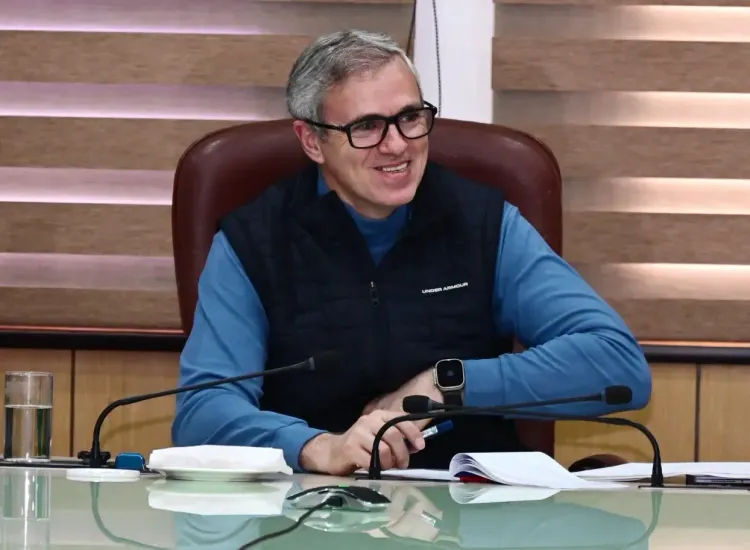
Jammu, Feb 9 (NationPress) The Chief Minister of Jammu and Kashmir, Omar Abdullah, informed the Legislative Assembly on Monday that his administration is preparing to conduct elections for urban local bodies and panchayats as soon as possible, although he noted that the position of State Election Commissioner remains unfilled.
In response to a query from Congress MLA Tariq Hameed Karra, Abdullah mentioned that the oversight, guidance, and management of the electoral roll preparations and the execution of elections under the Jammu and Kashmir Panchayati Raj Act, Jammu and Kashmir Municipal Act, and the Jammu and Kashmir Municipal Corporation Act, 2000 are under the jurisdiction of the State Election Commission (SEC).
He added that the SEC is making the necessary preparations to conduct elections for both the panchayats and urban local bodies at the earliest.
However, the Chief Minister emphasized that the role of State Election Commissioner is currently vacant.
He mentioned that the report from the Jammu and Kashmir Local Bodies to the Backward Classes Commission regarding the allocation of reserved seats is still being reviewed, and further actions will be taken based on that.
During his address, the Chief Minister noted that the terms for panchayats and block development councils (BDCs) lapsed on January 9, while the district development council (DDC) term concludes on February 24.
He also pointed out that the Srinagar Municipal Corporation’s term expired on November 5, 2023, and Jammu’s civic body followed suit with its term ending on November 14.
All municipal councils and committees saw their terms expire between October and November 2023.
He explained that the panchayat halqas were delineated prior to the 2018 panchayat elections using data from the 2011 Census.
“According to the Panchayati Raj Act, a fresh delimitation of panchayat halqas can occur only after the publication of population figures from the general Census,” he stated.
“Since no Census has been conducted post-2011, there are no plans for new delimitation at this time,” he added.
The Chief Minister further mentioned that the delimitation process for 77 urban local bodies (ULBs) has been initiated following directives from the Housing and Urban Development Department, with completion achieved for 72 ULBs and ongoing for the remaining five.
On the topic of reservations, he confirmed that the rotation of sarpanch and panch wards will be managed by the Rural Development Department, while the reservation of municipal wards will be handled by the SEC after the OBC Commission report is approved and notified.
He noted that the electoral rolls for the panchayat elections have already been updated with January 1, 2025, designated as the qualifying date, and the revision of municipal electoral rolls will follow the completion of delimitation and receipt of governmental directions.
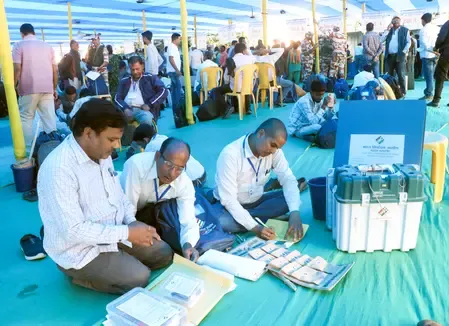
He also shared that the tendering process for acquiring election materials for panchayat elections has been finalized, and is currently in progress for DDC elections.
“Thirty thousand ballot boxes have been procured and distributed across districts, along with a memorandum of understanding established with the Madhya Pradesh State Election Commission for the provision of 7,000 multi-post electronic voting machines for ULB elections,” he added.
Emphasizing reforms in the Panchayati Raj system, Abdullah highlighted that the Union Territory has implemented a three-tier structure, conducting elections for 4,291 sarpanches and 33,597 panchs, alongside the formation of BDCs and DDCs.
He mentioned that the government has initiated the construction of 600 panchayat bhawans equipped with internet connectivity, and over 7.25 lakh participants have been trained in governance, planning, and financial management from 2022 to 2025.
Amendments to existing laws have guaranteed reservations for women, Scheduled Castes, Scheduled Tribes, and Other Backward Classes, he added.
Additionally, he indicated that digital platforms like eGramSwaraj and initiatives such as the SVAMITVA scheme have been launched to improve transparency and accountability, providing a record of rights to rural households.
It is noteworthy that through the devolution of governance powers in the nation, local issues at the village level are managed by panchayats, which assists in saving time and minimizing litigation for the rural populace.
Point of View
The vacancy of the State Election Commissioner raises questions about the timely execution of these polls. As the region navigates its political landscape, clarity and efficient governance remain paramount.
NationPress
5 Oct 2026
Frequently Asked Questions
What is the current status of the State Election Commissioner in J&K?
The position of State Election Commissioner in Jammu and Kashmir is currently vacant, which is crucial for overseeing the upcoming elections.
When did the terms for panchayats and block development councils expire?
The terms for panchayats and block development councils expired on January 9.
What measures are being taken for the upcoming elections?
The government is making arrangements for the elections, including updating electoral rolls and procuring election materials.
What is the significance of the delimitation process?
Delimitation is essential for ensuring fair representation in panchayat elections; however, it can only be conducted after the release of new Census data.
What initiatives have been launched to improve local governance?
The government has implemented digital platforms like eGramSwaraj and the SVAMITVA scheme to enhance transparency and accountability in local governance.