Jharkhand CMO launches student feedback drive on exam reforms
Synopsis
The Chief Minister's Office of Jharkhand has launched a public participation drive asking students to submit suggestions for improving the state's examination system through the samvad.jharkhand.gov.in portal, framing exam reform as a matter of regional identity and merit.
Key Takeaways
The Chief Minister's Office of Jharkhand announced the campaign on 10 August 2026 .
Students are invited to submit suggestions via samvad.jharkhand.gov.in , the state's citizen engagement portal.
The stated goals are a more transparent, fair, and trustworthy examination system.
The campaign uses 'Jharkhand first' and merit-based framing, anchoring reform in regional identity.
The initiative mirrors similar digital feedback drives by other Indian states responding to examination integrity concerns.
Whether suggestions lead to concrete policy orders or board-level changes remains to be watched.
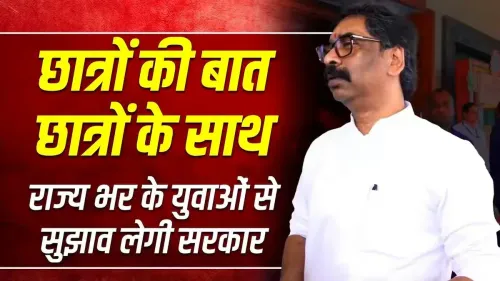
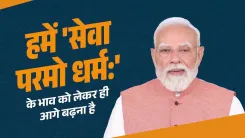
Jharkhand's students now have a direct line to the government — and the state wants them to use it. The Chief Minister's Office of Jharkhand on Monday, 10 August 2026 launched a public participation campaign inviting young people across the state to submit suggestions for making the examination system more transparent, fair, and trustworthy.
The post, shared in Hindi, called on 'jharkhand ke yuva saathi' (young friends of Jharkhand) to come forward and share their ideas through the state's citizen engagement portal samvad.jharkhand.gov.in. The message closed with a pointed affirmation: 'Jharkhandhi first aur Jharkhandhi ki mehnat hi safalta ka aadhar hai' — 'Jharkhand first, and the hard work of Jharkhandis is the foundation of success.'
Why exams are the pressure point right now
Across India, the integrity of public examinations — from state board assessments to competitive recruitment tests — has come under intense scrutiny in recent years. Repeated incidents of paper leaks and questions over evaluation transparency have eroded student confidence in the very systems meant to reward their effort. Jharkhand is not alone in this, but the state's student population, many from rural and tribal communities with limited safety nets, has particular stakes in getting it right.
Several Indian states have responded by creating digital feedback channels, part of a broader e-governance push to restore legitimacy to academic and recruitment testing. The samvad.jharkhand.gov.in portal fits squarely within this pattern — a government-run platform designed for citizen input on policy questions.
The 'Jharkhand First' framing and what it signals
The campaign's language is deliberate. By anchoring the call-to-action in regional identity and merit — 'Jharkhandhi first' — the CMO is doing more than running a feedback exercise. It is positioning examination reform as an expression of local pride and self-determination, a framing that resonates strongly in a state where debates over domicile rights and local opportunity have long shaped politics.
The initiative also aligns with the spirit of the National Education Policy 2020, which explicitly called for greater stakeholder consultation in education governance and student-centric reforms to assessment systems.
The real test, however, will come after the portal closes — whether the suggestions gathered translate into concrete changes to Jharkhand board examinations or recruitment processes, or whether the campaign remains a well-intentioned gesture without a follow-through order.
Point of View
Symbolically high-value, and strategically timed against a national backdrop of examination credibility crises. By routing the initiative through a dedicated state portal and wrapping it in 'Jharkhand first' language, the CMO is simultaneously addressing a genuine policy gap and consolidating a regional-identity narrative ahead of future electoral cycles. The harder question is institutional follow-through: feedback portals that produce no visible policy output tend to deepen cynicism rather than build trust. The Jharkhand government's credibility on this issue will ultimately be measured not by the launch, but by what it publishes after the portal closes.
NationPress
24 Sept 2026
Frequently Asked Questions
What is the Jharkhand CMO student feedback campaign about?
The Chief Minister's Office of Jharkhand has invited students and young people to submit suggestions for making the state's examination system more transparent and trustworthy, through the public portal samvad.jharkhand.gov.in.
How can Jharkhand students share suggestions for exam reform?
Students can visit samvad.jharkhand.gov.in, the state government's citizen participation portal, to submit their ideas and feedback on improving examination processes.
What is samvad.jharkhand.gov.in?
It is the Government of Jharkhand's official digital platform for citizen feedback and public participation in state policy discussions.
Why is Jharkhand focusing on exam transparency now?
Concerns over paper leaks and evaluation integrity have affected public examinations across India, prompting several state governments, including Jharkhand, to launch digital consultation drives to restore student confidence.
Is this campaign related to the National Education Policy 2020?
The initiative aligns with NEP 2020's emphasis on stakeholder consultation and student-centric reforms in assessment systems, though it is a state-level campaign driven by the Jharkhand government.