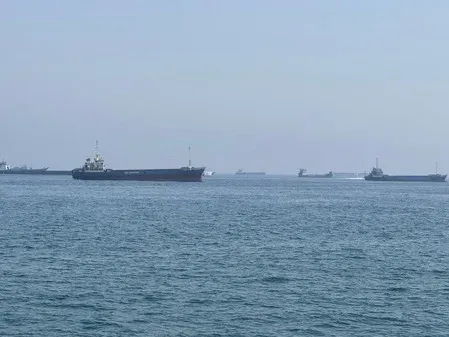
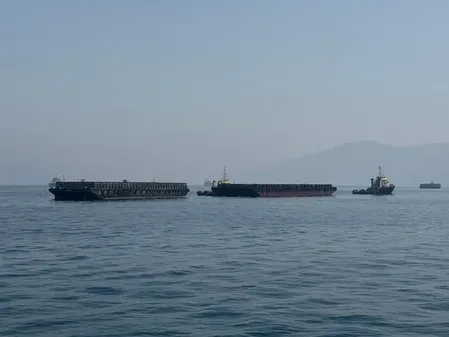
Cargo ship fire in Sea of Oman: All 22 crew rescued by UAE Coast Guard
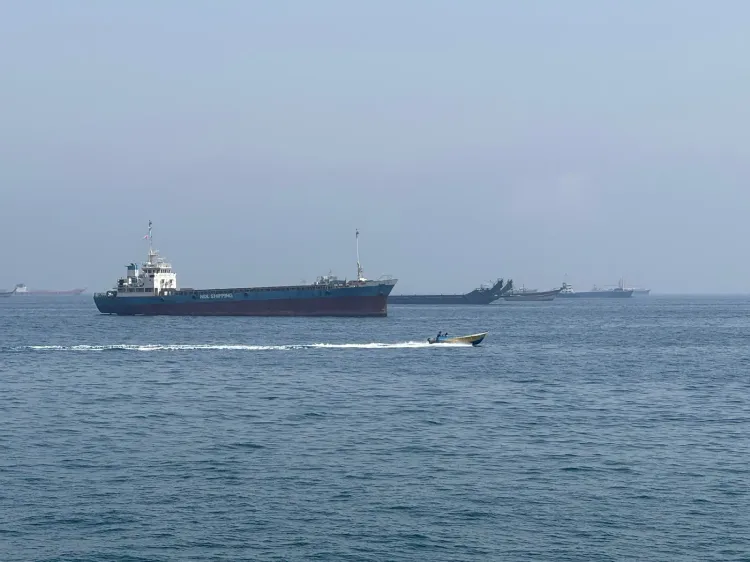
Synopsis
A cargo ship fire in the Sea of Oman on 8 November saw all 22 crew rescued by the UAE Coast Guard — but the broader picture is far more alarming: the IRGC simultaneously claimed two tankers hit naval mines in the Strait of Hormuz, while CENTCOM confirmed a US military aircraft disabled the St. Kitts-flagged M/V Huda for allegedly violating a naval blockade against Iran. Three separate maritime incidents, one day, one chokepoint.
Key Takeaways
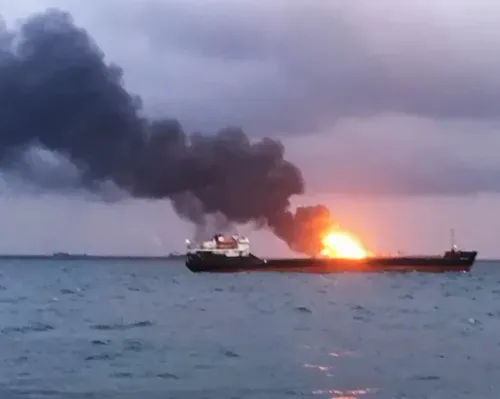
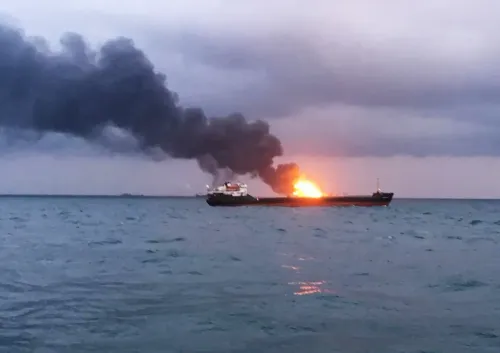
A cargo ship caught fire in the Sea of Oman on 8 November 2026 ; all 22 Arab-nationality crew members were rescued by the UAE Coast Guard .
Rescued crew were in stable condition after first aid and were handed to relevant authorities; cause of fire was not disclosed.
Iran's IRGC claimed two oil tankers hit naval mines in the Strait of Hormuz after using an 'unauthorised' route.
US CENTCOM confirmed a military aircraft fired on the St.
Kitts-flagged M/V Huda in the Gulf of Oman, disabling it for allegedly violating a naval blockade against Iran.
The IRGC warned any vessel cooperating with the US military in the area would 'definitely' strike naval mines.
A cargo ship caught fire in the Sea of Oman on 8 November 2026, prompting a swift rescue operation by the United Arab Emirates (UAE) Coast Guard that brought all 22 crew members to safety. The crew, all of Arab nationality, were reported to be in stable condition after receiving first aid, according to the UAE National Guard.
The Rescue Operation
The UAE Coast Guard launched the operation immediately after receiving a distress call from the stricken vessel reporting a fire on board. All 22 rescued crew members were subsequently handed over to the relevant authorities. The cause of the fire and the extent of damage to the vessel were not disclosed in official communications.
IRGC Claims of Mine Strikes in Strait of Hormuz
The incident unfolded against a sharply escalating maritime backdrop. The navy of Iran's Islamic Revolutionary Guard Corps (IRGC) said early Sunday that two 'violating' oil tankers attempting to pass through what it described as an 'unauthorised' route in the Strait of Hormuz caught fire after striking naval mines. According to a statement on the IRGC's official outlet Sepah News, one tanker hit mines east of the strait while the other was struck while crossing the waterway. Both vessels reportedly had their navigation and GPS systems switched off and were burning following the explosions.
The IRGC further warned that any vessel cooperating with what it called the 'aggressive' US Army and entering the region in defiance of Iranian regulations would 'definitely' hit naval mines, according to reports citing China's state news agency Xinhua.
US CENTCOM Confirms Strike on Commercial Vessel
US Central Command (CENTCOM) said on social media platform X that its forces had disabled a commercial vessel in the Gulf of Oman after the civilian crew 'ignored repeated warnings and attempted to violate the naval blockade against Iran multiple times.' CENTCOM stated that a US military aircraft fired precision munitions at the stern of the St. Kitts-flagged M/V Huda, disabling the ship after CENTCOM forces directed the crew to abandon targeted spaces. The cargo vessel had reportedly attempted to depart regional waters after visiting an Iranian port.
A Volatile Maritime Corridor
The Strait of Hormuz and the broader Gulf of Oman region are among the world's most strategically sensitive waterways, through which a significant share of global oil exports transit. This latest cluster of incidents reflects a renewed and dangerous contest of authority over maritime passage rights in the area. Notably, confrontations over vessel movements in and around the strait have recurred across multiple years, but the simultaneous involvement of UAE rescue operations, IRGC mine warnings, and a direct US military strike marks an unusually tense convergence.
What Happens Next
The identities of the two tankers referenced by the IRGC and their flags have not been officially confirmed. Regional shipping authorities and international maritime bodies are likely to issue guidance to vessels transiting the area. The incident is expected to draw diplomatic responses from Washington, Tehran, and Gulf states, and could weigh on crude oil prices given the corridor's outsized role in global energy supply.
Point of View
But it risks overshadowing the more alarming development: the near-simultaneous IRGC mine warnings and a confirmed US military strike on a commercial vessel in the same corridor. The Strait of Hormuz has long been a pressure valve in US-Iran tensions, but active naval mines claimed by a state actor and a US precision strike on a civilian-flagged ship in a single news cycle represent a qualitative escalation. Mainstream coverage will focus on the rescue; the harder question is whether these incidents signal a new operating posture by both Washington and Tehran — one that places commercial shipping in the direct line of geopolitical fire.
NationPress
8 Nov 2026
Frequently Asked Questions
What happened to the cargo ship in the Sea of Oman on 8 November?
A cargo ship caught fire in the Sea of Oman on 8 November, prompting a distress call to the UAE Coast Guard. All 22 crew members, all of Arab nationality, were rescued and reported to be in stable condition after receiving first aid.
What did Iran's IRGC claim about ships in the Strait of Hormuz?
Iran's IRGC said early Sunday that two oil tankers hit naval mines while attempting to use what it described as an 'unauthorised' route through the Strait of Hormuz. The IRGC warned that any vessel cooperating with the US military in the area would 'definitely' encounter naval mines.
What is the M/V Huda and why did the US military strike it?
The M/V Huda is a St. Kitts-flagged commercial cargo vessel that US Central Command (CENTCOM) said was disabled after its crew 'ignored repeated warnings and attempted to violate the naval blockade against Iran multiple times.' A US military aircraft fired precision munitions at the ship's stern in the Gulf of Oman.
Why is the Strait of Hormuz strategically significant?
The Strait of Hormuz is one of the world's most critical maritime chokepoints, through which a large share of global crude oil exports passes. Control over and freedom of navigation in the strait is a longstanding flashpoint in US-Iran relations.
What is known about the cause of the cargo ship fire?
The cause of the fire aboard the cargo ship in the Sea of Oman has not been officially disclosed. The UAE National Guard confirmed the rescue operation but did not reveal what triggered the blaze or the extent of damage to the vessel.