Chouhan: Key Crop Prices Above MSP This Diwali
Synopsis
Union Agriculture Minister Shivraj Singh Chouhan has said mandi prices for seven major kharif crops — including paddy, cotton and onion — are trading above MSP this Diwali, citing basmati paddy crossing ₹5,000 per quintal as evidence of the Modi government's farm-income policies bearing fruit.
Key Takeaways
Union Agriculture Minister Shivraj Singh Chouhan posted on 8 November 2026 that average mandi prices for maize, paddy, cotton, soybean, sesame, arhar and onion are above MSP.
Basmati paddy is fetching more than ₹5,000 per quintal , which Chouhan described as particularly encouraging for farmers.
The government set MSP at a minimum of 1.5 times the cost of production for 22 mandated crops in 2018 .
The PM-KISAN scheme, launched in 2019 , provides direct income support to farmers as a complement to price-floor mechanisms.
Chouhan credited Prime Minister Narendra Modi's farmer-friendly policies for the above-MSP market trend.
Rabi procurement data and upcoming MSP revisions will be the key indicators of whether this season's price gains are sustained.
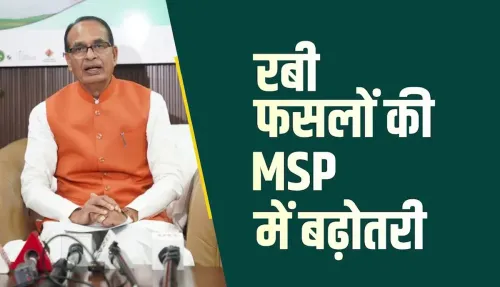
This Diwali, Union Agriculture Minister Shivraj Singh Chouhan says India's farmers have more than just diyas to celebrate — market prices for a clutch of key crops are trading above their government-mandated floor, a signal, he argues, of a farm-income policy beginning to pay out. In a post on X on Sunday, 8 November 2026, Chouhan highlighted that crops including maize, paddy, cotton, soybean, sesame, arhar (tur dal) and onion are fetching average mandi rates above the Minimum Support Price (MSP), and singled out basmati paddy crossing ₹5,000 per quintal as a particularly encouraging sign for growers.
What Chouhan said — and why basmati's ₹5,000 mark matters
Writing in Hindi, the minister said: 'Mandion mein makka, dhan, kapas, soyabean, til, arhar aur pyaaz jaisi pramukh faslon ke ausat bhaav MSP se oopar chal rahe hain' — 'In the mandis, average prices of key crops such as maize, paddy, cotton, soybean, sesame, arhar and onion are running above MSP.' He attributed the trend to 'farmer-friendly policies and continuous efforts to ensure remunerative prices' under Prime Minister Narendra Modi.
The basmati figure carries weight beyond symbolism. Basmati is a premium export variety grown primarily across Punjab, Haryana, Uttar Pradesh and parts of Uttarakhand, and its farmgate price is a bellwether for how well market demand — including export demand — is filtering down to the actual grower. When basmati clears the ₹5,000-per-quintal threshold, it typically widens the margin between production cost and sale price more meaningfully than for coarser varieties.
The MSP architecture behind the numbers
The MSP mechanism is the government's declared floor price for 22 mandated crops, designed to shield farmers from price collapses after harvest. In 2018, the central government committed to setting MSP at a minimum of 1.5 times the cost of production — a formula long demanded by farm lobbies. The PM-KISAN direct income-support scheme, launched in 2019, added a non-price layer, depositing cash directly into farmers' accounts to supplement earnings regardless of mandi fluctuations.
The practical gap, however, has always been between announced MSP and realised prices — what a farmer actually receives on the day of sale, net of transport, commission and market levies. When market rates organically exceed MSP — as Chouhan claims they are doing this season — it removes that gap without requiring costly government procurement, making it the most fiscally efficient outcome for the Centre. Ministers have made similar festive-season claims in previous kharif cycles, and economists routinely await mandi-level data to confirm whether the gains are broad-based or concentrated in specific pockets.
Diwali messaging with a policy edge
Chouhan closed his post with a prayer that this Diwali bring 'sukh, samridhi aur khushhali' — happiness, prosperity and well-being — to every farm family, signing off with the rallying cry 'Jai Jawan, Jai Kisan, Jai Hindustan.' The slogan, originally coined by Prime Minister Lal Bahadur Shastri in 1965, has since been a standard invocation at farmer-facing events by governments of multiple political colours.
Rabi sowing is now weeks away, and procurement figures from the ongoing kharif harvest season — along with any MSP revisions the Centre announces ahead of the next cycle — will be the real test of whether the mandi optimism Chouhan describes holds once the festive season passes.
Point of View
000 figure, if borne out by mandi data, would be a genuine talking point ahead of rabi sowing and any forthcoming MSP revision announcements. The real scrutiny will come when procurement figures and state-level mandi records are published — that is when the gap between ministerial claims and farm-income reality either closes or widens.
NationPress
8 Nov 2026
Frequently Asked Questions
What is MSP and why does it matter for Indian farmers?
MSP, or Minimum Support Price, is a government-announced floor price for key crops that protects farmers from sharp price drops at harvest time. When mandi prices exceed MSP, farmers benefit without the government needing to procure their crop directly.
Which crops does Shivraj Singh Chouhan say are above MSP this Diwali?
Chouhan cited maize, paddy, cotton, soybean, sesame (til), arhar (tur dal) and onion as crops whose average mandi prices are currently running above MSP.
What is the basmati paddy price mentioned by Chouhan?
Chouhan said basmati paddy prices have crossed ₹5,000 per quintal in mandis, calling it an encouraging development for farmers who grow the premium rice variety.
What is PM-KISAN and how does it relate to MSP?
PM-KISAN is a direct income-support scheme launched in 2019 that deposits cash into farmers' bank accounts regardless of market conditions. It complements the MSP mechanism by providing a non-price safety net on top of the crop price floor.
What comes next after the kharif harvest season in India?
After kharif, attention shifts to rabi sowing — winter crops like wheat, mustard and pulses. Rabi procurement figures and any MSP revisions the central government announces will indicate whether the farm-income gains of the kharif season are carried forward.