Amit Shah: First Naxal-Free Diwali in Five Decades
Synopsis
Union Home Minister Amit Shah marks PM Modi's Diwali visit to Bastar troops, declaring it India's first Naxal-free festival in five decades and dedicating it to the sacrifice of security personnel who ended Left Wing Extremism in the region.
Key Takeaways
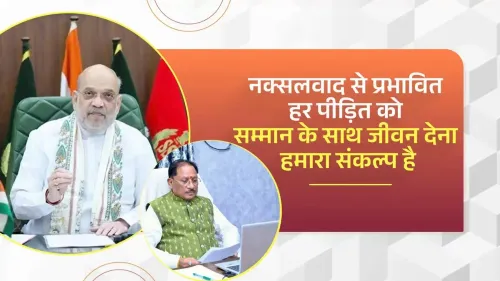
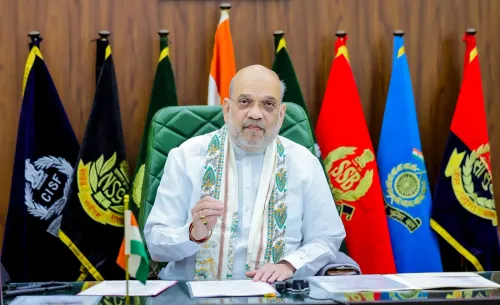
Union Home Minister Amit Shah posted on November 8, 2026 honouring PM Modi's Diwali visit to security forces in Bastar, Chhattisgarh .
Shah declared this the first Diwali in five decades that India is free from the Naxal insurgency's grip.
Bastar was for roughly fifty years the operational heartland of the Left Wing Extremist movement in India.
The government's counter-Naxal strategy since 2014 combined security operations with development outreach across Red Corridor districts.
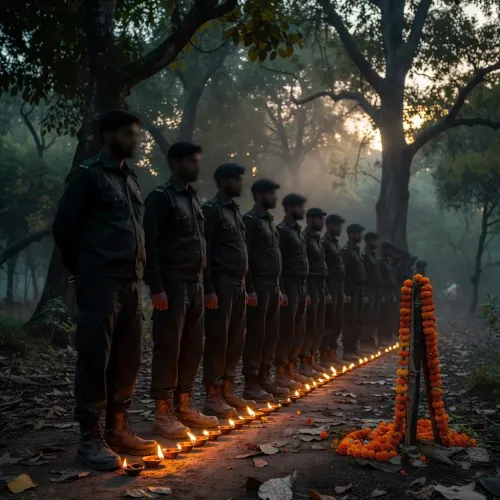
Shah dedicated the occasion to the valour and sacrifice of security personnel who served in affected areas.
Residents of Bastar — primarily tribal communities — are the primary civilian beneficiaries if the insurgency-free claim is sustained.
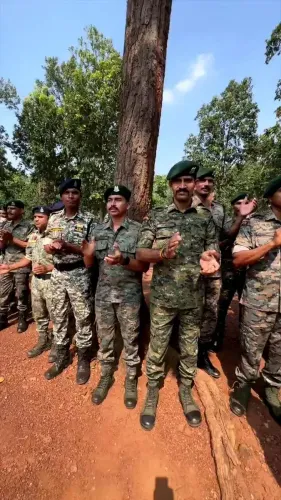
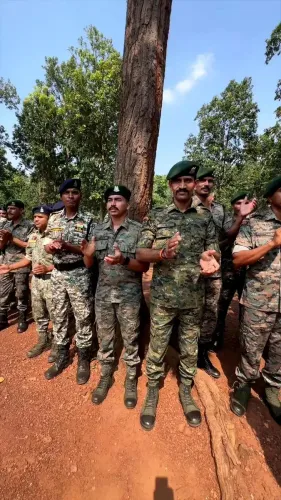
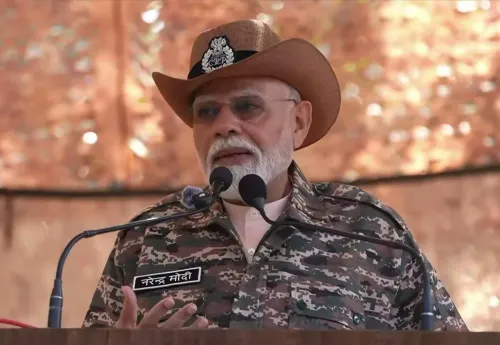
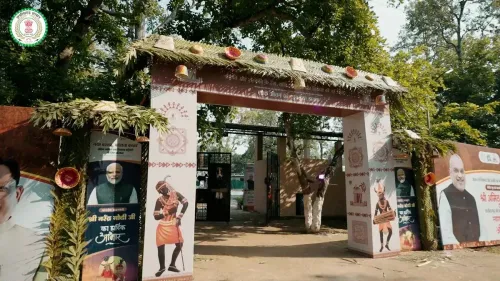
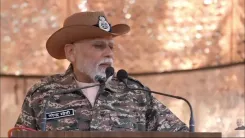
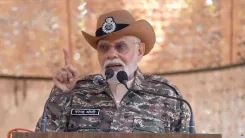
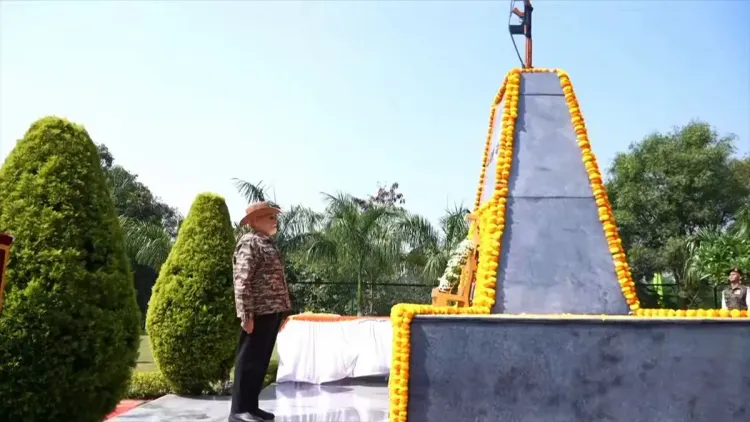
For the first time in five decades, India is celebrating a Diwali that Union Home Minister Amit Shah describes as free from the shadow of Naxal terror — and Prime Minister Narendra Modi chose to mark it not in the capital, but deep in the forests of Bastar, Chhattisgarh, alongside the security forces who made that claim possible.
Shah posted on Sunday, November 8, 2026, honouring a tradition that has become a Modi government signature: every Diwali, the Prime Minister travels to troops stationed far from home. This year's destination carries unmistakable symbolism. Bastar — once the heartland of Left Wing Extremism in India, a name synonymous for generations with ambushes, displacement, and fear — is now the site chosen to celebrate what the government is calling a historic security milestone.
Bastar's Long Shadow — and What Changed
The Naxalite insurgency took root in the late 1960s, drawing ideological inspiration from Maoist agrarian movements and spreading across the forested tribal belt of central and eastern India — the so-called 'Red Corridor'. Bastar, a dense, mineral-rich region in Chhattisgarh, became its operational nerve centre. For roughly five decades, security forces, civilians, and elected officials operated under constant threat in these jungles. The human cost — in lives lost on all sides, in development withheld, in fear normalised — was enormous.
Since 2014, the central government has articulated a twin-track strategy: intensified security operations alongside accelerated development outreach in affected districts. Official data over those years pointed to a shrinking geographic footprint of Naxal violence and a declining count of 'Left Wing Extremism-affected districts'. Shah's post is the most emphatic official declaration yet that the arc has reached its end.
Modi in the Jungle: A Calculated Message
The optics are deliberate and powerful. A sitting Prime Minister celebrating Diwali not at Rashtrapati Bhavan or a ceremonial venue, but in the same forested terrain where cadres of the Communist Party of India (Maoist) once held sway, sends a message that no press release could. It is a statement of control, confidence, and gratitude — directed simultaneously at the nation, at the families of fallen soldiers, and at communities in Bastar that endured decades of crossfire.
Shah's post captures the emotional register of the moment: 'यह दीपावली उन वीरों के पराक्रम व बलिदान को समर्पित है' — 'This Diwali is dedicated to the valour and sacrifice of those brave souls who gave everything for the country's security and peace. A grateful nation will forever be indebted to them.'
The Forces Behind the Claim
Shah is explicit that the credit belongs to the security personnel on the ground — the CRPF, state police, and specialised units who conducted operations in difficult, heavily mined terrain over years. The post does not name commanders or specific operations, but the broader pattern of official attribution has consistently spotlighted the courage of individual soldiers and officers who served in Bastar and the wider Red Corridor.
Residents of Bastar — tribal communities who often found themselves caught between Maoist cadres and state forces — stand as the other, quieter stakeholders of this moment. If the government's claim holds, it is their daily lives, their children's access to schools and healthcare, their freedom of movement, that changes most concretely.
What the Ministry of Home Affairs says next — updated district counts, development announcements for Chhattisgarh, long-term reintegration plans — will determine whether this Diwali in the jungle is remembered as a turning point or a headline.
Point of View
If verified, would represent one of independent India's most significant internal-security achievements. The choice of Bastar as Modi's Diwali destination is as much political communication as it is tribute: it anchors an abstract policy victory in a vivid, emotionally resonant image. The post also signals that the Home Ministry intends to hold this moment as a defining legacy marker ahead of any future electoral or policy cycles. Whether the narrative holds will depend on what the security situation in former Red Corridor districts looks like in the months ahead.
NationPress
8 Nov 2026
Frequently Asked Questions
Why did PM Modi celebrate Diwali 2026 in Bastar?
PM Modi visited Bastar, Chhattisgarh to celebrate Diwali with security forces stationed there, continuing his tradition of spending the festival with troops in remote or insurgency-affected areas. The government also marked the occasion as the first Naxal-free Diwali in five decades.
What is the Naxalite insurgency in India?
The Naxalite insurgency is a Left Wing Extremist movement that began in the late 1960s and spread across central and eastern India's forested tribal belt, often called the Red Corridor. Bastar in Chhattisgarh was one of its primary strongholds for roughly fifty years.
What did Amit Shah say about Naxalism on Diwali 2026?
Union Home Minister Amit Shah posted that this Diwali is the first in five decades where India is free from the Naxal menace, crediting the courage and sacrifice of security forces for achieving this milestone.
How has the Indian government tackled Left Wing Extremism?
Since 2014, the central government has pursued a dual strategy of intensified security operations and accelerated development outreach in Naxal-affected districts, which official data credited with shrinking the geographic footprint of Naxal violence over successive years.
Which region in India was most affected by Naxalism?
Bastar in Chhattisgarh was considered the operational heartland of the Naxalite movement. The broader Red Corridor stretched across parts of Chhattisgarh, Jharkhand, Odisha, and other central and eastern states.