IRGC says 2 tankers hit mines in Hormuz Strait; US disables vessel in Gulf of Oman
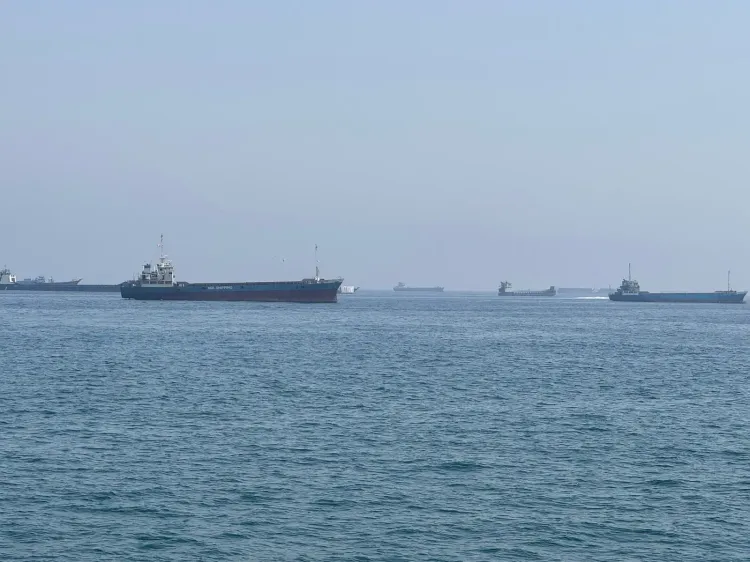
Synopsis
Two oil tankers are on fire in the Strait of Hormuz after striking IRGC-laid naval mines, while a US military aircraft separately disabled a cargo ship in the Gulf of Oman — the fifth such vessel since the blockade began in July. With mines and precision munitions now deployed in overlapping zones, the Iran-US maritime confrontation has entered a dangerous new phase.
Key Takeaways
The IRGC navy reported two oil tankers caught fire after hitting naval mines in the Strait of Hormuz on 8 November .
Both tankers had reportedly switched off their navigation and GPS systems before the explosions.
US CENTCOM disclosed it disabled the St.
Kitts-flagged M/V Huda in the Gulf of Oman using precision munitions after the crew repeatedly ignored blockade warnings.
Since July , US forces have redirected 147 commercial vessels and disabled 5 merchant ships ; 10 Iranian oil tankers have been destroyed.
Iran barred passage to US- and Israel-affiliated vessels through the Strait of Hormuz on 28 February following joint strikes on Iranian territory.
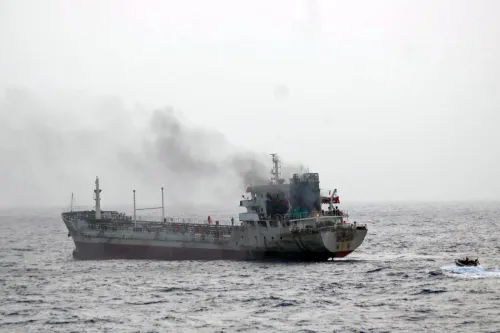
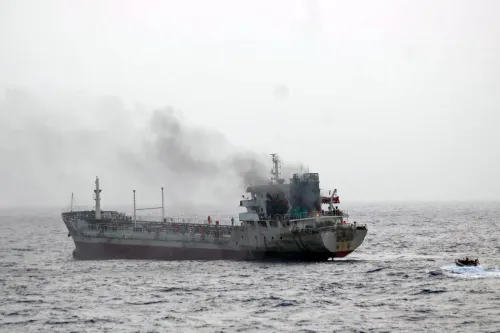
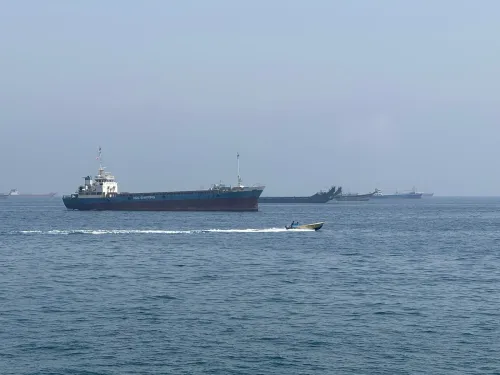
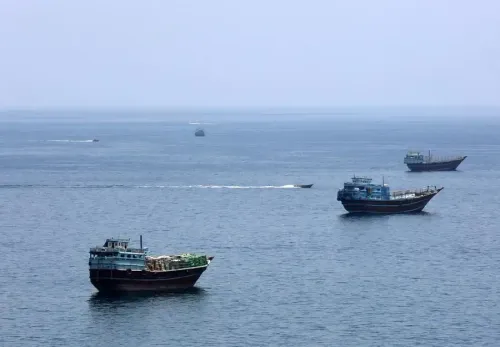
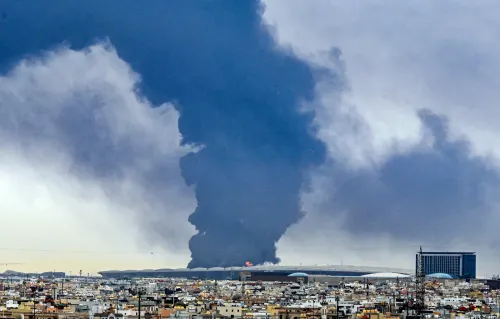
The navy of Iran's Islamic Revolutionary Guard Corps (IRGC) said early Sunday, 8 November that two oil tankers attempting to transit an 'unauthorised' route through the Strait of Hormuz caught fire after striking naval mines. The incident marks a sharp escalation in the ongoing maritime standoff between Iran and US forces in one of the world's most critical shipping corridors.
What the IRGC Said
In a statement carried by the IRGC's official outlet Sepah News, the corps' navy said one tanker struck mines east of the strait while the second hit mines while crossing the waterway. Both vessels had reportedly disabled their navigation and GPS systems prior to the explosions, and were burning following the blasts, according to the statement.
The IRGC issued a stark warning, stating that any vessel cooperating with what it called the 'aggressive' US Army and entering the 'unauthorised' zone in defiance of Iranian maritime regulations would 'definitely' hit naval mines.
US CENTCOM's Parallel Action in the Gulf of Oman
US Central Command (CENTCOM) disclosed on social media platform X that its forces had separately disabled a commercial vessel in the Gulf of Oman after its civilian crew 'ignored repeated warnings and attempted to violate the naval blockade against Iran multiple times.' A US military aircraft fired precision munitions at the stern of the St. Kitts-flagged M/V Huda, disabling the ship after CENTCOM forces directed the crew to abandon targeted spaces. The cargo vessel had reportedly attempted to depart regional waters after calling at an Iranian port.
Scale of the US Naval Blockade
CENTCOM stated that since July, US forces have redirected 147 commercial vessels and disabled five merchant ships that refused to comply with the blockade. It added that US forces had previously destroyed 10 Iranian commercial oil tankers, alleging they formed part of a multibillion-dollar shadow network operated by the IRGC.
Background: How the Standoff Escalated
Iran tightened its grip on the Strait of Hormuz on 28 February, barring safe passage to vessels belonging to or affiliated with Israel and the United States — a move that followed joint US-Israeli strikes on Iranian territory. The United States subsequently imposed a naval blockade against Iran. The strait is a chokepoint through which a significant share of global oil exports transits, making any disruption there a concern for energy markets worldwide.
This is at least the fifth merchant ship disabled by US forces since the blockade began, underscoring the intensifying confrontation. With both sides now deploying mines and precision munitions in overlapping maritime zones, the risk of miscalculation in the strait remains acutely elevated.
Point of View
A disruption that carries real costs for energy-importing economies, including India. The IRGC's public warning that any vessel cooperating with US forces 'will definitely hit mines' is not rhetoric — it is a declared targeting doctrine, and one that places commercial mariners in an impossible position between two blockades.
NationPress
8 Nov 2026
Frequently Asked Questions
What happened to the two tankers in the Strait of Hormuz?
According to the IRGC navy, two oil tankers caught fire on 8 November after striking naval mines while attempting to pass through what Iran described as an 'unauthorised' route in the Strait of Hormuz. Both vessels had reportedly disabled their navigation and GPS systems before the explosions.
What is the US naval blockade against Iran?
The United States imposed a naval blockade against Iran as part of escalating tensions following joint US-Israeli strikes on Iranian territory. Since July, CENTCOM says US forces have redirected 147 commercial vessels and disabled five merchant ships that refused to comply, and have destroyed 10 Iranian oil tankers alleged to be part of an IRGC-run shadow network.
What happened to the M/V Huda in the Gulf of Oman?
US CENTCOM said a military aircraft fired precision munitions at the stern of the St. Kitts-flagged cargo vessel M/V Huda in the Gulf of Oman after its crew repeatedly ignored warnings and allegedly attempted to breach the naval blockade against Iran. The ship was disabled after the crew was directed to abandon targeted spaces.
Why did Iran restrict passage through the Strait of Hormuz?
Iran tightened its control over the Strait of Hormuz on 28 February, barring safe passage to vessels belonging to or affiliated with Israel and the United States, citing joint US-Israeli strikes on Iranian territory as justification.
How does this affect global oil shipping?
The Strait of Hormuz is one of the world's most critical oil transit chokepoints. Active mine deployment by Iran and precision strikes by US forces in overlapping maritime zones raise the risk of disruption to global energy flows, with potential consequences for oil prices and energy-importing economies.