Two oil tankers catch fire at Strait of Hormuz after hitting mines: IRGC
Synopsis
Two oil tankers are on fire at the Strait of Hormuz after striking Iranian naval mines — and Tehran says the waterway stays closed until Washington meets seven undisclosed conditions. With supertankers ablaze, drones seized, and US Central Command blamed, this is the most dramatic escalation yet in Iran's chokehold on a passage that carries a fifth of the world's oil.
Key Takeaways
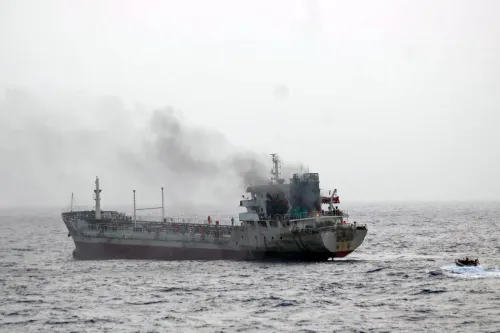
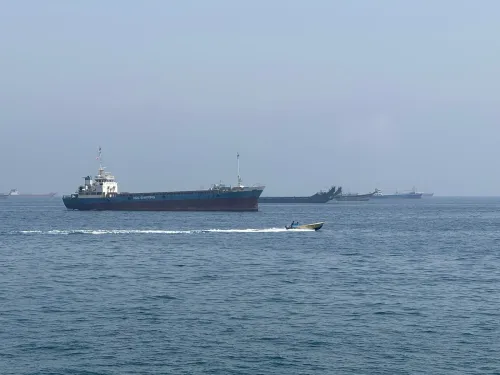
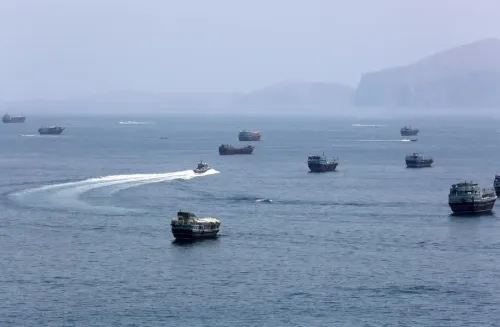
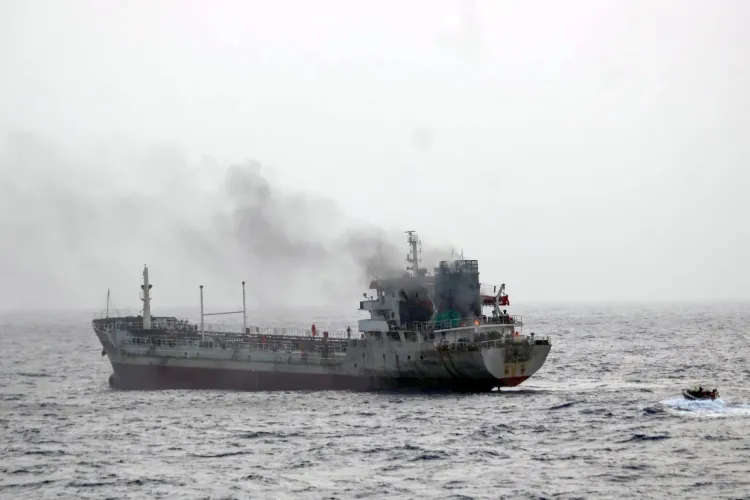
Iran's IRGC reported two oil tankers caught fire after striking naval mines at the Strait of Hormuz on 6 November 2026 .
The day before, three vessels including two supertankers caught fire in two separate overnight incidents at the same passage.
The IRGC alleged the vessels had disabled navigation and identification systems and were transiting an 'unauthorised' southern route.
The IRGC separately seized two uncrewed combat drones using electronic warfare, landing them undamaged.
Tehran declared the Strait of Hormuz will remain closed until the US meets seven conditions , which were not publicly specified.
The IRGC's claims have not been independently verified; no US military statement had been issued at time of publication.
Iran's Islamic Revolutionary Guard Corps (IRGC) announced on Friday, 6 November 2026 that two oil tankers attempting to transit the Strait of Hormuz through what it described as an 'unauthorised' route caught fire after striking naval mines. The IRGC's navy stated the vessels had disabled their navigation and identification systems at the time of the incident.
What the IRGC Said
In a statement published on the IRGC's official outlet Sepah News, the navy alleged that the tankers were trying to exit the strait through an 'unauthorised' passage with what it characterised as the support of the 'aggressive and terrorist' US Army. The IRGC added that attempts by US Central Command forces to compel vessels across the mined corridor would result in 'consecutive and abject' defeats, according to the statement.
The IRGC further declared that the Strait of Hormuz remains closed, and that no change to the waterway's status will occur unless the United States fulfils Iran's seven conditions — the specific terms of which were not detailed in the statement.
Thursday's Earlier Incidents
The Friday announcement followed a statement the previous day in which the IRGC said three vessels, including two supertankers, had caught fire in two separate incidents overnight while crossing the strait through what it called an 'illegal and unauthorised' southern route. In the first incident, one tanker caught fire after striking mines while navigating the disputed passage. In the second, another tanker caught fire east of the waterway, and a tugboat that had approached to help contain the blaze also caught fire.
Drone Seizure and US Accusations
Separately, the IRGC claimed that members of its naval electronic warfare unit took control of two 'invading' low-cost uncrewed combat attack drones and landed them without damage. The IRGC also accused the US government of imposing 'very heavy' insurance costs on American taxpayers and regional allies by allegedly directing vessels into the mined route.
Strategic Context and What It Means
The Strait of Hormuz is one of the world's most critical oil chokepoints, with roughly 20% of global petroleum trade passing through it. This latest episode marks a significant escalation in the ongoing standoff between Iran and US-allied maritime operations in the Persian Gulf. The incidents follow a broader pattern of Iranian naval assertiveness in the strait, including previous vessel seizures and confrontations with US warships. The IRGC's claims have not been independently verified, and no statement from the US military or the tanker operators had been issued at the time of publication.
Point of View
Disabled transponders, US complicity — is a carefully constructed legal and narrative shield, designed to place liability on the vessels and Washington rather than on Iran's mining of an international waterway. What is striking is the escalation in assets targeted: from seizures of individual ships to now disabling supertankers with mines, and the addition of drone interdiction in the same operation. The claim that the strait stays closed until seven unnamed US conditions are met is a maximalist opening position, not a resolution pathway. Global energy markets will be watching whether this triggers insurance flight, shipping reroutes via the Cape of Good Hope, and whether Washington responds with a naval escort programme — each of which carries its own escalation risk.
NationPress
6 Nov 2026
Frequently Asked Questions
What happened to the oil tankers at the Strait of Hormuz?
Iran's IRGC reported that two oil tankers caught fire after striking naval mines while attempting to cross the Strait of Hormuz through what the IRGC described as an 'unauthorised' route on 6 November 2026. A day earlier, three vessels including two supertankers caught fire in two separate overnight incidents at the same waterway.
Why is the Strait of Hormuz closed, according to Iran?
The IRGC declared that the Strait of Hormuz remains closed and will stay so until the United States meets seven conditions set by Iran. The specific terms of those conditions were not disclosed in the IRGC's public statement.
Did the US respond to the IRGC's claims?
No US military statement had been issued in response to the IRGC's claims at the time of publication. The IRGC alleged that US Central Command was supporting the tankers in crossing the mined route, a claim that has not been independently verified.
What are the broader implications of this incident for global oil supply?
The Strait of Hormuz carries roughly 20% of the world's petroleum trade, making it one of the most critical energy chokepoints globally. Tanker fires, mine risks, and a declared closure could drive up insurance costs, prompt shipping reroutes around the Cape of Good Hope, and cause volatility in global oil prices.
What else did the IRGC claim during the same operation?
The IRGC said its naval electronic warfare unit seized two uncrewed low-cost combat attack drones and landed them undamaged. It also accused the US of imposing heavy insurance costs on American taxpayers and regional allies by directing vessels through the mined corridor.