Iran's IRGC mines Hormuz Strait, two oil tankers catch fire; US drone shot down
Synopsis
Iran's IRGC has openly claimed responsibility for mining the Strait of Hormuz, with two oil tankers catching fire on 20 October after hitting those mines — and a US MQ-9 Reaper drone downed in the same waters the night before. With Tehran vowing retaliation 'with equal or greater force' and Trump floating a strike on Pickaxe Mountain, the world's most critical oil chokepoint is now at the centre of a fast-moving military and nuclear standoff.
Key Takeaways
Iran's IRGC confirmed two 'violating' oil tankers caught fire on 20 October after striking its naval mines in the Strait of Hormuz .
The IRGC also claimed its air defence forces shot down a US MQ-9 Reaper drone on Monday night over the strait.
Foreign Ministry spokesperson Esmaeil Baghaei vowed Iran will respond to any strike 'with equal or greater force.' US President Donald Trump had warned that Washington may target Iran's Pickaxe Mountain , reportedly tied to its nuclear programme.
Baghaei rejected social media claims of a US message about an imminent strike on Pickaxe Mountain, and said no nuclear-related talks were held during Lavrov 's recent Tehran visit.
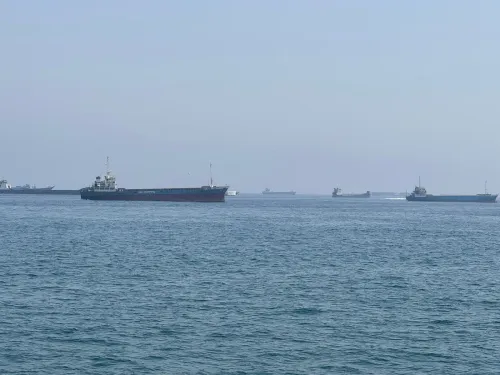
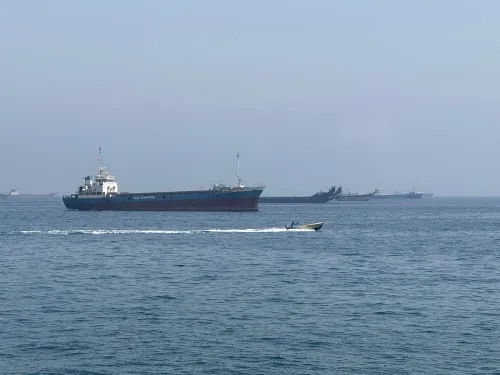
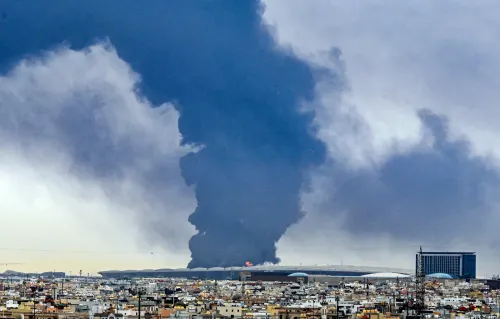
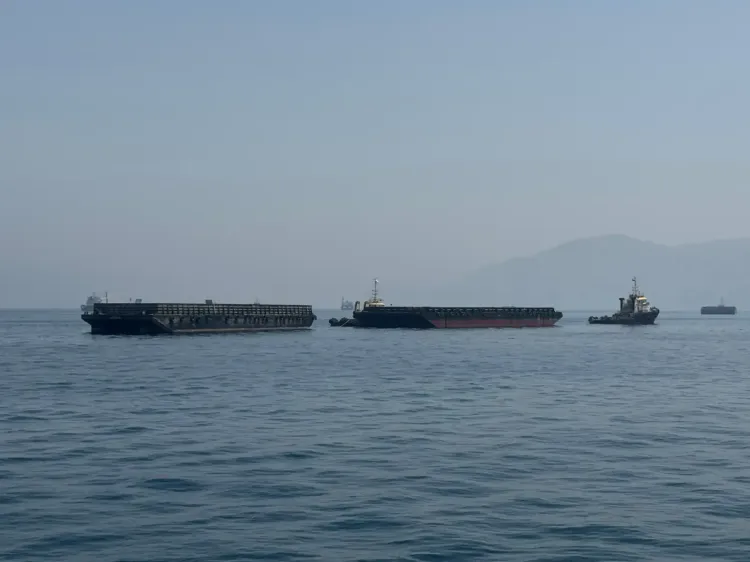
Iran's Islamic Revolutionary Guard Corps (IRGC) on Tuesday, 20 October said two 'violating' oil tankers caught fire in the Strait of Hormuz after colliding with naval mines laid by its forces, in what marks a sharp escalation of tensions in one of the world's most critical shipping corridors. The IRGC also separately claimed to have shot down a US MQ-9 Reaper drone on Monday night over the same waterway.
What the IRGC Said
In a statement published on its official outlet Sepah News, the IRGC said the two oil tankers attempted to cross the strait via what it described as the 'illegal' route to the south of the waterway. The corps warned that any attempt to traverse the mined path is 'illegal' and will result only in the burning of 'violators' assets.' The IRGC added that its air defence forces shot down the US MQ-9 Reaper drone late Monday night, stating that its forces are 'constantly monitoring the situation in the region' and will continue to exercise sovereignty over the strait.
Iran's Foreign Ministry Warns of Retaliation
At a weekly press conference in Tehran on Tuesday, Foreign Ministry spokesperson Esmaeil Baghaei declared that Iran will not allow any strike against it to go unanswered, vowing to respond 'with equal or greater force.' Baghaei dismissed suggestions that Tehran would refrain from retaliating as 'fantasies,' saying Iran has demonstrated over the past two years that the era of 'hit and run' is over.
Baghaei also rejected claims circulating on social media that the United States had sent a message announcing its intention to attack Iran's Pickaxe Mountain, a site reportedly linked to the country's nuclear programme. He said no talks on the details of Iran's nuclear issue were held between Tehran and Moscow during Russian Foreign Minister Sergei Lavrov's recent visit to Iran.
Trump's Nuclear Warning and the Pickaxe Mountain Question
The backdrop to these developments includes remarks by US President Donald Trump, who said in an interview on Thursday that the United States may have to target Iran's Pickaxe Mountain, stressing that Washington seeks to ensure Tehran does not develop nuclear weapons. The comment has heightened anxieties over a potential direct military confrontation between the two countries.
Why the Strait of Hormuz Matters
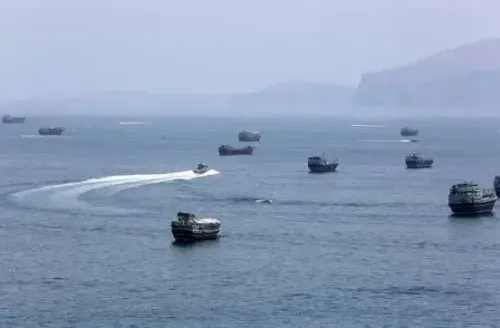
The Strait of Hormuz is the world's most critical oil chokepoint, with roughly 20% of global oil supply passing through it daily. Any disruption to navigation — particularly mine-laying by the IRGC — carries immediate implications for global energy markets, insurance rates for tankers, and regional stability. This is not the first time Iran has signalled control over the strait; similar standoffs occurred during the 'tanker wars' of the 1980s and during heightened tensions in 2019.
With the IRGC formally claiming responsibility for both the mine strikes and the drone shoot-down, and Tehran's Foreign Ministry hardening its retaliatory posture, the situation remains volatile and closely watched by global powers and energy markets alike.
Point of View
Iran is unilaterally rewriting the rules of maritime passage through a waterway governed by international law — a challenge that the international community has so far failed to answer coherently.
NationPress
21 Oct 2026
Frequently Asked Questions
What happened in the Strait of Hormuz on 20 October 2026?
Iran's IRGC said two oil tankers caught fire after striking naval mines it had laid in the Strait of Hormuz on 20 October. The corps stated the tankers were attempting to cross via a route it deemed 'illegal,' and warned that such crossings would result in the destruction of 'violators' assets.'
Did Iran shoot down a US drone near the Strait of Hormuz?
Yes. The IRGC claimed its air defence forces shot down a US MQ-9 Reaper drone late Monday night, 19 October, over the Strait of Hormuz. The corps said its forces are continuously monitoring the region.
What did Iran's Foreign Ministry say about possible US strikes?
Spokesperson Esmaeil Baghaei said Iran will not allow any strike to go unanswered and will retaliate with equal or greater force. He also rejected social media reports of a US message threatening to target Pickaxe Mountain, and dismissed suggestions Iran would hold back as 'fantasies.'
What is Pickaxe Mountain and why is it significant?
Pickaxe Mountain is a site in Iran reportedly linked to its nuclear programme. US President Donald Trump said in a Thursday interview that Washington may have to target it to prevent Iran from developing nuclear weapons, raising fears of a direct military confrontation.
Why is the Strait of Hormuz so strategically important?
The Strait of Hormuz is the world's most critical oil chokepoint, through which roughly 20% of global oil supplies transit daily. Any disruption — including mine-laying — has immediate consequences for global energy prices, tanker insurance, and regional security.