Second supertanker explodes in Strait of Hormuz after hitting mine: IRGC
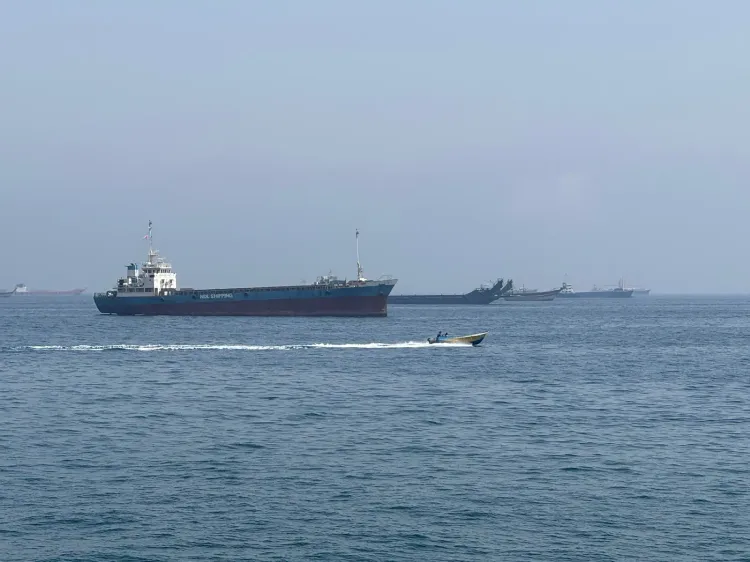
Synopsis
Two supertankers, each carrying over 2 million barrels of crude oil, exploded in the Strait of Hormuz on the same day after hitting naval mines — the third such incident in a week. With Iran's IRGC openly warning of 'decisive responses' to vessels it deems in violation, the world's most critical oil chokepoint is now an active minefield, and global energy markets face a serious new risk variable.
Key Takeaways
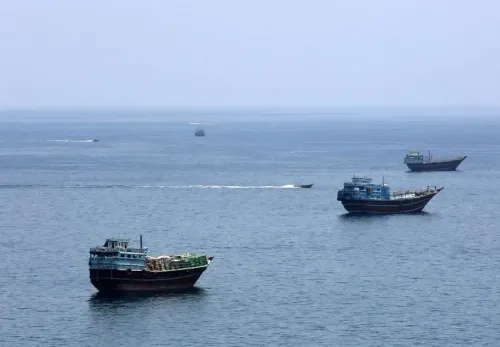
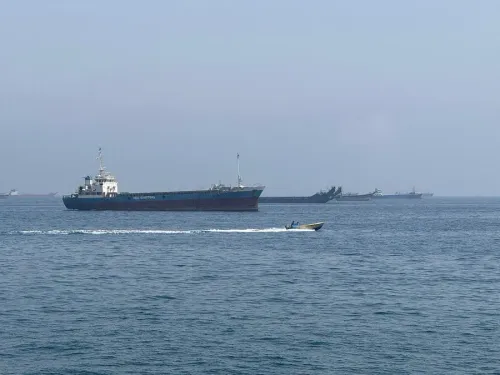
Iran's IRGC Navy reported a second supertanker explosion in the Strait of Hormuz on Saturday, 17 October , hours after a similar first incident the same day.
Both vessels were reportedly carrying over 2 million barrels of crude oil and had disabled their GPS and radar systems .
A container ship had already sunk in the same strait on Wednesday after hitting a naval mine — marking at least three incidents within days.
IRGC Navy Commander Ali Azmaei warned that vessels violating shipping rules under US 'deception or provocation' would face a 'decisive response.' Iranian President Masoud Pezeshkian separately denied that Iran seeks to develop nuclear weapons, calling contrary claims a 'lie.' The Strait of Hormuz handles roughly 20% of global oil supply, making the incidents a potential threat to international energy markets.
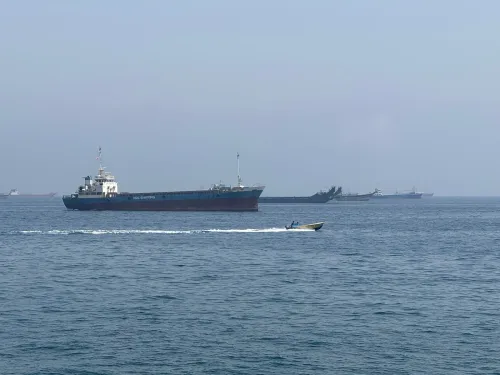
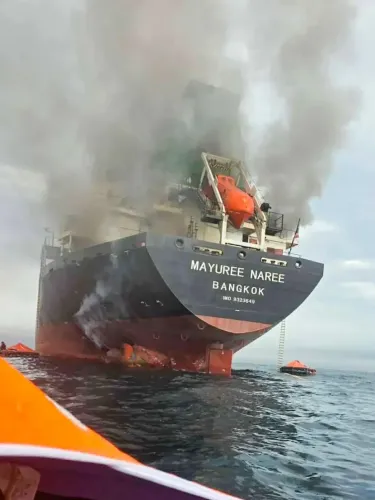
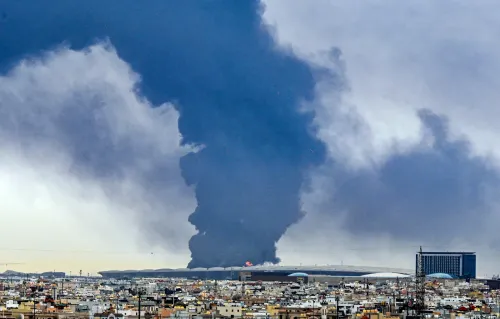
Iran's Islamic Revolution Guard Corps (IRGC) Navy announced on Saturday, 17 October that a second supertanker had exploded in the Strait of Hormuz after striking a naval mine — the latest in a series of maritime incidents that have dramatically escalated tensions in one of the world's most critical oil shipping lanes. The blast, which occurred on Saturday morning, triggered what the IRGC described as a 'huge' fire aboard a vessel reportedly carrying over 2 million barrels of crude oil.
What the IRGC Said
According to a statement published on the IRGC's official outlet Sepah News, the second tanker had disabled its GPS and radar systems and was attempting to cross the strait via what Iranian authorities characterised as an 'illegal' route. The explosion reportedly occurred in the vessel's engine room, bringing the supertanker to a halt. The IRGC Navy labelled both vessels as 'violating' tankers, a term it has used consistently to describe ships it accuses of breaching Iranian maritime rules.
A Third Incident in Days
The Saturday explosions follow a similar incident earlier in the week. On Wednesday, the IRGC Navy reported that a container ship attempting to transit the Strait of Hormuz through an 'unauthorised and high-risk' route had sunk after striking a naval mine south of the waterway. That vessel was also said to have been carrying cargo through what Iranian authorities deemed an unapproved corridor. This marks at least three separate mine-related maritime incidents within days in the same strategic chokepoint.
Iran's Warning to Shipping
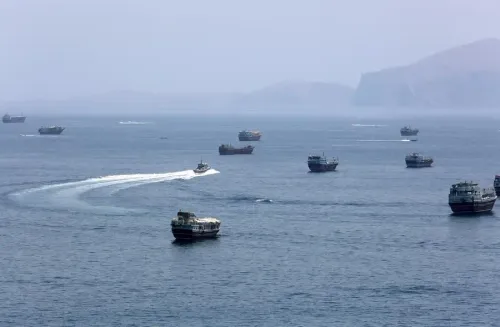
Speaking to state broadcaster IRIB TV on Tuesday, IRGC Navy Commander Ali Azmaei said Iranian forces are controlling the Persian Gulf and the Strait of Hormuz 'round the clock,' with the Gulf of Oman under the supervision of Iran's conventional navy. Azmaei warned that any vessel violating shipping rules under what he described as US 'deception or provocation' would face a 'decisive response' from Iran. The remarks signal a deliberate posture of maritime enforcement, raising alarm among global shipping operators and energy markets.
Iran's Nuclear Stance Amid Tensions
Separately, Iranian President Masoud Pezeshkian on Friday reiterated that Iran does not seek to develop nuclear weapons. Speaking on the sidelines of the 17th Conference of the Parties (COP17) to the Convention on Biological Diversity in Yerevan, Armenia, during a meeting with Georgian Prime Minister Irakli Kobakhidze, Pezeshkian called claims to the contrary a 'lie.' He cited what he described as the clear positions of Iran's late Supreme Leader Ali Khamenei regarding the prohibition of nuclear weapons development. The statement, published on his office's website, comes as Iran faces intensifying international scrutiny over its nuclear programme.
Why This Matters for Global Energy
The Strait of Hormuz is the world's most critical oil chokepoint, with roughly 20% of global oil supply transiting it daily. Repeated mine strikes on supertankers — each reportedly carrying over 2 million barrels — pose a direct threat to energy supply chains and could drive crude oil prices sharply higher. This comes amid already-elevated geopolitical risk in the broader Middle East region. Shipping insurers and tanker operators are expected to reassess risk premiums and route planning in the wake of the incidents, with potential knock-on effects for global fuel prices.
Point of View
Labelling targeted vessels as 'violating' and warning of 'decisive responses,' suggests Iran is asserting a new, self-defined enforcement regime over the world's most critical oil lane. What mainstream coverage underweights is the insurance and routing crisis this will trigger: even if no further explosions occur, the mere credible threat of mines will push tanker premiums sharply higher and force rerouting, adding cost and time to global crude flows. The nuclear denial from Pezeshkian, delivered simultaneously, reads less like reassurance and more like a diplomatic hedge — Iran signalling it can escalate conventionally while keeping the nuclear question formally off the table.
NationPress
17 Oct 2026
Frequently Asked Questions
What happened to the supertankers in the Strait of Hormuz?
Iran's IRGC Navy reported that two supertankers exploded in the Strait of Hormuz on Saturday, 17 October, after each struck a naval mine. Both vessels were reportedly carrying over 2 million barrels of crude oil and had disabled their GPS and radar systems while attempting to use routes Iranian authorities described as unauthorised.
How many maritime incidents have occurred in the Strait of Hormuz this week?
At least three incidents have been reported within days. A container ship sank on Wednesday after hitting a naval mine, and two supertankers exploded on Saturday morning in separate incidents, all in or near the Strait of Hormuz.
What has Iran said about the incidents?
The IRGC Navy labelled the affected vessels as 'violating' tankers that were using illegal or unauthorised routes. IRGC Navy Commander Ali Azmaei warned on Tuesday that vessels breaching shipping rules under what he called US 'deception or provocation' would face a decisive response from Iran.
Why does the Strait of Hormuz matter for global energy?
The Strait of Hormuz is the world's most critical oil chokepoint, with approximately 20% of global oil supply passing through it daily. Repeated mine strikes on large crude carriers directly threaten energy supply chains and could push global oil prices significantly higher.
What did Iranian President Pezeshkian say about nuclear weapons?
President Masoud Pezeshkian, speaking on the sidelines of COP17 in Yerevan on Friday, reiterated that Iran does not seek to develop nuclear weapons and called claims to the contrary a 'lie.' He cited what he described as the late Supreme Leader Ali Khamenei's clear positions prohibiting nuclear weapons development.