Iran navy intercepts 'violating' oil tanker on fire east of Hormuz Strait
Synopsis
Iran has declared the Strait of Hormuz 'completely closed' and intercepted a second burning oil tanker in two days near its eastern approaches. With the IRGC controlling western waters and the army's navy dominating the east, Tehran is signalling a dramatic escalation in its enforcement posture over one of the world's most critical energy chokepoints.
Key Takeaways
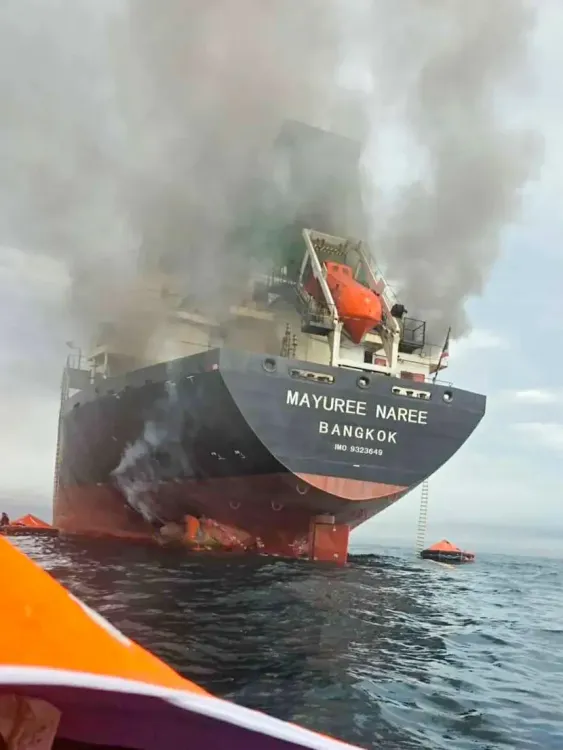
Iran's Army Navy detected a 'violating' oil tanker on fire east of the Strait of Hormuz on 15 October 2026 — the second such incident in two days.
The tanker had allegedly switched off its tracking systems before entering the restricted zone.
Habibollah Sayyari , Deputy Chief of the Iranian Army for Coordination, declared the Strait of Hormuz completely closed on Thursday.
The IRGC navy controls the strait's western waters ; the army's navy controls the eastern waters up to the north of the Gulf of Oman .
Iran has warned all vessels to coordinate with its armed forces and keep tracking systems active for safe passage.
Approximately 20% of global oil trade transits the Strait of Hormuz daily, making the standoff a major energy market risk.
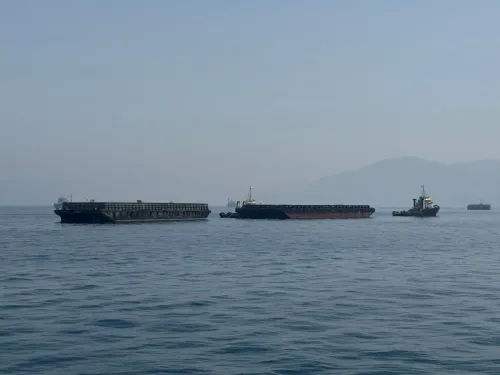
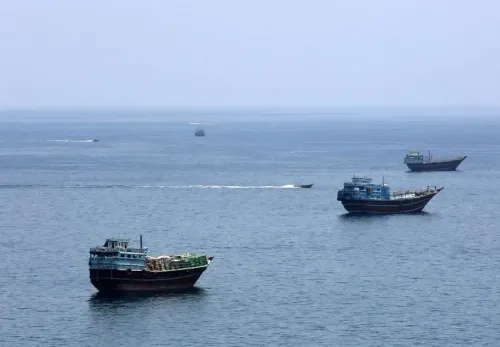
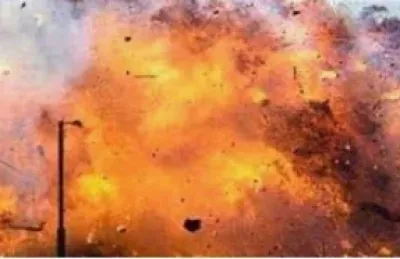
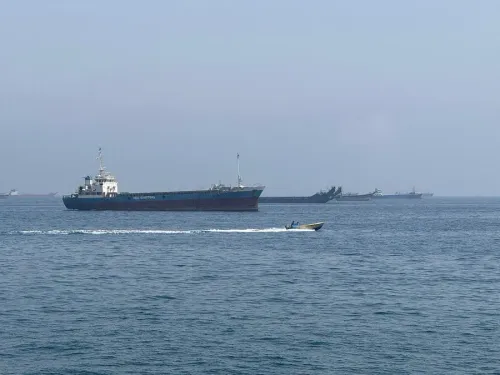
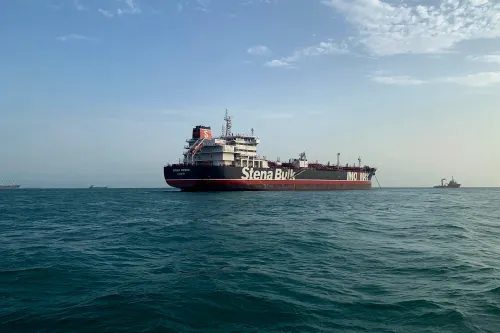
Iran's Army Navy announced on Thursday, 15 October 2026, that its patrol teams detected a 'violating' oil tanker engulfed in fire while attempting to cross the 'forbidden region' east of the Strait of Hormuz. The vessel had allegedly switched off its tracking systems before entering the restricted zone, according to a statement published on the Iranian Army's official website.
What the Iranian Navy Said
In its official statement, the navy said its teams were conducting routine patrolling and control operations over the strait's eastern waters when they detected the burning tanker. The navy stressed that its forces maintain 'full control and dominance' over the eastern approaches to the Strait of Hormuz, encompassing the Arabian Sea and the Sea of Oman.
Authorities strongly advised all vessels to refrain from disabling electronic tracking equipment and to coordinate with Iran's armed forces for safe passage through the strait — warning that non-compliance would be treated as a violation.
A Second Incident in the Same Week
Notably, this is the second such incident in just two days. On Tuesday, the navy reported detecting another 'violating' oil tanker that had sustained damage and caught fire while crossing the same forbidden zone east of Hormuz. The back-to-back incidents point to a pattern of escalating Iranian naval enforcement in the region's critical waterway.
Strait of Hormuz 'Completely Closed,' Army Official Says
Habibollah Sayyari, Deputy Chief of the Iranian Army for Coordination, declared on Thursday that the Strait of Hormuz is completely closed, according to a statement issued by the army. Sayyari outlined a clear division of control: the Islamic Revolution Guard Corps (IRGC) navy holds authority over the strait's western waters, while the army's naval forces exercise full monitoring over the eastern waters up to the north of the Gulf of Oman.
Why This Matters for Global Energy Markets
The Strait of Hormuz is one of the world's most critical energy chokepoints, with approximately 20% of global oil trade passing through it daily. Any sustained disruption to tanker traffic or enforcement actions in the region can have immediate knock-on effects on crude oil prices and global supply chains. This comes amid already-elevated geopolitical tensions in the Middle East, making Iranian naval movements a closely watched flashpoint for energy markets and international shipping.
International Shipping on Alert
Iran's advisory to vessels — requiring prior coordination with its armed forces for Hormuz passage — marks a significant assertion of territorial control that could complicate navigation for commercial shipping. International maritime regulators and the navies of the United States, United Kingdom, and other Gulf states are expected to monitor the situation closely. The next few days will be crucial in determining whether Iran's 'closed strait' declaration translates into active interdiction of commercial vessels.
Point of View
Not a tactical improvisation. What mainstream coverage risks underplaying is the jurisdictional assertion embedded in Iran's advisory: requiring foreign vessels to coordinate with Tehran's armed forces for Hormuz passage is a de facto demand for transit permission — a step that directly challenges the principle of freedom of navigation. With crude markets already sensitive and Western naval assets stretched, Tehran may be probing just how far it can push enforcement before triggering a multilateral response.
NationPress
16 Oct 2026
Frequently Asked Questions
What happened to the oil tanker east of the Strait of Hormuz?
Iran's Army Navy detected a 'violating' oil tanker on fire on 15 October 2026, while it was attempting to cross the 'forbidden region' east of the Strait of Hormuz with its tracking systems switched off. It is the second such incident reported by Iran's navy in two days.
Has Iran declared the Strait of Hormuz closed?
Yes. Habibollah Sayyari, Deputy Chief of the Iranian Army for Coordination, declared on Thursday that the Strait of Hormuz is completely closed, according to an official army statement. The IRGC navy controls the western passage, while the army's naval forces control the eastern waters up to the Gulf of Oman.
Why is the Strait of Hormuz significant for global oil supply?
The Strait of Hormuz is the world's most critical oil chokepoint, with roughly 20% of global oil trade passing through it daily. Any disruption to tanker movement can rapidly affect crude oil prices and energy supplies across Asia, Europe, and North America.
What has Iran advised international shipping?
Iran has strongly advised all vessels to keep their electronic tracking systems active and to coordinate with Iran's armed forces before transiting the Strait of Hormuz. Tehran warned that disabling tracking equipment or entering restricted zones without authorisation constitutes a violation.
Is this a new escalation or part of an ongoing pattern?
This represents a significant escalation. While Iran has periodically seized or harassed vessels in the past, the formal declaration of the strait as 'closed' combined with two back-to-back tanker fire incidents in 48 hours signals a more assertive and coordinated enforcement posture than seen in recent months.