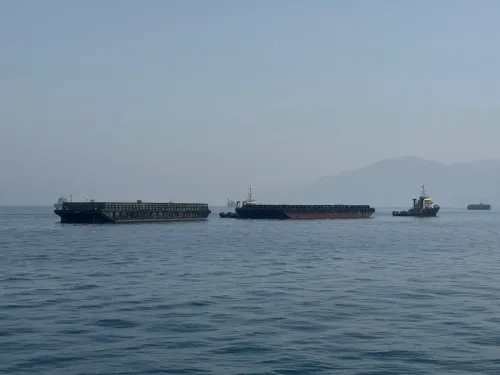
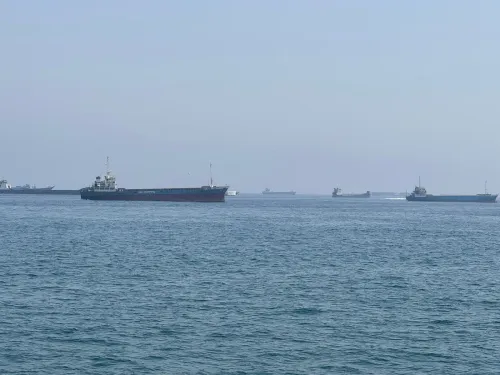
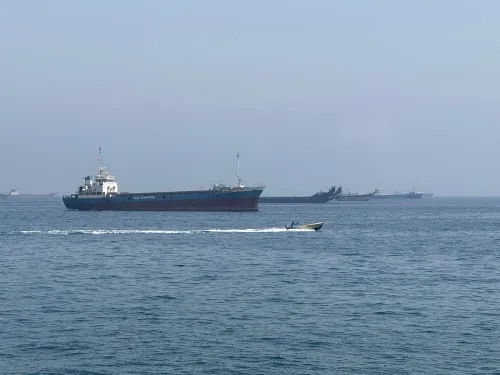
Iran IRGC mines hit 2 oil tankers in Strait of Hormuz, supertanker ablaze
Synopsis
Two oil tankers — one a supertanker now burning — struck IRGC-laid naval mines in the Strait of Hormuz on 2 November, as Iran's Supreme Leader ordered unlimited-geography retaliation against US and Israeli 'enemies.' With the US reportedly briefing Trump on Iran strike options and Gulf states warned to prepare, the world's most critical oil chokepoint has become the front line of a potential direct US-Iran confrontation.
Key Takeaways
Iran's IRGC announced two oil tankers, including a supertanker , struck naval mines and exploded in the Strait of Hormuz on 2 November 2026 .
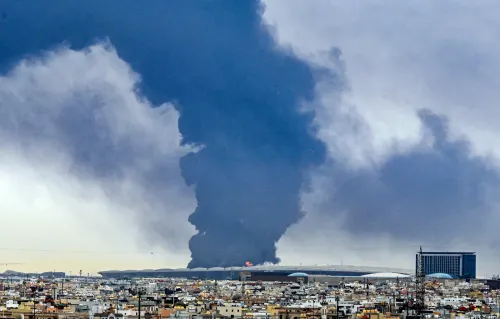
The supertanker is reportedly 'burning' after a 'massive explosion'; both vessels had disabled navigation and identification systems.
Iran has barred passage through Hormuz to vessels affiliated with Israel and the United States since 28 February .
Supreme Leader Mojtaba Khamenei ordered military commanders to respond to any threat 'without geographical limitations.' According to The Wall Street Journal , President Trump was briefed on military options against Iran; Gulf states were reportedly told to prepare for a possible US strike.
The Strait of Hormuz carries approximately 20% of global crude oil and petroleum products.
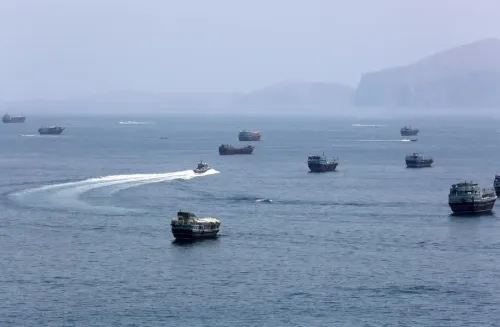
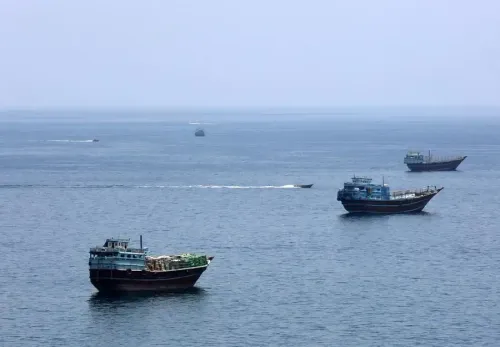
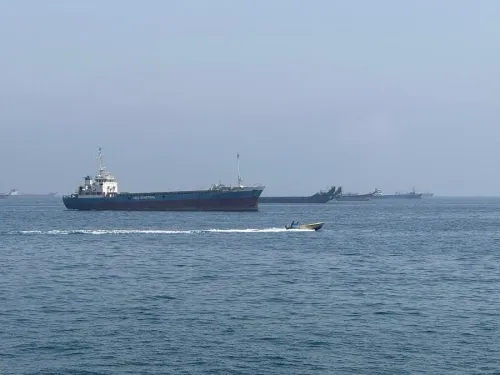
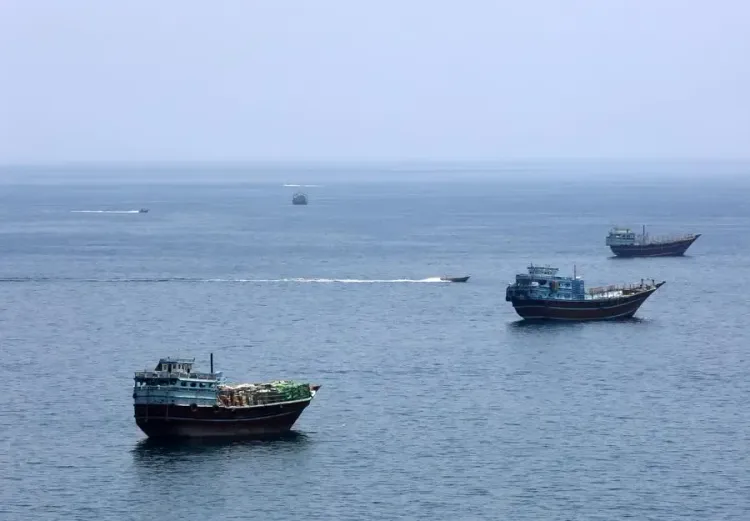
The navy of Iran's Islamic Revolution Guard Corps (IRGC) announced on Sunday, 2 November 2026 that two oil tankers — including a supertanker — suffered explosions and were halted after striking naval mines in the Strait of Hormuz. The IRGC described the vessels as 'violating' tankers navigating an 'unauthorised' route through the strategically critical waterway.
What Happened in the Strait
According to a statement published on the IRGC's official outlet Sepah News, the supertanker 'suffered a massive explosion and is burning.' Both vessels had reportedly switched off their navigation and identification systems at the time of the incident. The IRGC said the tankers were transiting a route it had designated as off-limits.
Iran reportedly tightened its control over the Strait of Hormuz on 28 February, barring safe passage to vessels belonging to or affiliated with Israel and the United States — a move Tehran framed as retaliation for joint US-Israeli strikes on Iranian territory.
IRGC Signals Wider Escalation
Separately, IRGC spokesperson Hossein Mohebbi addressed a conference in Iran's southeastern Kerman province on Sunday, declaring that Iranian forces had 'determined a vast battlefield to inflict damage on the enemy and achieve complete deterrence.' He said Iranian forces were more prepared than ever 'to respond decisively to the enemy.'
Mohebbi also cited recent orders from Supreme Leader Mojtaba Khamenei to senior military commanders, stating that Khamenei's directives 'opened a new chapter of war.' He emphasised Khamenei's position that 'there is no geographical limitation in the war with the United States,' adding that the IRGC had placed identifying new enemy targets and planning operations in new geographical regions on its formal agenda.
On Saturday, a separate statement from Iran's leadership had instructed senior armed forces commanders to ensure any threat from 'enemies' is met with an 'immediate and effective' response, explicitly without geographical limitations.
US Military Options on the Table
The tanker explosions and Iranian warnings come against a backdrop of sharply rising US-Iran tensions. According to The Wall Street Journal, US President Donald Trump was briefed on Thursday by top military officials on options regarding Iran. The publication also reported that the United States had informed several Gulf countries to prepare for a possible brief but intense military campaign against Iran following the US midterm elections.
Why the Strait of Hormuz Matters
The Strait of Hormuz is the world's most critical oil chokepoint, through which roughly 20% of global crude oil and petroleum products transit. Any sustained disruption risks immediate shocks to global energy markets and supply chains. This is not the first time Iran has used the strait as a pressure lever — the country has a documented history of tanker seizures and incidents in the waterway dating back to the 1980s 'Tanker War.'
Notably, the simultaneous triggering of naval mines, IRGC battlefield declarations, and reported US military planning signals a convergence of escalatory moves that analysts warn could rapidly spiral beyond either side's intent. With the US midterm elections providing a potential political inflection point, the coming days will be closely watched by energy markets and regional governments alike.
Point of View
Which could rapidly internationalise the confrontation. The timing is also pointed: with US midterm elections just passed and Trump being briefed on strike options, Tehran appears to be daring Washington to act first, betting that domestic political hesitation will restrain a military response. If oil markets read this as a sustained blockade threat rather than a one-off incident, the price signal could arrive before any missile does.
NationPress
2 Nov 2026
Frequently Asked Questions
What happened to the oil tankers in the Strait of Hormuz?
Two oil tankers, including a supertanker, struck IRGC-laid naval mines in the Strait of Hormuz on 2 November 2026 and suffered explosions. The supertanker is reportedly burning after a 'massive explosion,' and both vessels had switched off their navigation and identification systems.
Why is Iran blocking tankers in the Strait of Hormuz?
Iran tightened control over the strait on 28 February, barring passage to vessels affiliated with Israel and the United States following joint US-Israeli strikes on Iranian territory. The IRGC describes vessels using 'unauthorised' routes as 'violating' tankers.
What did Iran's Supreme Leader order military commanders?
Supreme Leader Mojtaba Khamenei ordered senior armed forces commanders to respond to any threat from 'enemies' with an 'immediate and effective' response and explicitly without geographical limitations. The IRGC said this directive 'opened a new chapter of war.'
Is the United States preparing military action against Iran?
According to The Wall Street Journal, President Trump was briefed by top US military officials on options regarding Iran on Thursday. The US also reportedly informed several Gulf countries to prepare for a possible brief but intense military campaign against Iran following the US midterm elections.
Why does the Strait of Hormuz matter globally?
The Strait of Hormuz is the world's most critical oil chokepoint, through which roughly 20% of global crude oil and petroleum products pass. Any sustained disruption would send immediate shockwaves through global energy markets and supply chains.