Lalan Singh visits PM SHRI school in Sikkim's Tingda
Synopsis
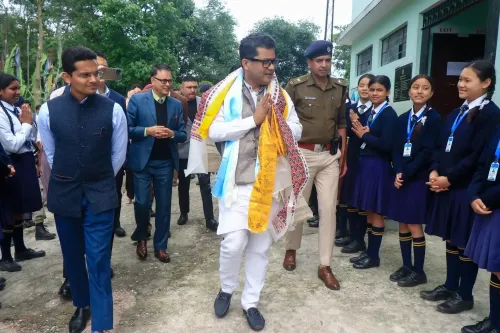
Union Minister Rajiv Ranjan Singh visited the PM SHRI Government Primary School in Tingda, Sikkim on November 2, interacting with teachers and students to assess the learning environment and facilities under the central school-upgrade scheme.
Key Takeaways
Union Minister Rajiv Ranjan Singh visited the PM SHRI Government Primary School in Tingda, Sikkim on November 2, 2026 , the second day of his state tour.
The minister held direct conversations with teachers and students on the quality of education, available facilities, and their experiences.
The PM SHRI (Pradhan Mantri Schools for Rising India) scheme was launched in 2022 to upgrade selected government schools into model institutions across India.
Sikkim and the Northeast are priority regions under PM SHRI due to remote terrain and the need to strengthen foundational education infrastructure.
The visit is consistent with a pattern of central ministers conducting on-ground inspections of scheme beneficiaries to monitor real-time implementation.
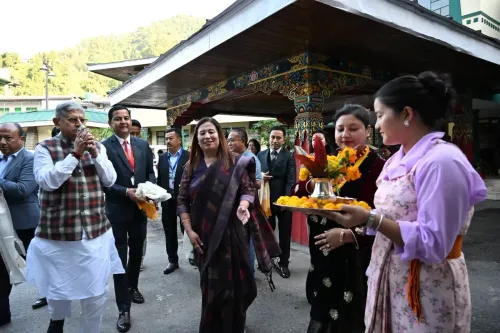
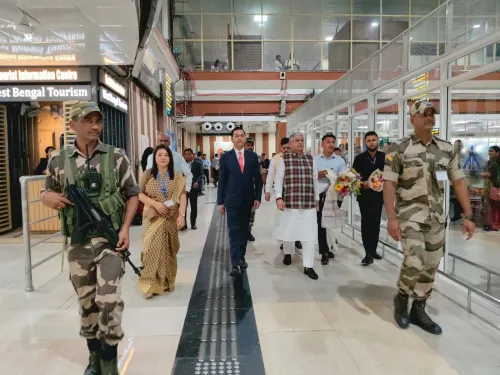
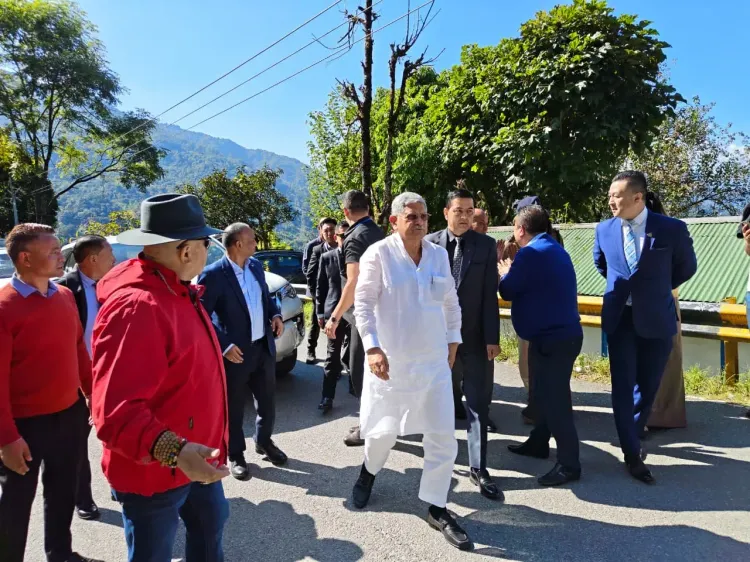
On the second day of his Sikkim visit, Union Panchayati Raj and Fisheries Minister Rajiv Ranjan Singh stepped into the PM SHRI Government Primary School at Tingda on Monday, November 2, 2026 — sitting down with teachers and children to hear, first-hand, how India's flagship school-upgrade scheme is actually landing in one of its most remote corners.
Posting on X in Hindi, the minister said he held 'aatmiya samvad' — a warm, personal exchange — with the school's teachers and students, gathering feedback on the learning environment, available facilities, and their day-to-day experiences. The visit was part of a two-day tour of the northeastern state focused on assessing central scheme implementation on the ground.
What the PM SHRI scheme promises for schools like Tingda's
Launched by the Ministry of Education in 2022, the Pradhan Mantri Schools for Rising India (PM SHRI) scheme was designed to transform selected government schools into model institutions — upgrading classrooms, laboratories, libraries and digital infrastructure while raising teaching standards. The Northeast, with its challenging terrain and historically under-resourced public schools, has been a deliberate focus area for the scheme's rollout.
Sikkim's geography makes delivery difficult; the hills that isolate communities also isolate classrooms. A school in Tingda receiving PM SHRI support signals an intent to push foundational education investment beyond easily accessible urban centres.
Why ministers walk the halls — not just read the reports
Union ministers conducting in-person school visits under centrally sponsored schemes serve a dual purpose: they generate political visibility for the programme, and — more substantively — they create a feedback loop that desk-bound monitoring cannot. Teachers in remote postings rarely get a direct line to Delhi. A minister in the classroom, even briefly, compresses that distance.
Singh's engagement fits a broader pattern of senior NDA government figures making visible rounds of scheme beneficiaries ahead of potential legislative sessions and budget cycles, signalling active oversight rather than passive funding.
For the children of Tingda, the visit is a fleeting moment of national attention on their school. Whether it translates into faster infrastructure upgrades or sustained resource flows is the question Sikkim's education department will be watching closely.
Point of View
Brand-able upgrade of government schooling — a direct counter to the narrative that private schools alone deliver quality. By sending a senior coalition minister to a remote Northeastern school, the government signals that PM SHRI is not just a plains-state programme. Whether the Northeast's unique infrastructural challenges receive proportionate resource allocation, however, remains the harder, longer-term test of the scheme's equity credentials.
NationPress
2 Nov 2026
Frequently Asked Questions
What is the PM SHRI scheme?
PM SHRI, or Pradhan Mantri Schools for Rising India, is a central government scheme launched in 2022 to upgrade selected government schools across India with better infrastructure, modern teaching resources, and higher learning standards.
Why did Lalan Singh visit Sikkim?
Union Minister Rajiv Ranjan Singh, also known as Lalan Singh, was on a two-day visit to Sikkim to review the on-ground implementation of central government schemes, including the PM SHRI school-upgrade programme.
Where is Tingda located?
Tingda is a locality in Sikkim, the northeastern Indian state, where the PM SHRI Government Primary School visited by the minister is situated.
Who is Rajiv Ranjan Singh (Lalan Singh)?
Rajiv Ranjan Singh, popularly known as Lalan Singh, is a senior Janata Dal (United) leader from Bihar and the Union Minister of Panchayati Raj, Fisheries, Animal Husbandry and Dairying in the NDA government.
How many PM SHRI schools are there in Sikkim?
Specific figures for Sikkim's PM SHRI school count have not been confirmed in official public disclosures available; the broader scheme targets thousands of schools nationwide with the Northeast designated as a focus region.