Delhi traders say INDIA Bloc rally at Ramlila Maidan hit business on Nov 1
Synopsis
Delhi's largest traders' body says the INDIA Bloc's Ramlila Maidan rally on 1 November disrupted business, hurt footfall and strained supply chains just days before Diwali — and warned that the economic damage to customer trust could outlast the political moment by far.
Key Takeaways
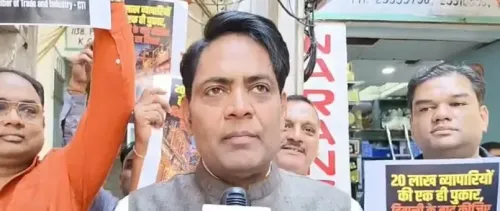
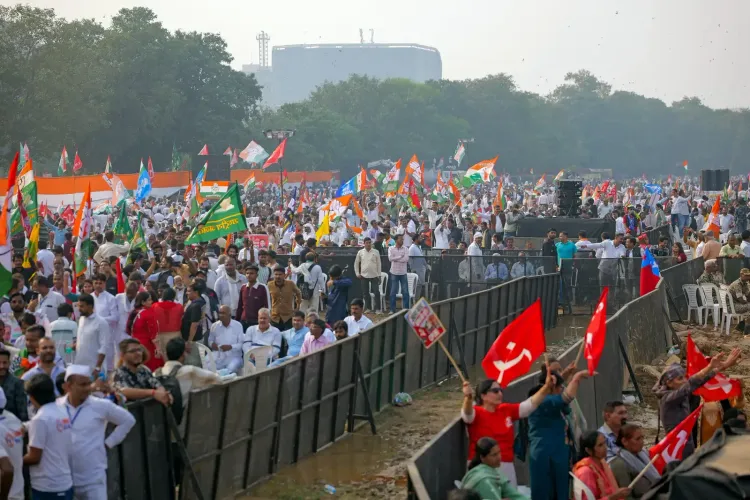
Delhi Vyapar Mahasangh released a statement on 2 November criticising the business impact of the INDIA Bloc rally at Ramlila Maidan on 1 November .
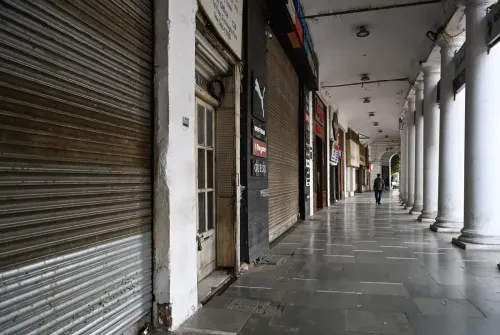
Business activities, customer footfall and supply chains were disrupted on a critical pre-Diwali Sunday.
Out-of-state small traders lost purchasing time; shopkeepers, labourers and transporters saw earnings affected.
The Mahasangh warned of a potential long-term shift in consumer behaviour toward online shopping and rival commercial centres.
The traders' body acknowledged the rally amplified awareness of their concerns, but urged future coordination between political events and the business calendar .
It appealed to authorities and parties to respect Delhi's festive trading window when scheduling large-scale events.
The Delhi Vyapar Mahasangh, the capital's prominent traders' body, on 2 November 2026 raised concerns over the economic fallout of the INDIA Bloc's large rally at Ramlila Maidan on 1 November, saying the event disrupted business activities, customer footfall, and supply chains — critically, just days ahead of the Diwali festive season. The organisation released a statement titled 'What Did We Lose, What Did We Gain?', listing both the economic losses and, notably, a few silver linings from the political gathering.
Economic Impact on Traders and Workers
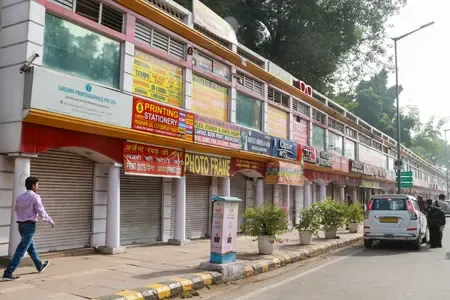
The Mahasangh stated that business activities and customer movement were adversely affected throughout Sunday, 1 November. Small traders arriving from other states lost valuable time and purchasing opportunities, while the daily earnings of shopkeepers, employees, labourers, transporters, and their dependent families took a hit.
The traders' body also flagged broader structural concerns, warning that the disruption risked accelerating a shift in consumer behaviour toward online shopping and rival commercial centres. The commercial image of Delhi's major wholesale markets — which it described as a critical node in India's national supply chain — had suffered a setback, it said.
Why Delhi's Wholesale Markets Matter
The Mahasangh underscored that Delhi's wholesale markets are not merely local retail hubs but serve as a foundational supply source for millions of small traders across the country. Any disruption to their operations, particularly in the run-up to a high-consumption occasion like Diwali, carries consequences that ripple well beyond the capital.
This context makes the timing of the rally particularly sensitive. The festive season — spanning Navratri, Dhanteras, and Diwali — accounts for a disproportionately large share of annual revenues for Delhi's trading community, and any curtailment of footfall during this window has an outsized impact.
What the Mahasangh Acknowledged
The statement was notably balanced. The organisation acknowledged that the rally brought Delhi's trading community's problems and concerns to a wider public platform, and reaffirmed the important role that the capital's wholesale markets play in the national economy and supply chain. It also called for better coordination between business interests, public convenience, and traffic management when planning large-scale events in the future.
'Delhi Vyapar Mahasangh (Regd.) respects democratic rights and peaceful protests. Every political party has the right to express its views, but equal responsibility towards trade, employment, ordinary citizens and the country's economic activities is equally necessary,' the statement said.
Appeal to Authorities and Political Parties
The traders' body urged authorities and political parties to factor in Delhi's business calendar, festive timelines, market accessibility, goods supply, and public convenience when scheduling large-scale events. 'Political events last for a limited period, but the economic losses suffered by businesses and the impact on customers' trust can be felt for a long time,' it added.
The Mahasangh concluded with a call for equilibrium: 'Politics has its place, and trade and employment have theirs. A balance between the two is the hallmark of a strong, responsible and healthy democratic system.' How political parties and the administration respond to this appeal will be closely watched as the festive calendar advances.
Point of View
Acknowledging democratic rights while putting a price tag on political mobilisation. What it reveals is a structural tension that resurfaces every election cycle: Delhi's wholesale markets, the backbone of national supply chains, have no formal seat at the table when political event calendars are drawn up. The festive season protest-timing conflict is not new, but the framing around online-shopping attrition is — it signals that traders see each disruption as nudging customers permanently toward e-commerce rivals. That is a slow-burn economic risk that neither the state nor political parties appear to be pricing in.
NationPress
2 Nov 2026
Frequently Asked Questions
What is the Delhi Vyapar Mahasangh and why did it issue this statement?
The Delhi Vyapar Mahasangh is a registered traders' organisation representing the business community in the national capital. It issued the statement on 2 November to flag the economic losses suffered by traders, workers, and supply chains due to the INDIA Bloc rally at Ramlila Maidan on 1 November, particularly because it fell just ahead of the Diwali festive season.
How did the INDIA Bloc rally affect Delhi's markets?
According to the Mahasangh, the rally disrupted customer movement, business activities, and the supply of goods on Sunday, 1 November. Small traders from other states lost purchasing time, while shopkeepers, labourers, and transporters saw their daily earnings affected.
Did the traders' body oppose the rally outright?
No. The Mahasangh explicitly stated it respects democratic rights and peaceful protests. It acknowledged that the rally gave a platform to the trading community's concerns and highlighted Delhi's role in the national supply chain, but it called for better coordination between political events and the business calendar.
Why is the timing particularly significant for Delhi traders?
The rally fell ahead of Diwali, one of the highest-revenue periods in the annual trading calendar. Delhi's wholesale markets serve as a supply hub for millions of small traders across India, so any disruption during the festive window has an amplified economic impact.
What did the Mahasangh ask authorities to do?
It urged authorities and political parties to prioritise Delhi's business calendar, festive season timelines, market accessibility, goods supply, and public convenience when deciding the dates and venues of large-scale events, so that economic and democratic interests can coexist.