Odisha govt deploys 72 rapid teams for post-Arnab livestock care
Synopsis
After Cyclone Arnab triggered severe flooding, Odisha has deployed 72 rapid response teams and 116 animal health camps, vaccinated over 19,582 livestock, and shifted 1,918 animals to safe shelters — with Ganjam district receiving 87 metric tonnes of fodder and compensation processes initiated for affected herders.
Key Takeaways
72 Rapid Response Teams and 116 animal health camps are providing veterinary care in post-Cyclone Arnab flood zones across Odisha.
Over 19,582 animals have been vaccinated to prevent post-flood disease outbreaks.
1,918 animals have been evacuated to 31 safe shelters to prevent further losses.
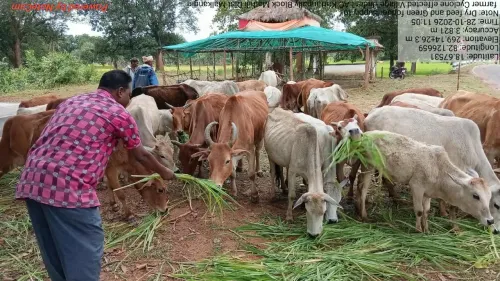
Ganjam district alone has 23 teams , 55 camps , and 87 metric tonnes of cattle feed, green fodder, and bran distributed.
Control rooms are active at the block, sub-division, and district levels for coordinated relief.
Steps have been initiated to provide immediate compensation to affected livestock owners.
When floodwaters recede after a cyclone, the suffering does not end — it shifts to the barns and fields of coastal farmers who have lost their only productive assets. In the wake of Cyclone Arnab, the Government of Odisha has launched a war-footing response to protect livestock and support animal herders across flood-hit districts, the Chief Minister's Office of Odisha announced on Monday, November 2, 2026.
72 teams, 116 camps: the scale of Odisha's veterinary surge
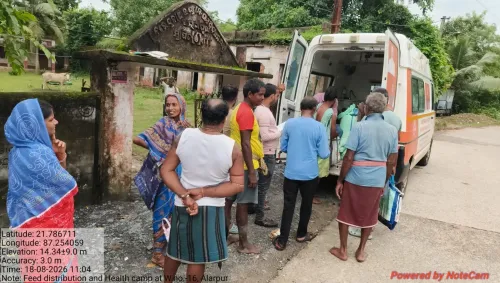
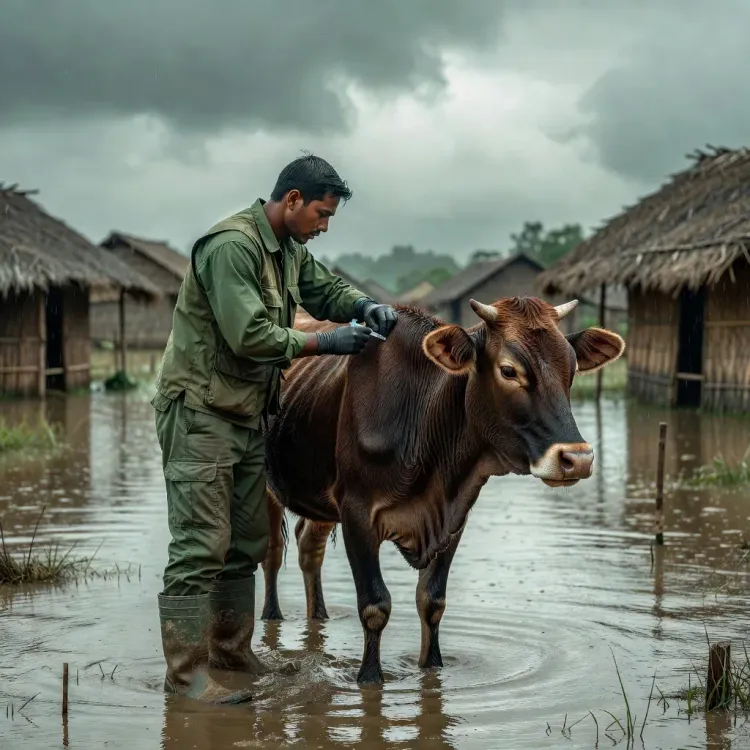
The state has deployed 72 Rapid Response Teams and activated 116 animal health camps to provide continuous veterinary care in affected areas. Over 19,582 animals have already been vaccinated to prevent post-flood disease outbreaks — a standard but critical intervention, since waterlogged conditions accelerate the spread of foot-and-mouth disease, haemorrhagic septicaemia, and other livestock killers. Simultaneously, 1,918 animals have been relocated to 31 safe shelters, pulling them out of inundated zones before losses compound.
Ganjam district gets the heaviest concentration of aid
Ganjam district — a perennially storm-battered coastal district in southern Odisha — is receiving the most intensive support. 23 Rapid Response Teams and 55 camps are operational there alone, backed by the distribution of 87 metric tonnes of cattle feed, green fodder, and bran. For coastal farming households where a single cow or buffalo can represent months of income, that fodder supply is the difference between survival and destitution.
Control rooms from block level upward keep the grid tight
The CMO's post notes that control rooms are operational at the block, sub-division, and district levels — a layered command structure designed to prevent information gaps from turning into relief gaps. Steps have also been initiated to provide immediate assistance and compensation to affected livestock owners, signalling that financial relief — not just veterinary care — is in the pipeline.
How Odisha built this playbook — from Phailin to Fani to Arnab
Odisha's animal-husbandry disaster protocols have been hardened over a decade of painful experience. After Cyclone Phailin (2013) and the catastrophic Cyclone Fani (2019), the state expanded livestock protection frameworks to include rapid teams, vaccination drives, and structured compensation mechanisms. That institutional memory is now being deployed again. The state's Bay of Bengal coastline is among the most cyclone-exposed in the world, and Odisha's evolution into a model for disaster management — human and animal — reflects hard-won learning.
For the farmers of Ganjam and beyond, the metric that matters most is the one still coming: how quickly the compensation actually reaches their hands.
Point of View
Camps, vaccination counts, fodder tonnage — is itself a governance signal, projecting administrative grip at a moment of crisis. The key test now is whether the compensation pipeline moves as fast as the veterinary teams; historically, that last mile has been where well-designed disaster frameworks lose credibility. Odisha's model, if the compensation arm delivers, could become a reference point for other Bay of Bengal states still treating livestock losses as a secondary concern.
NationPress
2 Nov 2026
Frequently Asked Questions
What is Cyclone Arnab and where did it hit in Odisha?
Cyclone Arnab is the storm that struck Odisha's coastline and triggered severe flooding across multiple districts, with Ganjam district in southern Odisha among the worst affected. It prompted the state government to launch a large-scale livestock protection and relief operation.
How many animals have been vaccinated after Cyclone Arnab flooding in Odisha?
Over 19,582 animals have been vaccinated across flood-affected areas of Odisha as part of the post-Arnab relief operation, according to the Chief Minister's Office.
What relief is Ganjam district getting for livestock after the cyclone?
Ganjam district has received 23 Rapid Response Teams , 55 animal health camps , and 87 metric tonnes of cattle feed, green fodder, and bran, making it the most intensively supported district in the current operation.
Will Odisha give compensation to farmers who lost livestock in the floods?
Yes, the Chief Minister's Office has stated that steps have been initiated to provide immediate assistance and compensation to livestock owners affected by the post-Arnab flooding, though the specific amounts and timelines are yet to be detailed publicly.
How does Odisha's post-cyclone livestock response work?
Odisha deploys Rapid Response Teams and animal health camps for on-ground veterinary care, conducts mass vaccinations to prevent disease outbreaks, shifts vulnerable animals to safe shelters, distributes fodder, and activates control rooms at block, sub-division, and district levels to coordinate relief — a framework built after major cyclones including Phailin and Fani.