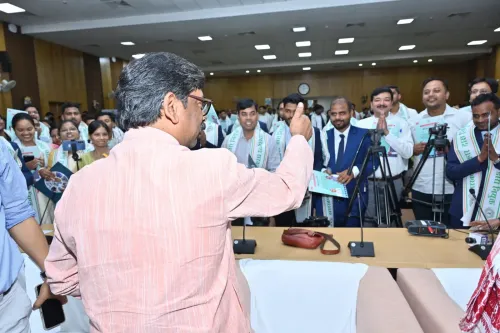
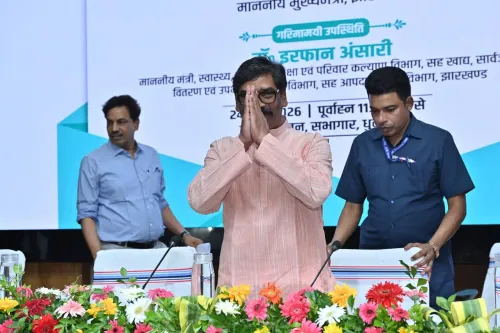
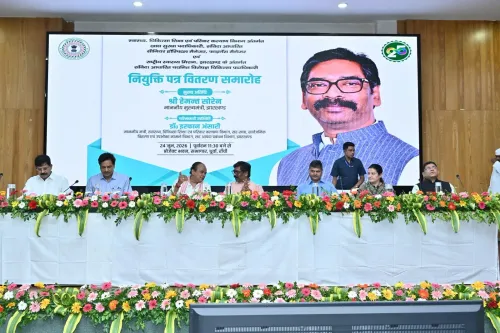
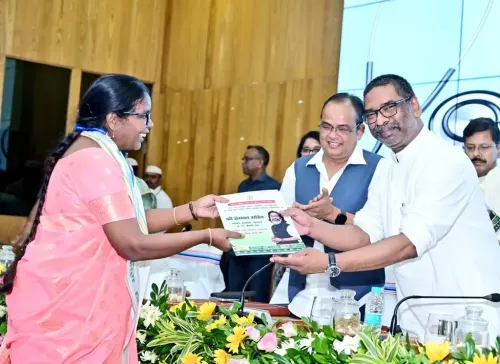
Jharkhand CMO hands appointment letters to 262 health officials

Synopsis
The Chief Minister's Office of Jharkhand announced appointment letters for 262 officials across four cadres — 151 specialist doctors, 56 JPSC-selected food safety officers, 29 senior hospital managers, and 26 finance managers — in a major push to strengthen the state's public health infrastructure.
Key Takeaways
262 officials across four cadres received appointment letters from the Jharkhand government on 24 June 2026 .
151 Specialist Medical Officers were inducted, directly addressing chronic vacancy shortages in district hospitals.
56 Food Safety Officers were selected through the Jharkhand Public Service Commission (JPSC) , strengthening regulatory enforcement under the Food Safety and Standards Act.
29 Senior Hospital Managers and 26 Finance Managers were appointed to professionalise administration and fiscal oversight in public health facilities.
The drive aligns with the National Health Mission framework, which ties central funding to state-level staffing benchmarks.
The Chief Minister's Office described the appointments as 'extremely important for the state's health infrastructure.'
The Chief Minister's Office of Jharkhand announced on Wednesday, 24 June 2026 that appointment letters were handed to a total of 262 officials across four health and regulatory cadres, marking a significant expansion of the state's public health workforce. The appointments span food safety officers, specialist doctors, hospital managers, and finance managers, all selected through rigorous state-level processes.
The official post described the development as 'rajya ke swasthya dhanche ke liye behad mahatvapurn' ('extremely important for the state's health infrastructure'), underscoring the government's framing of the exercise as a structural investment rather than routine hiring.
What was announced
According to the post, 56 Food Safety Officers selected by the Jharkhand Public Service Commission (JPSC) received their appointment letters alongside 151 Specialist Medical Officers, 29 Senior Hospital Managers, and 26 Finance Managers. The Chief Minister's Office extended congratulations to all appointees, calling it a 'new beginning.'
The simultaneous induction of medical, managerial, and financial personnel signals an attempt to address multiple layers of institutional weakness in district hospitals — clinical capacity, administrative efficiency, and fiscal oversight — in a single drive.
Context
Jharkhand, a predominantly tribal state carved out of Bihar in 2000, has historically faced acute shortages of specialist doctors and trained health administrators in its rural and semi-urban districts. Public health facilities in the state have struggled with high vacancy rates in specialist cadres, leaving secondary and tertiary care under-resourced.
The JPSC is the constitutional body entrusted with conducting competitive examinations for state government posts. Recruitment through JPSC provides a merit-based, legally defensible pathway to public employment, and selections made through it carry significant public credibility.
Policy backdrop
Under the National Health Mission (NHM) framework, operational since 2013, states receive central funding and mandates to strengthen district- and block-level health systems, particularly by filling specialist vacancies. Jharkhand's current recruitment drive aligns with this broader federal architecture, which ties fund releases to staffing benchmarks.
The Food Safety and Standards Act requires states to maintain a cadre of qualified Food Safety Officers to inspect food establishments, sample products, and enforce standards — a function that had been understaffed in many states. The induction of 56 such officers through JPSC addresses a regulatory compliance gap as well as a public health need.
Hospital managers and finance managers are relatively newer cadres in Indian public health, introduced to professionalise administration in government hospitals that were previously run entirely by clinical staff doubling as administrators.
Stakeholders and impact
The 151 Specialist Medical Officers are expected to be posted across district hospitals and referral centres, potentially easing the burden on general duty doctors who have been handling specialist caseloads. Patients in Jharkhand's underserved districts — particularly in the Santhal Pargana and Palamu divisions — stand to benefit most directly from improved specialist availability.
The 29 Senior Hospital Managers and 26 Finance Managers are positioned to improve procurement efficiency, reduce leakages, and bring structured accountability to hospital operations — outcomes that health system reformers have long argued are as critical as clinical staffing.
What's next
The immediate question is how swiftly the new appointees are assigned to specific facilities and whether the Jharkhand Health Department will publish district-wise postings. Performance audits and budget utilisation reviews in the coming fiscal year will indicate whether this staffing push translates into measurable improvements in health outcomes. Observers will also watch whether the state follows up with infrastructure upgrades — equipment, medicines, and diagnostics — to match the expanded human resource base.
Point of View
Managerial, and financial personnel in a single ceremony reflects a more systemic approach to health system reform — one that acknowledges that doctor shortages alone do not explain the dysfunction in public hospitals. By routing selections through the JPSC, the Jharkhand government insulates the appointments from legal challenge and signals institutional process over patronage. The scale — 262 officials across four distinct cadres — is notable for a state of Jharkhand's size, and suggests the government is keen to demonstrate visible delivery on health infrastructure ahead of any political cycle. Whether the gains hold will depend on posting decisions, infrastructure support, and accountability mechanisms that follow.
NationPress
22 Sept 2026
Frequently Asked Questions
How many officials received appointment letters in Jharkhand on 24 June 2026?
A total of 262 officials received appointment letters, comprising 151 Specialist Medical Officers, 56 Food Safety Officers, 29 Senior Hospital Managers, and 26 Finance Managers.
What is JPSC and how were the food safety officers selected?
The Jharkhand Public Service Commission (JPSC) is the state's constitutional body for merit-based recruitment to government posts. The 56 Food Safety Officers were selected through a competitive examination conducted by JPSC.
What do Specialist Medical Officers do in Jharkhand's health system?
Specialist Medical Officers provide secondary and tertiary care in district hospitals — covering disciplines such as surgery, gynaecology, paediatrics, and medicine — in facilities that have historically been staffed only by general duty doctors.
Why are Hospital Managers and Finance Managers being appointed in government hospitals?
Hospital Managers and Finance Managers are professionalised cadres introduced to improve administrative efficiency, procurement processes, and financial accountability in public hospitals, functions previously handled informally by clinical staff.
How does this recruitment relate to the National Health Mission?
The National Health Mission (NHM) , operational since 2013, provides central funding to states conditional on meeting staffing and service delivery benchmarks. Jharkhand's recruitment drive is consistent with NHM mandates to fill specialist and support vacancies at district and block levels.