Jharkhand HC orders welfare benefits for 300 bonded labourers rescued in 1992
Synopsis
More than three decades after their rescue from Uttar Pradesh, around 300 bonded labourers settled in Jharkhand's Garhwa district have yet to receive a single welfare benefit they are legally owed. The Jharkhand High Court's order on 2 July cuts through years of bureaucratic letter-writing and demands actual, on-ground delivery — a rare judicial intervention that exposes how deeply India's rehabilitation machinery can fail its most vulnerable.
Key Takeaways
The Jharkhand High Court on 2 July directed the Garhwa district administration to provide welfare benefits to approximately 300 rescued bonded labourers .
The labourers were freed from districts of Uttar Pradesh in 1992 and have since settled in Garhwa, Jharkhand .
Despite 34 years passing, they have not received rehabilitation under the Bonded Labour System (Abolition) Act, 1976 .
A PIL filed by Ghanshyam Pathak in 2023 triggered the case; officials spent three years in correspondence without concrete action.
The bench of Chief Justice S.M.
Sonak and Justice Rajesh Shankar directed the Garhwa Deputy Commissioner to identify all eligible workers and ensure actual benefit delivery.
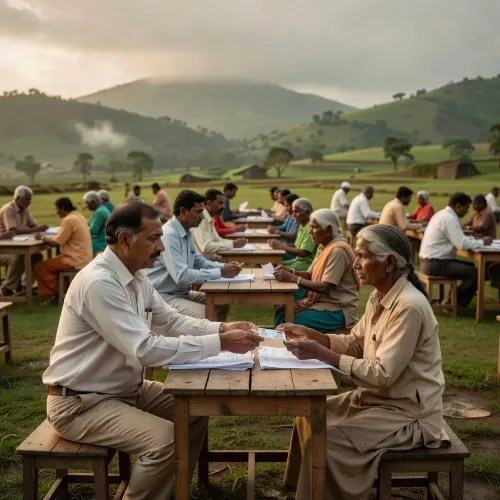
The Jharkhand High Court on Thursday, 2 July directed the Garhwa district administration to ensure that approximately 300 rescued bonded labourers settled in the district receive welfare and rehabilitation benefits to which they are legally entitled. The workers were freed from various districts of Uttar Pradesh nearly 34 years ago, in 1992, and have since settled in Garhwa, Jharkhand.
Background of the Case
A division bench comprising Chief Justice S.M. Sonak and Justice Rajesh Shankar issued the directive while hearing a Public Interest Litigation (PIL) filed by Ghanshyam Pathak in 2023. The petition alleged that despite more than three decades since their rescue, the labourers had not received rehabilitation assistance under the Bonded Labour System (Abolition) Act, 1976, nor had they been adequately covered under government welfare schemes for housing, healthcare, employment, and pensions.
What the Court Found
The bench expressed serious concern over the prolonged inaction, observing that it was unacceptable for eligible individuals to be denied legally guaranteed benefits for such an extended period. Counsel for the petitioner informed the court that over the past three years of litigation, officials had engaged only in correspondence without taking any concrete steps to extend benefits to the workers. The court noted that bureaucratic formalities had caused substantive delays, depriving eligible beneficiaries of assistance guaranteed under law.
Key Directives Issued
The court directed the Garhwa Deputy Commissioner to identify all eligible labourers and ensure actual delivery of benefits under the Bonded Labour System (Abolition) Act as well as other applicable government welfare schemes. The bench specifically emphasised that mere paperwork would not suffice — authorities must ensure tangible, on-ground delivery of entitlements. This marks a significant judicial push after years of administrative inertia.
Broader Significance
This case highlights a persistent gap in India's rehabilitation framework for bonded labourers. The Bonded Labour System (Abolition) Act, 1976 mandates rehabilitation support including land allotment, housing, and financial assistance — yet implementation has historically lagged across states. Notably, this is not an isolated instance; courts across India have repeatedly had to intervene to compel state administrations to honour statutory obligations toward freed bonded workers. The Jharkhand HC's order adds judicial pressure at a time when labour rights groups have flagged widening gaps in scheme coverage for vulnerable communities.
What Happens Next
The Garhwa Deputy Commissioner is now bound by the court's directive to identify and enrol eligible labourers under applicable schemes. The matter is expected to return before the bench for compliance review. Civil society groups and the petitioner will likely monitor whether the administration moves beyond correspondence to actual benefit delivery this time.
Frequently Asked Questions
Why did the Jharkhand High Court intervene in the bonded labourers case?
The court intervened after a PIL revealed that around 300 bonded labourers rescued in 1992 had not received any rehabilitation benefits despite more than 34 years passing. Officials had spent three years of litigation merely exchanging correspondence without taking concrete steps, prompting the bench to issue a direct directive to the Garhwa Deputy Commissioner.
What benefits are the rescued bonded labourers entitled to?
Under the Bonded Labour System (Abolition) Act, 1976, rescued bonded labourers are entitled to rehabilitation support including housing, healthcare, employment assistance, and pensions. The court noted that the Garhwa settlers had not been adequately covered under any of these government welfare schemes.
Who filed the PIL and when?
The PIL was filed by Ghanshyam Pathak in 2023. The case was heard by a division bench of Chief Justice S.M. Sonak and Justice Rajesh Shankar of the Jharkhand High Court.
What has the court directed the Garhwa administration to do?
The court directed the Garhwa Deputy Commissioner to identify all eligible labourers and ensure actual, on-ground delivery of benefits under the Bonded Labour System (Abolition) Act and other applicable welfare schemes. The bench explicitly stated that paperwork alone would not be acceptable.
Where were the bonded labourers originally rescued from?
The approximately 300 bonded labourers were rescued from various districts of Uttar Pradesh in 1992. Many subsequently settled in Jharkhand's Garhwa district, where they have since lived without receiving the rehabilitation support mandated by law.