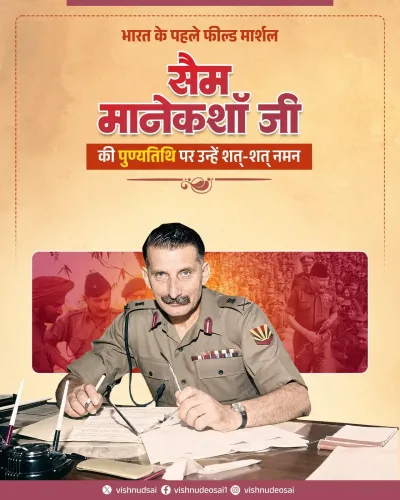
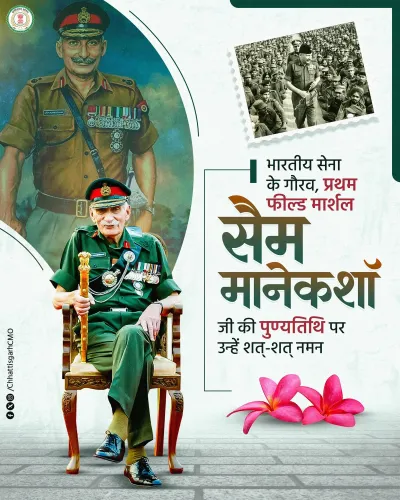
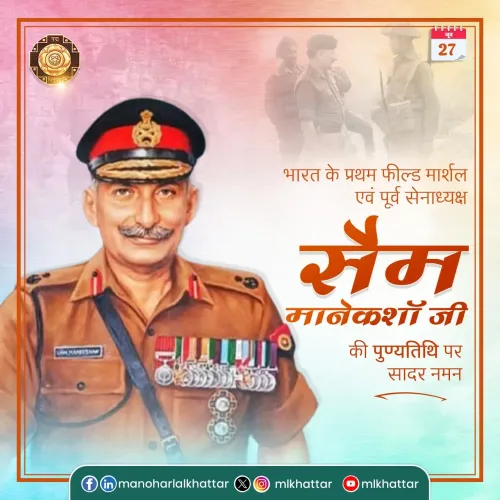
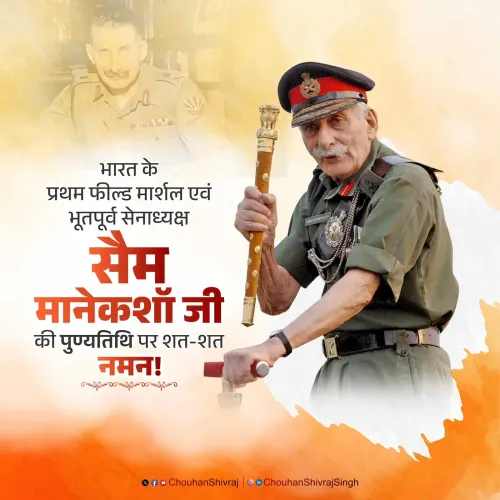
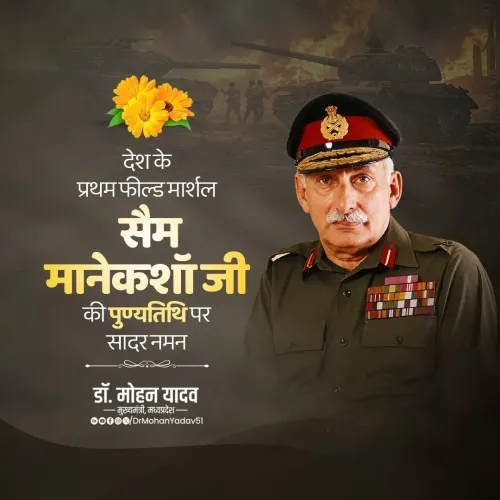
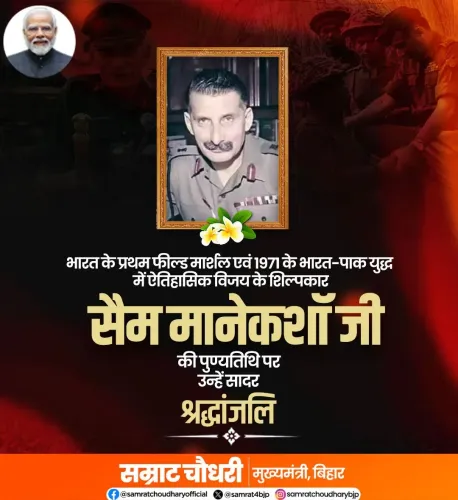
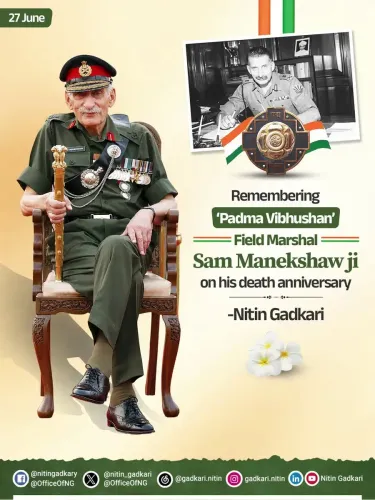
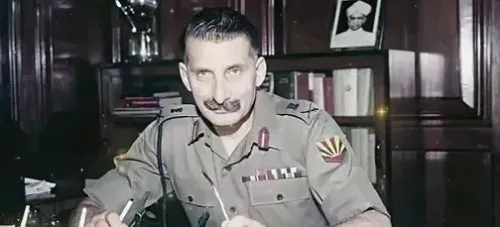
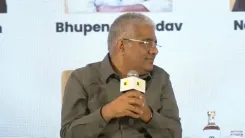
Dr. Jitendra Singh Remembers Field Marshal Sam Manekshaw
Synopsis
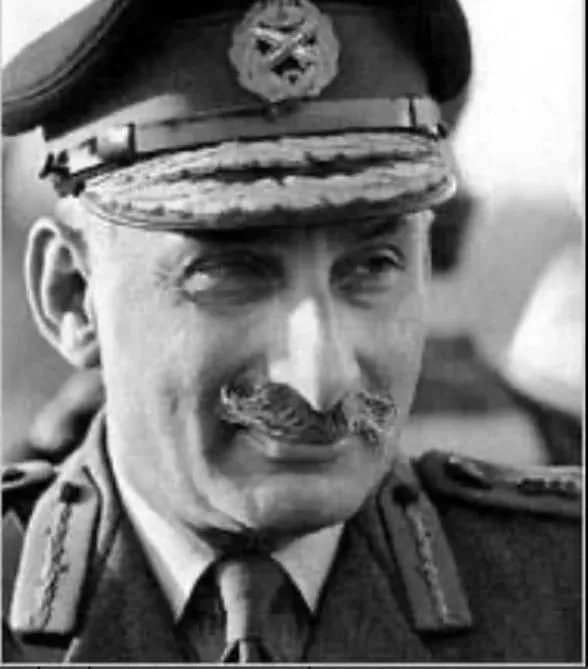
On the 18th death anniversary of Field Marshal Sam Manekshaw, Union Minister Dr. Jitendra Singh paid tribute on X, quoting the legendary commander's celebrated remark on the fearlessness of Gorkha soldiers. Manekshaw, India's first Field Marshal, led the 1971 war campaign that created Bangladesh.
Key Takeaways
Jitendra Singh posted a tribute to Field Marshal Sam Manekshaw on June 27, 2026 , his death anniversary.
The post quoted Manekshaw's celebrated line: 'If a man says he is not afraid of dying, he is either lying or is a Gorkha.' Sam Manekshaw was India's first Field Marshal , a rank conferred in 1973 following the 1971 Indo-Pakistani War victory.
Manekshaw served as Chief of Army Staff from 1969 to 1973 and commanded the eastern theatre campaign that led to the creation of Bangladesh .
Gorkha regiments of the Indian Army recruit from Nepal under the 1947 Tripartite Treaty framework and have served in every major conflict since independence.
Manekshaw passed away on June 27, 2008 , at age 94 , and is buried in Wellington, Tamil Nadu .
Union Science and Technology Minister Dr. Jitendra Singh on Saturday, June 27, 2026, paid tribute to Field Marshal Sam Manekshaw on his death anniversary, sharing the legendary soldier's celebrated remark about the courage of Gorkha soldiers.
Context
Quoting Manekshaw's iconic line — 'If a man says he is not afraid of dying, he is either lying or is a Gorkha' — Dr. Singh's post on X drew attention to one of the most memorable tributes ever paid by an Indian military commander to a regiment within his own ranks. The quote, widely attributed to Manekshaw, encapsulates the reputation the Gorkha regiments have earned across decades of service in the Indian Army.
Manekshaw died on June 27, 2008, at the age of 94, making this year the 18th death anniversary of India's only Field Marshal at the time of his passing. His is a name that remains synonymous with military professionalism, plain-spoken candour, and decisive battlefield leadership.
Policy Backdrop
Sam Manekshaw served as Chief of Army Staff from 1969 to 1973 and was the overall operational commander of Indian forces during the 1971 Indo-Pakistani War — a conflict that resulted in the creation of Bangladesh and is widely regarded as one of the most decisive military campaigns in post-independence South Asian history. In recognition of that victory, he was conferred the rank of Field Marshal in 1973, the first such promotion in independent India's history.
The Gorkha regiments of the Indian Army recruit personnel from Nepal under arrangements rooted in the 1947 Tripartite Treaty framework between India, Nepal, and the United Kingdom. These units have fought in every major conflict involving India since independence and retain a distinct identity within the army's regimental system.
Stakeholders and Impact
Tributes to Manekshaw carry resonance for Indian Army veterans, serving soldiers — particularly those in Gorkha regiments — and the wider defence community. Ministerial acknowledgements of military anniversaries serve to keep institutional memory alive and reaffirm the government's regard for the armed forces.
For the Gorkha community in India and Nepal, the circulation of Manekshaw's quote by a senior Union minister is a moment of public recognition of their long-standing contribution to national security. The India-Nepal defence relationship, underpinned by Gorkha recruitment, remains one of the most enduring bilateral arrangements in the region.
What's Next
Annual commemorations on June 27 at military institutions and at Manekshaw's grave in Wellington, Tamil Nadu, where he is buried, typically draw serving officers, veterans, and civil dignitaries. Parliamentary and ministerial references to Manekshaw's legacy often coincide with broader discussions on India-Nepal defence cooperation and Gorkha recruitment policy. As debates around the Agnipath scheme and regimental recruitment continue within defence policy circles, Manekshaw's legacy and the Gorkha regiment's place in the Indian Army are likely to remain subjects of public and political attention.
Point of View
But the specific choice of Manekshaw's Gorkha quote by a Union minister adds a layer of community recognition that resonates beyond ceremonial tribute. It implicitly signals the government's continued regard for the Gorkha regimental identity at a time when broader recruitment reforms under the Agnipath scheme have raised questions about the future of the regimental system. Dr. Singh's post connects the ruling dispensation to a legacy of decisive, apolitical military professionalism — a narrative the government has consistently sought to align itself with. The timing on the exact death anniversary, rather than a birth anniversary, underscores the solemnity of the gesture.
NationPress
25 Sept 2026
Frequently Asked Questions
When did Field Marshal Sam Manekshaw die?
Sam Manekshaw died on June 27, 2008 , in Wellington, Tamil Nadu , at the age of 94 .
Why is Sam Manekshaw famous?
Sam Manekshaw is famous for commanding Indian forces to victory in the 1971 Indo-Pakistani War , which led to the creation of Bangladesh . He was India's first Field Marshal , a rank conferred in 1973 .
What did Sam Manekshaw say about Gorkhas?
Manekshaw is widely quoted as saying: 'If a man says he is not afraid of dying, he is either lying or is a Gorkha' — a remark that has become one of the most celebrated tributes to the Gorkha regiments of the Indian Army.
Who are the Gorkha regiments in the Indian Army?
Gorkha regiments are infantry units of the Indian Army recruited from Nepalese Gorkhas under arrangements rooted in the 1947 Tripartite Treaty between India, Nepal, and the United Kingdom. They are renowned for their combat record across multiple wars.
Why did Dr. Jitendra Singh post about Sam Manekshaw?
Dr. Jitendra Singh posted on X on June 27, 2026 to mark the death anniversary of Field Marshal Sam Manekshaw , sharing the military legend's famous quote about Gorkha soldiers as a tribute to his legacy.