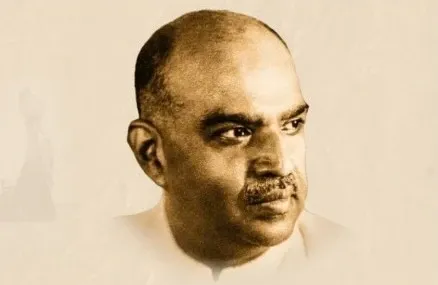
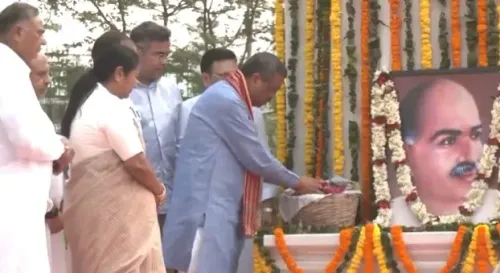
Dr. Jitendra Singh Pays Tribute to Syama Prasad Mookerjee on 125th Birth Anniversary
Synopsis
Union Minister Dr. Jitendra Singh marked Dr. Syama Prasad Mookerjee's 125th birth anniversary on July 6, 2026, sharing PM Modi's article on Mookerjee's life and legacy, calling him a visionary devoted to India's unity and progress.
Key Takeaways
Jitendra Singh posted a tribute on July 6, 2026 , marking Dr.
Syama Prasad Mookerjee's 125th birth anniversary .
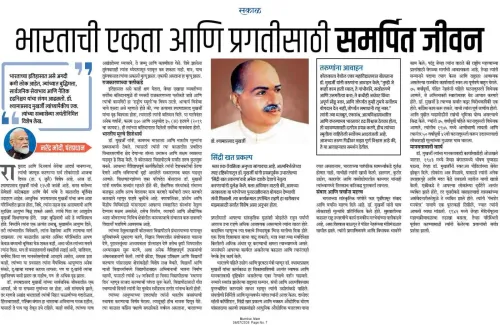
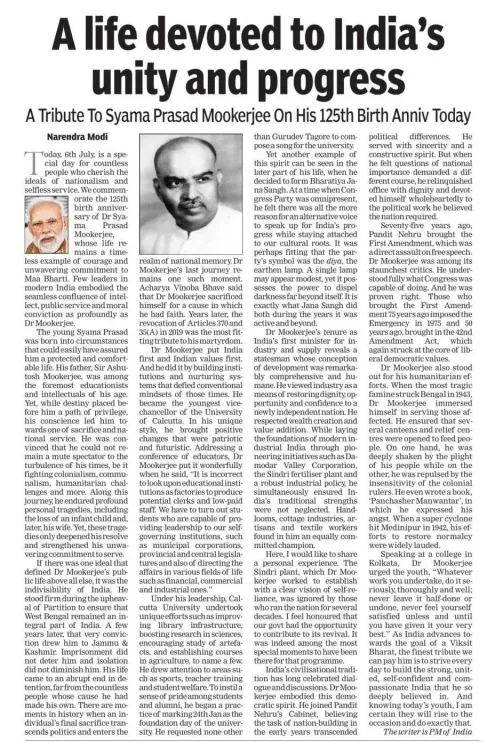
PM Narendra Modi authored a reflective article titled 'A Life Devoted to India's Unity and Progress,' shared by the minister.
Mookerjee founded the Bharatiya Jana Sangh in 1951 , the ideological predecessor to the Bharatiya Janata Party .
He is closely associated with opposition to Article 370 and advocacy for the full integration of Jammu and Kashmir .
Annual BJP-led commemorations since 2014 have consistently linked Mookerjee's legacy to contemporary national integration policy.
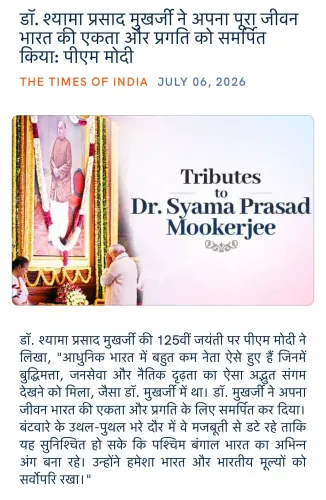
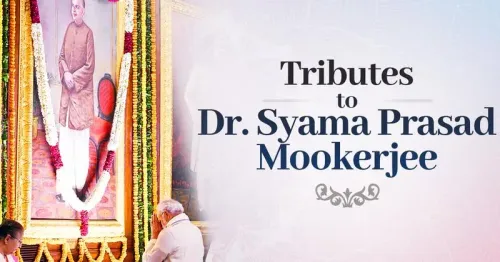
Union Science and Technology Minister Dr. Jitendra Singh on Monday, July 6, 2026, paid tribute to Dr. Syama Prasad Mookerjee on his 125th birth anniversary, sharing a reflective article authored by Prime Minister Narendra Modi that examines Mookerjee's life, vision, and enduring legacy.
Context
Dr. Jitendra Singh described Mookerjee as 'a visionary leader whose life exemplified courage, conviction, and unwavering devotion to Maa Bharti.' The minister pointed followers to PM Modi's article, titled 'A Life Devoted to India's Unity and Progress,' published on the Prime Minister's personal website, calling it 'a must-read' for those seeking to understand Mookerjee's contributions to the nation.
Born on July 6, 1901, in Calcutta, Dr. Syama Prasad Mookerjee rose to become one of independent India's most consequential political figures. He served as Bengal's Finance Minister and later as a Union Cabinet Minister in Jawaharlal Nehru's first government before resigning over policy differences.
Policy Backdrop
Mookerjee founded the Bharatiya Jana Sangh in 1951, a party that later merged into the Bharatiya Janata Party. He is most closely associated with his vocal opposition to the special constitutional status granted to Jammu and Kashmir under Article 370, a position that has since become a defining plank of the BJP's political identity.
Annual commemorations of Mookerjee's birth anniversary have been a consistent feature of BJP-led governments since 2014. These observances frequently draw a line between his historical advocacy for territorial integration and the August 2019 abrogation of Article 370, framing his legacy as foundational to contemporary governance decisions on national unity.
Stakeholders and Impact
The tribute carries significance for nationalist political workers, BJP cadres, and the broader Sangh Parivar ecosystem, for whom Mookerjee occupies a near-iconic status as a founding ideological ancestor. His ideas of 'service, sacrifice, and national unity,' as Dr. Jitendra Singh noted, are regularly invoked to connect historical vision with present-day policy priorities.
For younger audiences and students of political history, PM Modi's article serves as an official articulation of how the ruling establishment interprets Mookerjee's contributions — particularly on questions of cultural cohesion, federalism, and the idea of an undivided, integrated India. Such publications on high-profile anniversaries reinforce institutional memory around figures central to the party's ideological lineage.
What's Next
State-level programmes and party events are typically organised across West Bengal, Delhi, and other BJP-governed states around July 6 each year. Parliamentary references to Mookerjee's vision may also surface in upcoming sessions, particularly in debates touching on national integration, federal policy, and the legacy of early post-independence political thought.
As the BJP continues to consolidate its ideological narrative ahead of state and national electoral cycles, commemorations like this one serve as touchstones — anchoring contemporary governance priorities in a historical continuum that the party traces directly to Mookerjee's founding vision.
Point of View
Connecting Mookerjee's foundational politics to present-day governance priorities. PM Modi's personal authorship of the commemorative article elevates it beyond routine messaging, signalling that Mookerjee's legacy remains central to the ruling establishment's self-narrative. For the BJP, each anniversary of Mookerjee's birth is an opportunity to restate the party's claim to a historical continuum stretching from pre-independence nationalism to the 2019 abrogation of Article 370. The broader pattern suggests these commemorations are as much about consolidating political identity among the cadre as they are about honouring history.
NationPress
5 Oct 2026
Frequently Asked Questions
Who was Dr. Syama Prasad Mookerjee?
Dr. Syama Prasad Mookerjee was an Indian politician born on July 6, 1901, who served as Bengal's Finance Minister, founded the Bharatiya Jana Sangh in 1951, and was a prominent advocate for national integration and the full accession of Jammu and Kashmir to India.
Why is July 6 significant for the BJP?
July 6 marks the birth anniversary of Dr. Syama Prasad Mookerjee, the founder of the Bharatiya Jana Sangh — the political predecessor to the BJP — making it an important date for annual commemorations by the party and its affiliated organisations.
What did PM Modi write about Syama Prasad Mookerjee?
PM Narendra Modi authored an article titled 'A Life Devoted to India's Unity and Progress,' published on his personal website, reflecting on Mookerjee's life, vision, and contributions to national unity, as shared by Minister Dr. Jitendra Singh on July 6, 2026.
What is the connection between Syama Prasad Mookerjee and Article 370?
Dr. Mookerjee was one of the most vocal opponents of the special constitutional status granted to Jammu and Kashmir under Article 370, a position that the BJP has historically cited as foundational to its own stance, which culminated in the abrogation of Article 370 in August 2019.
Who is Dr. Jitendra Singh?
Dr. Jitendra Singh is the Union Minister of State with Independent Charge of Science and Technology and Earth Sciences, and also holds the position of Minister of State in the Prime Minister's Office and the Ministry of Personnel.