PM Modi pays tribute to Syama Prasad Mookerjee on 125th Jayanti
Synopsis
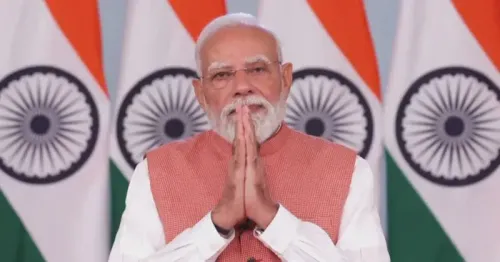
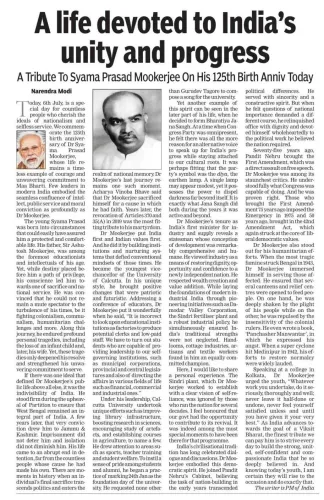
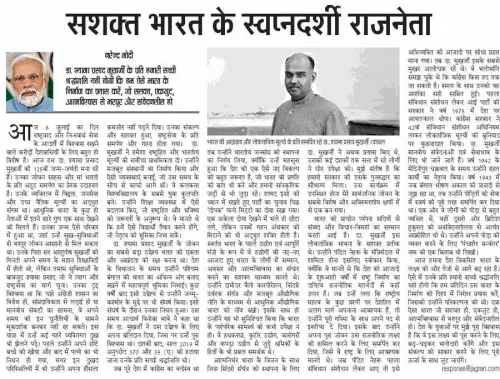
Prime Minister Narendra Modi on 6 July 2026 paid tribute to Dr. Syama Prasad Mookerjee on his 125th birth anniversary, honouring the Jana Sangh founder and first Industry Minister as a nation-builder whose commitment to India's unity and dignity remains central to the BJP's ideological identity.
Key Takeaways
Prime Minister Narendra Modi paid tribute to Dr.
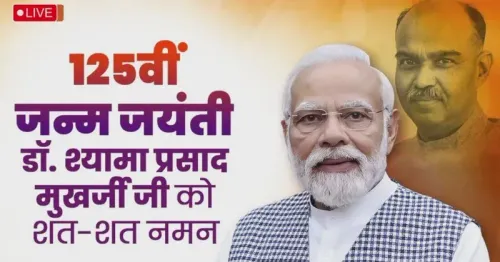
Syama Prasad Mookerjee on his 125th Jayanti on 6 July 2026 .
Mookerjee was born on 6 July 1901 and served as India's first Industry Minister after independence.
He founded the Bharatiya Jana Sangh in 1951 , the ideological predecessor of the present-day BJP .
Mookerjee was a leading opponent of Article 370 and died in detention in Kashmir in 1953 .
The BJP-led government abrogated Article 370 in 2019 , a move framed as fulfilling Mookerjee's demand for full integration of Jammu and Kashmir .
Modi and senior BJP leaders have issued annual tributes to Mookerjee on 6 July as part of a wider pattern of commemorating nationalist figures to establish ideological continuity.
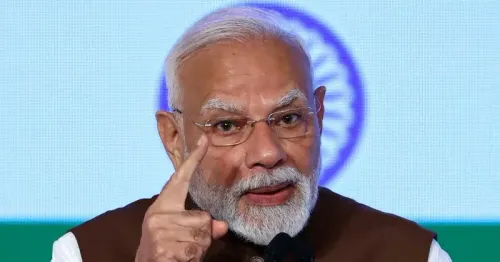
Prime Minister Narendra Modi on Monday, 6 July 2026, paid tribute to Dr. Syama Prasad Mookerjee on the occasion of his 125th birth anniversary (Jayanti), describing the nationalist leader as one of India's most remarkable nation-builders whose life was defined by scholarship, courage, and an unwavering commitment to national service.
In a post on X, Prime Minister Modi wrote: 'Today, on the 125th Jayanti of Dr. Syama Prasad Mookerjee, I bow to one of India's most remarkable nation-builders, whose life was defined by scholarship, courage and an unwavering commitment to national service. He dedicated himself to the cause of India's unity, dignity and...' The post underscored Mookerjee's enduring place in the BJP's ideological heritage.
Context
Dr. Syama Prasad Mookerjee was born on 6 July 1901 in Calcutta (present-day Kolkata, West Bengal). A barrister and academic, he served as India's first Industry Minister in the cabinet of Prime Minister Jawaharlal Nehru before resigning over policy differences. He went on to found the Bharatiya Jana Sangh in 1951, a party whose ideological lineage is directly claimed by the present-day Bharatiya Janata Party (BJP).
Mookerjee became one of the most prominent voices opposing the special constitutional status granted to Jammu and Kashmir under Article 370. He died in detention in Kashmir in 1953 while agitating against the requirement for a separate permit to enter the state — a cause that remained central to the BJP's political platform for decades.
Policy Backdrop
The BJP-led government abrogated Article 370 in August 2019, presenting the move as the fulfilment of Mookerjee's long-standing demand for the complete constitutional integration of Jammu and Kashmir with the rest of India. Senior party leaders have consistently framed that decision as a tribute to his legacy.
Modi and other senior BJP figures have issued annual tributes to Mookerjee on 6 July since at least the early 2010s, positioning him as an early proponent of the party's core positions on territorial integrity and national unity. These commemorations form part of a broader pattern of invoking pre-1960s nationalist figures to establish ideological continuity between the Jana Sangh era and present-day governance.
Stakeholders and Impact
The tribute carries significance for BJP supporters and national-integration advocates who regard Mookerjee as a foundational figure. His legacy is particularly resonant in West Bengal, where he was born and where the BJP has sought to expand its political footprint in recent years.
For the broader public, the 125th Jayanti is a milestone anniversary, lending added weight to this year's commemoration. State-level events and parliamentary references during the ongoing Monsoon Session are expected to echo the Prime Minister's tribute.
What's Next
Observers will watch for any linkage of Mookerjee's legacy to ongoing policy discussions, including deliberations around the Uniform Civil Code and administrative exercises in Jammu and Kashmir such as delimitation. Parliamentary tributes during the Monsoon Session may further amplify the commemoration at the national level.
As the BJP approaches future electoral cycles, the annual invocation of Mookerjee's ideals of national unity and dignity is likely to remain a consistent feature of the party's public communication, reinforcing the ideological thread it draws from the Jana Sangh's founding vision to its current governance agenda.
Point of View
' Modi reinforces the narrative that the 2019 abrogation of Article 370 was not a partisan act but the completion of an unfinished national project. The milestone anniversary — the 125th — lends the tribute unusual symbolic weight, likely to be amplified across state-level party events. As the BJP navigates upcoming electoral contests, particularly in West Bengal where Mookerjee remains a potent symbol, such commemorations serve both an ideological and a political mobilisation function.
NationPress
5 Oct 2026
Frequently Asked Questions
Who was Dr. Syama Prasad Mookerjee?
Dr. Syama Prasad Mookerjee was an Indian politician, barrister, and academic born on 6 July 1901. He served as India's first Industry Minister after independence and founded the Bharatiya Jana Sangh in 1951, the ideological predecessor of the BJP. He died in detention in Kashmir in 1953 while protesting the requirement for a separate permit to enter the state.
Why is PM Modi paying tribute to Mookerjee today?
6 July 2026 marks the 125th birth anniversary (Jayanti) of Dr. Syama Prasad Mookerjee. Prime Minister Modi paid tribute on X, describing him as one of India's most remarkable nation-builders. The BJP has observed this anniversary annually as part of its tradition of commemorating the Jana Sangh founder.
What is the connection between Mookerjee and Article 370?
Dr. Syama Prasad Mookerjee was one of the most prominent opponents of Article 370, which granted special constitutional status to Jammu and Kashmir. He died in detention in Kashmir in 1953 while agitating against the permit system. The BJP-led government's abrogation of Article 370 in 2019 was presented as fulfilling his demand for full integration of the state.
What is the Bharatiya Jana Sangh?
The Bharatiya Jana Sangh was a political party founded by Dr. Syama Prasad Mookerjee in 1951. It later merged into the Janata Party and its ideological lineage is directly claimed by the present-day Bharatiya Janata Party (BJP).
What events are expected on Mookerjee's 125th Jayanti?
State-level commemorations and parliamentary tributes during the Monsoon Session are expected following PM Modi's post. Observers are also watching for any linkage of Mookerjee's legacy to ongoing policy discussions such as the Uniform Civil Code or delimitation exercises in Jammu and Kashmir.