PM Modi Pays Tribute to Dr. Shyama Prasad Mookerjee on Birth Anniversary
Synopsis
Prime Minister Narendra Modi marked the birth anniversary of Dr. Shyama Prasad Mookerjee on 6 July 2026, calling his sacrifice for India's unity and integrity an eternal inspiration for every generation, and quoting a Sanskrit shloka in his honour.
Key Takeaways
Prime Minister Narendra Modi paid tribute to Dr.
Shyama Prasad Mookerjee on his birth anniversary, 6 July 2026 .
Mookerjee founded the Bharatiya Jana Sangh in 1951 , the ideological precursor to the BJP .
He died in detention in Jammu and Kashmir in 1953 while protesting restrictions on free movement into the state.
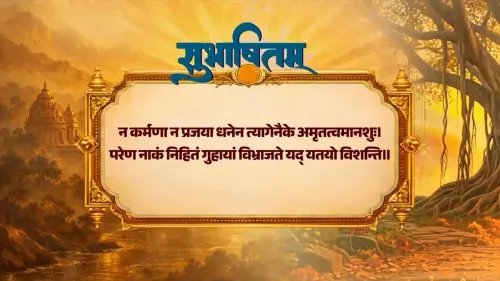
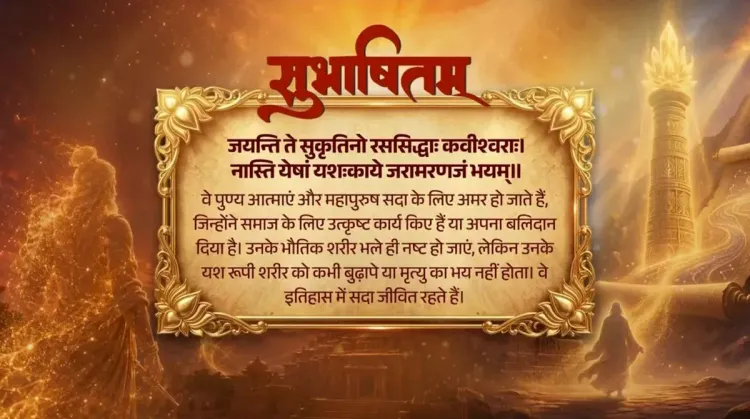
Modi's post quoted a Sanskrit shloka honouring souls whose legacy transcends the fear of death.
The Modi government abrogated Article 370 in 2019 , presenting it as fulfilling Mookerjee's vision of full national integration.
The BJP marks 6 July annually with nationwide commemorative events linking Mookerjee's legacy to contemporary policy.
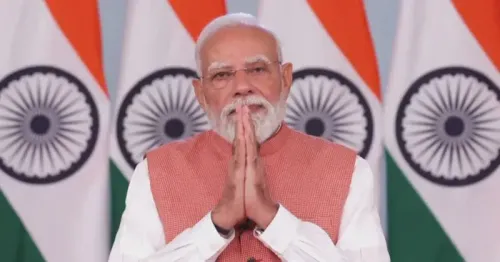
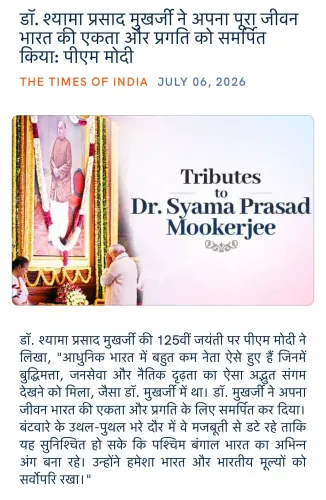
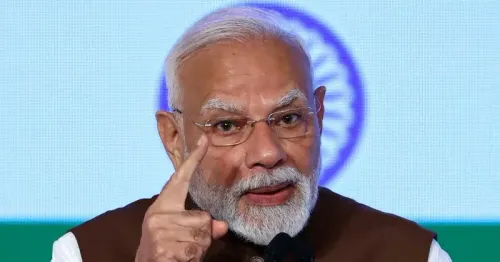
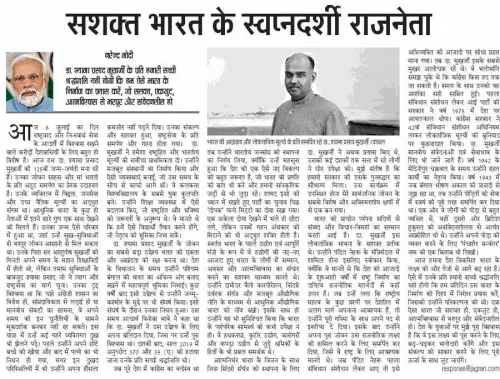
Prime Minister Narendra Modi on Monday, 6 July 2026, paid tribute to Dr. Shyama Prasad Mookerjee on his birth anniversary, honouring the founding figure of the Bharatiya Jana Sangh as an enduring symbol of national unity, integrity, and self-respect.
In his post, the Prime Minister wrote in Hindi: 'Bharatvarsh ki ekta, akhandata aur swabhiman ke liye Dr. Shyama Prasad Mookerjee ka balidan har peedhi ko prerit karta rahega' — meaning, 'Dr. Shyama Prasad Mookerjee's sacrifice for the unity, integrity, and self-respect of India will continue to inspire every generation.' He accompanied the tribute with a Sanskrit shloka: 'Jayanti te sukritino rasasiddhah kavishvarah / Nasti yesham yashah kaye jaramaranajam bhayam' — 'Blessed are those accomplished souls whose bodies of glory know no fear of ageing or death.'
Context
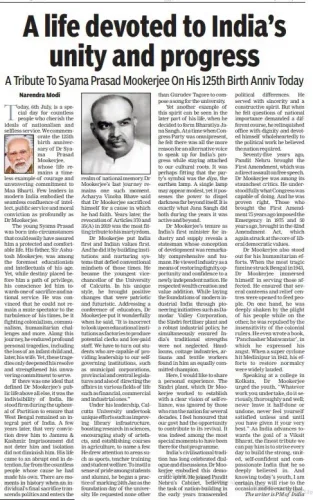
Dr. Shyama Prasad Mookerjee was born on 6 July 1901 and is commemorated annually on this date by the Bharatiya Janata Party and affiliated nationalist organisations. A scholar, educationist, and politician, Mookerjee founded the Bharatiya Jana Sangh in 1951 as an ideological alternative rooted in cultural nationalism. He died in June 1953 while in detention in Jammu and Kashmir, where he had entered in protest against the requirement for a permit — a restriction he viewed as an affront to national integration.
His campaign against the special status accorded to Jammu and Kashmir under Article 370 remains the most cited chapter of his political legacy. The slogan attributed to his movement — 'Ek desh mein do Vidhan, do Pradhan, do Nishan nahin chalenge' (One country cannot have two constitutions, two prime ministers, two symbols) — continues to be invoked by BJP leaders.
Policy Backdrop
In August 2019, the Modi government abrogated Article 370 through a parliamentary resolution, revoking the special constitutional status of Jammu and Kashmir and bifurcating the state into two Union Territories. The government formally presented the move as fulfilling the constitutional integration that Mookerjee had championed more than six decades earlier.
The BJP has consistently positioned itself as the ideological successor to the Jana Sangh tradition, drawing a direct line from Mookerjee's foundational politics to its own governance agenda on national unity. Annual commemorations on 6 July serve as a renewal of that institutional memory, reinforced through state-level events, party programmes, and social media outreach by senior leaders.
Stakeholders and Impact
BJP workers, cadres of affiliated organisations, and nationalist groups across the country observe 6 July as a day of remembrance, holding seminars, rallies, and community programmes. The tribute from the Prime Minister's official account amplifies these ground-level activities and frames the commemoration within a national narrative rather than a purely partisan one.
For the broader electorate — particularly in Jammu and Kashmir and among communities with strong cultural-nationalist affiliations — the annual tribute reinforces the BJP's claim to a long ideological lineage predating its own founding in 1980.
What's Next
State governments led by the BJP are expected to hold official commemorative events on 6 July, with party units organising programmes at district and block levels. References to Mookerjee's legacy are likely to recur in parliamentary debates and party communications around themes of national integration. As the political calendar moves toward assembly elections in several states, the framing of Mookerjee's sacrifice as a foundational act of national service is expected to remain a recurring motif in BJP messaging.
Point of View
Most notably the abrogation of Article 370, to a founding martyr's unfinished mission. By invoking a Sanskrit shloka alongside Hindi prose, the Prime Minister signals continuity across India's civilisational and political heritage. The annual commemoration functions as a party-wide mobilisation ritual that reinforces cadre identity and frames nationalist integration as a historical imperative rather than a partisan choice. As the BJP navigates a complex electoral landscape, anchoring its identity in Mookerjee's sacrifice keeps the foundational narrative of 'one nation, one constitution' firmly in public discourse.
NationPress
5 Oct 2026
Frequently Asked Questions
Who was Dr. Shyama Prasad Mookerjee?
Dr. Shyama Prasad Mookerjee was an Indian politician, educationist, and founder of the Bharatiya Jana Sangh in 1951, the party that later evolved into the BJP. He died in June 1953 while in detention in Jammu and Kashmir, where he had gone to protest restrictions on free movement into the state.
Why does PM Modi pay tribute to Shyama Prasad Mookerjee every year?
PM Modi and the BJP mark 6 July — Mookerjee's birth anniversary — each year to honour his role as the founding figure of the Jana Sangh tradition and to reaffirm the party's ideological lineage rooted in cultural nationalism and national integration.
What is the connection between Shyama Prasad Mookerjee and Article 370?
Mookerjee campaigned against the special status granted to Jammu and Kashmir under Article 370, arguing it created a state within a state. The Modi government abrogated Article 370 in August 2019, officially presenting the move as completing the constitutional integration Mookerjee had championed.
What did PM Modi write about Shyama Prasad Mookerjee on 6 July 2026?
Modi wrote in Hindi that Mookerjee's sacrifice for the unity, integrity, and self-respect of India will continue to inspire every generation. He also quoted a Sanskrit shloka honouring accomplished souls whose legacy knows no fear of ageing or death.
What was the Bharatiya Jana Sangh?
The Bharatiya Jana Sangh was a political party founded by Dr. Shyama Prasad Mookerjee in 1951 as a culturally nationalist alternative in Indian politics. It merged into the Janata Party in 1977 and its members subsequently founded the Bharatiya Janata Party in 1980.