JMI forms 7-member panel to address students' union election revival demand
Synopsis
Jamia Millia Islamia has moved to defuse a week-long student hunger strike by forming a 7-member panel to examine demands for restoring union elections — banned since 2006 after violent clashes and upheld by courts as recently as 2022. With the current administration in office just over a year, this is its first formal engagement with a protest that touches a two-decade-old unresolved question about democratic student representation at one of India's premier central universities.
Key Takeaways
Jamia Millia Islamia formed a 7-member committee on 19 October 2026 to engage with students demanding revival of union elections.
Students launched a hunger strike on 12 October , also seeking withdrawal of alleged suspensions of agitators.
Union elections at JMI were banned in 2006 following violent clashes, attacks on teachers, and campus disruptions.
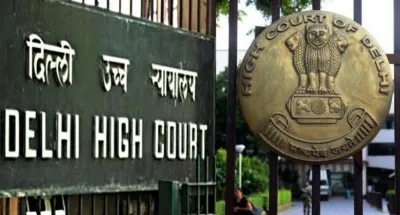
The Delhi High Court upheld the ban most recently in 2022 , issuing no directions to reinstate elections.
Vice Chancellor Mazhar Asif , who took charge in October 2024 , has stated his administration is committed to an 'amicable resolution' of the 'two-decade-old impasse.' JMI currently runs department-level subject association elections by secret ballot as an alternate representative mechanism.
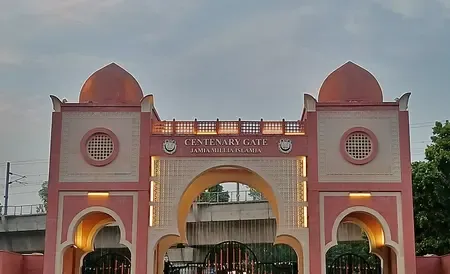
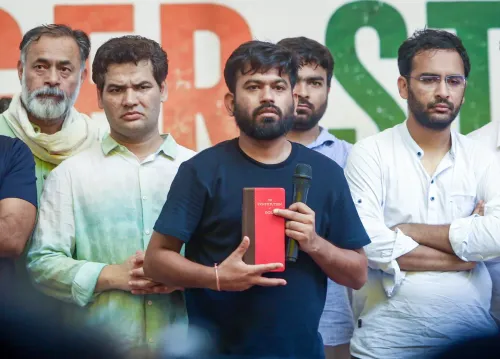
Jamia Millia Islamia (JMI) has constituted a 7-member committee of Deans and Professors to engage with students who have been protesting — including staging a hunger strike — over their demand to revive the university's students' union elections, banned since 2006 following violent clashes on campus. The development was confirmed by JMI Chief Public Relations Officer Saima Saeed on Monday, 19 October 2026.
How the Committee Was Formed
The committee was constituted following a high-level meeting of senior university functionaries held on Sunday evening, chaired by Vice Chancellor Mazhar Asif. The meeting was attended by Registrar Md. Mahtab Alam Rizvi, Controller of Examinations Ahteshamul Haque, Deans of Faculties, Dean of Students' Welfare, Dean of Academic Affairs, the Chief Proctor, Provosts of all Hostels, and the Chief Public Relations Officer, among others.
The committee has been tasked with examining the students' demands and taking necessary steps towards restoring peace and ensuring a return to normalcy on the New Delhi campus, according to the official statement issued by Saeed.
The Students' Protest and Key Demands
A group of Jamia students launched a hunger strike on 12 October, pressing two demands: the restoration of the students' union and the withdrawal of what they described as the suspension of agitators by the university. The protest has continued for over a week, prompting the administration to convene Sunday's emergency meeting.
This comes amid a wider national conversation about student representation in central universities, where elected unions remain a flashpoint between administrations and student bodies.
The 2006 Ban and Court History
Students' union elections at JMI were dissolved in 2006 following what the university described as recurrent incidents of violent clashes, attacks on teachers, and frequent disruption of classes. The decision has withstood several legal challenges in the Delhi High Court.
Most recently, in 2022, the High Court accepted JMI's submissions and disposed of a petition without issuing any directions to the university to conduct union elections, citing the documented history of violent disruptions on campus both during and after 2006. In the intervening years, courts issued no directions compelling the university to reinstate elections, according to the statement.
Notably, the present administration, which assumed office in October 2024, has stated it remains committed to finding an amicable resolution to what it called the 'two-decade-old impasse.'
What the University Said
'The University administration remains committed to resolving the matter through constructive dialogue and deliberation, grounded in mutual trust and understanding and seeks the same spirit of cooperation from the protesting students and other stakeholders,' the statement said.
The administration also highlighted an existing system of subject association elections in each department and centre, under which students vote by secret ballot to elect three office-bearers — the Vice President, General Secretary, and Joint Secretary. The university argued this mechanism 'has served the students very well through these past years.'
What Comes Next
The 7-member committee is now expected to meet with protesting students and submit its recommendations to the Vice Chancellor. The university has called upon all stakeholders to 'safeguard the name, reputation, and high national and international ranking of the 106-year-old university.' Whether the committee's engagement leads to a concrete timeline for restoring union polls — or results in a stalemate — will determine whether the campus protests escalate or wind down.
Point of View
Not a resolution — and JMI's history suggests the gap between dialogue and action can span years. The university's repeated invocation of the 2006 violence and the 2022 court ruling serves a dual purpose: it legally insulates the administration while also signalling that any revival will come on its own terms. What is conspicuously absent from the statement is any timeline, mandate, or commitment to a specific outcome. A committee tasked with 'examining demands' and 'restoring normalcy' is not the same as one authorised to recommend reinstating elections. Unless the protesting students extract a clearer mandate, this risks becoming a mechanism for deescalation rather than structural change.
NationPress
19 Oct 2026
Frequently Asked Questions
Why are Jamia Millia Islamia students protesting?
Students at JMI launched a hunger strike on 12 October demanding the restoration of the students' union, whose elections were banned in 2006, and the withdrawal of alleged suspensions of agitating students. The protest reflects a two-decade-long demand for elected student representation at the university.
Why were students' union elections banned at JMI in 2006?
The university dissolved the students' union in 2006 following recurrent violent clashes on campus, attacks on teachers, and frequent disruption of academic activities. The ban has since been upheld by the Delhi High Court, most recently in 2022, when the court disposed of a petition without directing JMI to reinstate elections.
What is the 7-member committee and what will it do?
The 7-member committee comprises Deans and Professors and was constituted by Vice Chancellor Mazhar Asif after a high-level meeting on Sunday, 18 October. It is tasked with examining the students' demands and recommending steps to restore peace and normalcy on campus.
Does JMI have any existing form of student elections?
Yes. JMI currently runs subject association elections in each department and centre, where students elect three office-bearers — the Vice President, General Secretary, and Joint Secretary — by secret ballot. The administration considers this a robust democratic mechanism, though protesting students want a centralised students' union restored.
What has the Delhi High Court said about reinstating JMI's union elections?
The Delhi High Court has repeatedly declined to order JMI to reinstate students' union elections. Most recently, in 2022, it accepted the university's submissions and disposed of the matter without issuing any directions, citing the documented history of violent disruptions on campus.