JNUSU Organizes University-Wide Strike Following Arrest of 13 Students
Synopsis
In a bold move, JNUSU has called for a university-wide strike protesting the arrest of 13 students, sparking a heated clash with police. The incident raises critical questions about student rights and university governance.
Key Takeaways
JNUSU has initiated a university strike following the arrest of 13 students.
Claims of police brutality and damage to property have emerged.
The union is demanding accountability and the Vice-Chancellor's resignation.
Ongoing protests highlight significant student unrest.
University administration cites legal constraints regarding protests.
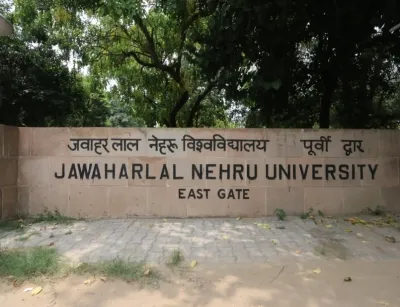
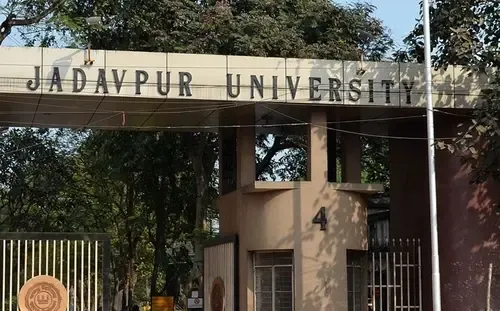
New Delhi, Feb 27 (NationPress) The Jawaharlal Nehru University Students' Union (JNUSU) has declared a total university strike in response to the detention of 13 students, including three office-bearers, during a demonstration aimed at the Ministry of Education (MoE).
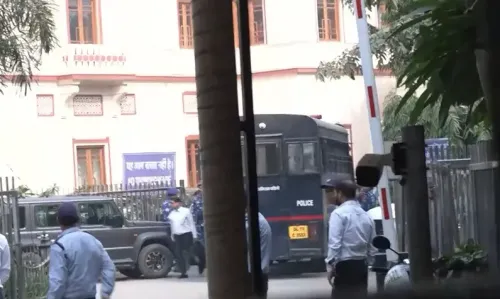
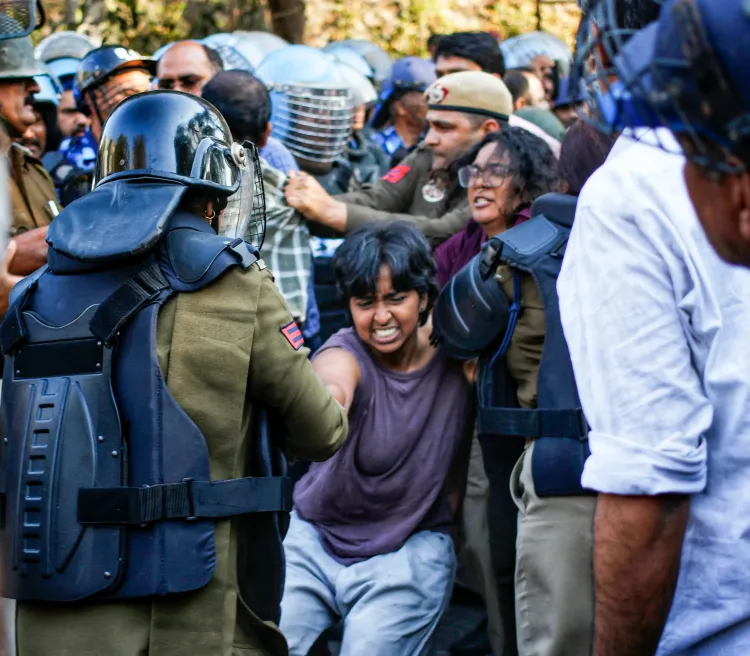
The union alleges that numerous students were severely assaulted and injured during the protest and claims that a portrait of Babasaheb Ambedkar was vandalized amid police intervention. The detained students were presented in court as the Delhi Police seeks judicial custody.
In their statement, JNUSU demands the immediate and unconditional release of all 13 students and office-bearers. They also called for the resignation of the Vice-Chancellor due to alleged casteist comments, accusing her of negligence and complicity in protecting students.
Additionally, the union is demanding accountability and action against police personnel allegedly involved in the desecration of Dr. B.R. Ambedkar's portrait and is calling for the withdrawal of all proctorial actions and FIRs against student activists.
With slogans like “Free Our Comrades Now” and “Long Live Student Unity,” the union aims to escalate its protest efforts on campus.
The arrested students include Nitish Kumar, Aditi Mishra, Gopika Babu, and Danish Ali. Aditi Mishra serves as the JNUSU president, Nitish Kumar is a former president, Gopika Babu is the secretary, and Danish Ali is the general secretary.
The conflict erupted on Thursday when students sought to embark on a “Long March” from the JNU campus to the Ministry of Education. According to police reports, the march was organized without the necessary permissions to move beyond campus boundaries. The JNU administration had allegedly informed students that no approval was granted for protests outside university grounds and advised them to keep their demonstration within campus limits.
Despite this, police reported that approximately 400-500 students gathered and commenced marching. At around 3:20 p.m., the protesters moved through the main gate, attempting to head towards the ministry, which led to a confrontation between students and police.
Police officials allege that protesters resorted to throwing sticks and shoes and physically assaulted officers, resulting in injuries to several. Some officers reportedly sustained bites during the skirmish. Conversely, students claim that the police used excessive force, leading to injuries among numerous protesters.
JNUSU asserts that a portrait of Dr. B.R. Ambedkar was damaged during the police action. Videos purportedly showing the clash surfaced online, including one depicting an Ambedkar portrait being forcibly taken from protesters. However, the authenticity of these videos remains unverified.
This protest march is part of ongoing demonstrations against JNU Vice-Chancellor Santishree Dhulipudi Pandit's recent statements on a podcast concerning the implementation of University Grants Commission (UGC) norms, the expulsion of JNUSU office-bearers, and the proposed Rohith Act.
In a statement, the JNU Teachers Association (JNUTA) condemned what it referred to as the “brutal use of force” by the police. It claimed that multiple students, including women, were injured and expressed concern for the welfare of those detained, alleging that some were taken to “unconfirmed locations.”
JNUTA called for the immediate release of all detained students and asserted that police actions infringed upon students’ democratic rights to protest.
Meanwhile, the university administration released an official statement claiming that JNUSU protesters were demanding the implementation of UGC regulations, despite a Supreme Court stay. They stated that the Vice-Chancellor and Registrar hold no authority over these regulations and accused JNUSU of neglecting issues concerning students who were expelled for alleged “vandalism and violence” on campus.
Point of View
The recent events at JNU highlight a significant clash between student activism and institutional authority. The JNUSU's call for a strike reflects deep-seated frustrations regarding governance and student rights, while the university administration's stance raises questions about the management of protests and adherence to regulations. This incident underscores the ongoing struggle for accountability and justice within academic institutions.
NationPress
30 Sept 2026
Frequently Asked Questions
What led to the JNUSU strike?
The JNUSU strike was initiated in response to the arrest of 13 students during a protest march aimed at the Ministry of Education.
Who are the arrested students?
The detained students include JNUSU president Aditi Mishra, former president Nitish Kumar, secretary Gopika Babu, and general secretary Danish Ali.
What are the main demands of JNUSU?
JNUSU demands the immediate release of all detained students, the resignation of the Vice-Chancellor, and accountability for police actions.
What allegations have been made against the police?
Students accused the police of using excessive force during the protest, leading to injuries among protesters and damage to property.
What is the university administration's response?
The university administration claimed that JNUSU protesters demanded the implementation of UGC regulations despite a Supreme Court stay.