Pralhad Joshi Hails IIT Madras Brain Centre After Mann Ki Baat
Synopsis
Union Minister Pralhad Joshi on 25 October 2026 amplified PM Modi's Mann Ki Baat praise for IIT Madras's Sudha Gopalakrishnan Brain Centre, whose brain-imaging platform has been called a global benchmark, underscoring India's growing ambitions in neuroscience research.
Key Takeaways
PM Narendra Modi spotlighted the Sudha Gopalakrishnan Brain Centre at IIT Madras in the 25 October 2026 episode of Mann Ki Baat .
The centre has developed a brain-imaging technology platform described as setting a global benchmark .
Union Minister Pralhad Joshi amplified the PM's remarks on X, citing India's scientific excellence and youth potential.
Mann Ki Baat has run since October 2014 as a monthly radio address highlighting national achievements.
IIT Madras has increasingly expanded into interdisciplinary life-sciences research alongside its core engineering mandate.
A brain-imaging technology platform built at one of India's premier research institutions has earned a mention from the highest office in the land — and now a second wave of recognition from the Union Cabinet. On Sunday, 25 October 2026, Union Consumer Affairs Minister Pralhad Joshi amplified Prime Minister Narendra Modi's praise for the Sudha Gopalakrishnan Brain Centre at IIT Madras, calling its work a 'global benchmark' in brain-imaging technology.
What Modi said on Mann Ki Baat — and why it matters
Mann Ki Baat, the monthly radio address PM Modi has hosted since October 2014, has long served as a platform to spotlight homegrown scientific achievement. In today's episode, the Prime Minister turned his attention to neuroscience — flagging the Sudha Gopalakrishnan Brain Centre's brain-imaging platform as evidence of India's expanding scientific ambition. Minister Joshi echoed that sentiment on X, calling the achievement a reflection of 'India's growing scientific excellence and the immense potential of its youth.'
The framing is deliberate. Mann Ki Baat does not typically dwell on niche laboratory breakthroughs — when it does, the signal is that a particular institution or technology has crossed a threshold worth national attention. For IIT Madras, the mention doubles as a public endorsement of its push into high-end interdisciplinary research.
The Sudha Gopalakrishnan Brain Centre's rising profile
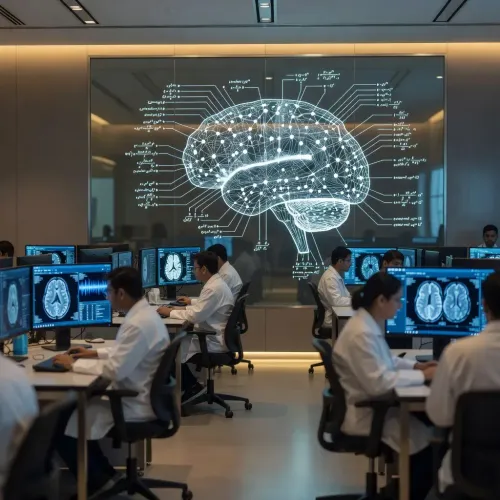
Housed within IIT Madras, the Sudha Gopalakrishnan Brain Centre has focused on advancing neuroscience and brain-imaging applications. The centre's work sits at the intersection of engineering precision and medical science — exactly the kind of translational research successive Indian governments have encouraged premier institutes to pursue. Its brain-imaging platform, according to today's post, sets a standard that extends beyond domestic benchmarks.
India's investment in neuroscience infrastructure has been gradual but deliberate. IITs, historically engineering-first institutions, have broadened into life sciences and health technology over the past decade. The Sudha Gopalakrishnan Brain Centre represents that pivot in tangible form.
Youth, science, and the self-reliance narrative
Minister Joshi's post does more than relay Modi's words — it plants a flag for a specific political and policy narrative: that young Indian researchers, working within Indian institutions, are now generating knowledge that matters globally. The language of 'unlocking new possibilities for humanity' situates this not as a domestic milestone but as an Indian contribution to a universal challenge. Brain research, with its implications for neurological disease, mental health, and human cognition, is one of the most consequential frontiers in 21st-century science. Staking a claim there is a different kind of assertion than a satellite launch or a software export figure — it is quieter, but in the long run, potentially just as consequential.
Watch for whether the brain-imaging platform draws follow-up attention in policy circles — funding announcements, international collaborations, or further Mann Ki Baat references would confirm that today's mention is the beginning of a sustained push, not a one-episode spotlight.
Point of View
Converting institutional breakthroughs into national pride narratives — and today's episode extends that pattern into neuroscience, an arena with significant global stakes. Minister Joshi's amplification is not incidental; Cabinet-level re-sharing of Mann Ki Baat highlights signals coordinated messaging around a chosen theme. Positioning IIT Madras's brain-imaging work as a 'global benchmark' serves the broader 'Atmanirbhar Bharat' science narrative while reaching an audience — neuroscientists and STEM researchers — that is rarely addressed through political communication. Whether the rhetorical attention translates into sustained funding and policy infrastructure for Indian neuroscience will be the real test of its significance.
NationPress
25 Oct 2026
Frequently Asked Questions
What is the Sudha Gopalakrishnan Brain Centre at IIT Madras?
The Sudha Gopalakrishnan Brain Centre is a neuroscience research facility at IIT Madras focused on advanced brain-imaging technology and neuroscience applications. It has developed a brain-imaging platform that PM Modi described as setting a global benchmark during Mann Ki Baat on 25 October 2026.
What did PM Modi say about IIT Madras in Mann Ki Baat?
In the 25 October 2026 episode of Mann Ki Baat, PM Narendra Modi highlighted the work of the Sudha Gopalakrishnan Brain Centre at IIT Madras, praising its brain-imaging technology platform as a pioneering achievement that sets a global standard.
What is Mann Ki Baat and when did it start?
Mann Ki Baat is a monthly radio address hosted by PM Narendra Modi that began in October 2014. Each episode discusses citizen stories, government schemes, and national achievements including scientific and technological milestones.
Why did Pralhad Joshi post about the IIT Madras brain centre?
Union Consumer Affairs Minister Pralhad Joshi shared the Mann Ki Baat reference on X to amplify PM Modi's recognition of the Sudha Gopalakrishnan Brain Centre, underlining India's scientific excellence and the potential of Indian youth in advancing brain research.
What is IIT Madras known for in neuroscience research?
IIT Madras, one of India's premier technical institutions, has been expanding into interdisciplinary life-sciences research. The Sudha Gopalakrishnan Brain Centre represents its push into high-end neuroscience, combining engineering expertise with medical-science applications.