PM Modi at Mann Ki Baat: IIT Madras start-ups lead India's deep-tech push
Synopsis
In the 139th Mann Ki Baat, Modi went beyond platitudes — he named specific deep-tech start-ups at IIT Madras working on flying EVs, AI-powered cancer screening, and defence applications, framing institutional incubation as the real engine behind India's talent. The Kapany tribute added a rare historical anchor: the man who made the internet's physical backbone possible was born in Punjab's Moga, and turns 100 on 31 October.
Key Takeaways
PM Modi spotlighted IIT Madras deep-tech start-ups during the 139th episode of Mann Ki Baat on 25 October 2026 .
Start-ups highlighted include teams working on flying electric vehicles , fast-charging drone batteries , AI for defence , gold quality verification , bank fraud recovery , and AI-based cervical cancer screening .
Modi credited the IIT Madras incubation ecosystem as key to enabling breakthrough innovation among young entrepreneurs.
The Prime Minister paid tribute to Narinder Singh Kapany , the 'Father of Fibre Optics' , ahead of his 100th birth anniversary on 31 October .
Kapany, born in Moga, Punjab , pioneered the transmission of light through thin fibres, laying the groundwork for modern internet infrastructure.
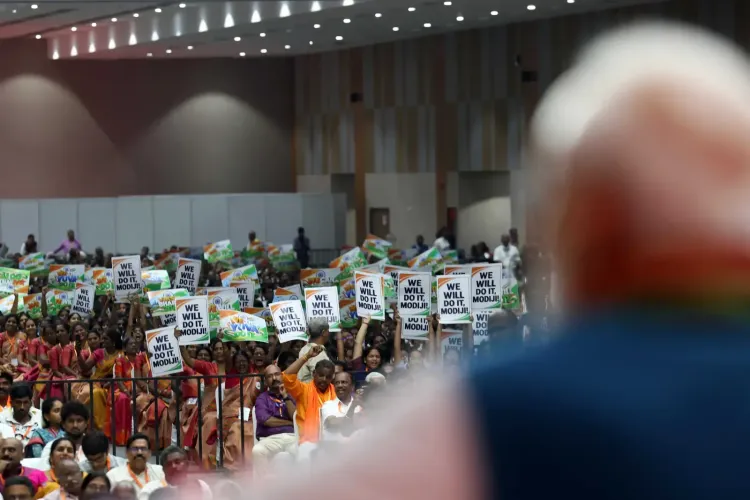
Prime Minister Narendra Modi on Sunday, 25 October 2026, praised the cutting-edge work of young entrepreneurs and researchers at IIT Madras, saying India's youth are delivering breakthrough technological solutions in financial security, healthcare, defence, and transportation. He made the remarks during the 139th episode of his monthly radio programme, 'Mann Ki Baat', drawing on impressions from his recent visit to Chennai.
Deep-Tech at IIT Madras: What Modi Saw
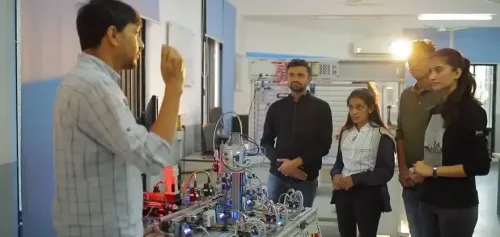
Recalling his visit to IIT Madras and a metro journey through Chennai, Modi said his interaction with young people was 'entirely focused on deep-tech.' The start-ups he encountered are backed by the institute's incubation ecosystem and are tackling problems well beyond conventional software applications.
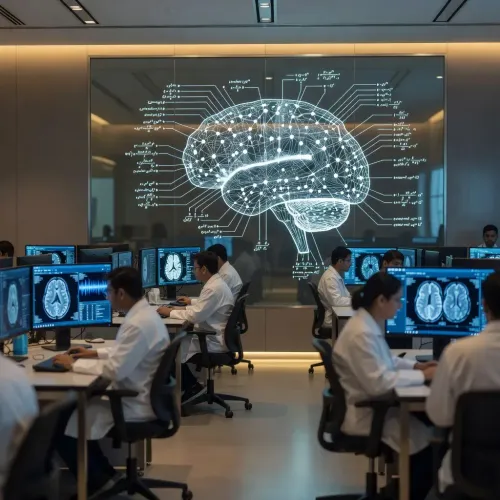
Among the highlighted ventures: one team is building a flying electric vehicle capable of operating over the sea, while another is developing fast-charging batteries for drones and electric vehicles. A third is applying artificial intelligence (AI) to defence technology — an area that has historically been dominated by state-owned research bodies.
From Gold Fraud to Cancer Screening
Modi also spotlighted start-ups with direct consumer impact. One is developing technology to verify the quality of gold at the point of purchase, aiming to shield buyers from fraud in a country where gold transactions run into several lakh crore rupees annually. Another team is building a platform to accelerate recovery of money lost in bank fraud cases — a concern that has grown alongside India's digital payments boom.
In healthcare, a separate team is exploring the use of AI for cervical cancer screening, a field where early detection remains critically uneven across urban and rural India. 'It was truly heartening to see how our youth are working on innovative solutions to problems,' Modi said.
The Enabling Environment Argument
'Our youth are achieving such extraordinary things today because they are receiving the right environment and support. It is not as if there has ever been a shortage of talent in our country,' the Prime Minister said. The remark is a pointed reference to India's broader start-up policy push — from tax incentives for recognised start-ups to the DPIIT-backed incubation framework that underpins hubs like the one at IIT Madras.
This comes amid India's sustained push to rank among the world's top-three start-up ecosystems. The country has crossed 1.4 lakh DPIIT-recognised start-ups, with deep-tech emerging as the fastest-growing segment in recent years.
Tribute to Narinder Singh Kapany, 'Father of Fibre Optics'
Modi used the broadcast to pay tribute to Narinder Singh Kapany, ahead of his 100th birth anniversary on 31 October. Born in the Moga district of Punjab, Kapany made pioneering contributions to fibre-optics technology and earned global recognition for his research into transmitting light through ultra-thin fibres.
'His advanced research into the technology of transmitting light through thin fibres lent a new direction to the world of communication. It is difficult to even imagine the era of the internet and digital communication that we live in today without fibre optics,' Modi said. He urged the country's youth to study the lives of scientists like Kapany and draw inspiration from them.
What This Signals
The IIT Madras spotlight and the Kapany tribute together frame a consistent narrative from the Prime Minister: India's technological ambition rests on honouring its scientific heritage while channelling present-day innovation through structured institutional support. With deep-tech start-ups now working on everything from flying EVs to AI-driven cancer diagnostics, the next 'Mann Ki Baat' may well have more such stories to tell.
Point of View
Rather than market forces alone, will produce India's next technological wave. Yet the gap between a Radio mention and a funded, scaled start-up remains wide; most deep-tech ventures in India still struggle past Series A due to limited domestic institutional capital and long product cycles. The Kapany tribute, while culturally resonant, also surfaces a quiet irony: one of India's most consequential scientists spent his career abroad, at institutions in the UK and the US. The 'right environment' Modi speaks of is still a work in progress.
NationPress
25 Oct 2026
Frequently Asked Questions
What did PM Modi say about IIT Madras start-ups in Mann Ki Baat?
PM Modi praised young entrepreneurs at IIT Madras during the 139th episode of Mann Ki Baat on 25 October 2026, highlighting start-ups working on flying electric vehicles, fast-charging drone batteries, AI in defence, gold quality verification, bank fraud recovery platforms, and AI-assisted cervical cancer screening. He credited the institute's incubation ecosystem for enabling this innovation.
Who is Narinder Singh Kapany and why is Modi paying tribute to him?
Narinder Singh Kapany is internationally recognised as the 'Father of Fibre Optics' for his pioneering research into transmitting light through ultra-thin fibres. Born in the Moga district of Punjab, he would have turned 100 on 31 October, and PM Modi urged India's youth to read about and draw inspiration from his life's work.
What is the significance of the IIT Madras incubation ecosystem?
The IIT Madras incubation ecosystem provides institutional support — mentorship, funding access, and infrastructure — to deep-tech start-ups. PM Modi specifically credited this environment as the reason young talent is now producing advanced solutions in sectors like defence, healthcare, and clean energy.
What deep-tech areas are Indian start-ups at IIT Madras working on?
According to PM Modi's Mann Ki Baat address, IIT Madras-backed start-ups are working on flying electric vehicles for sea travel, fast-charging batteries for drones and EVs, AI applications in defence, gold quality verification technology, a bank fraud money recovery platform, and AI-based cervical cancer screening.
What was the broader message of the 139th Mann Ki Baat episode?
PM Modi's central message was that India has never lacked talent — what has changed is the environment and institutional support now available to young innovators. The episode linked present-day deep-tech start-ups to the legacy of scientists like Narinder Singh Kapany, framing innovation as both a contemporary achievement and a historical continuum.