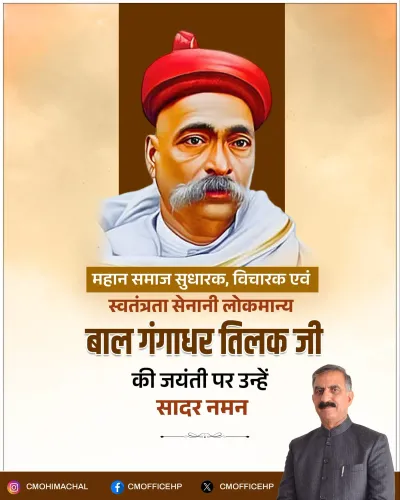
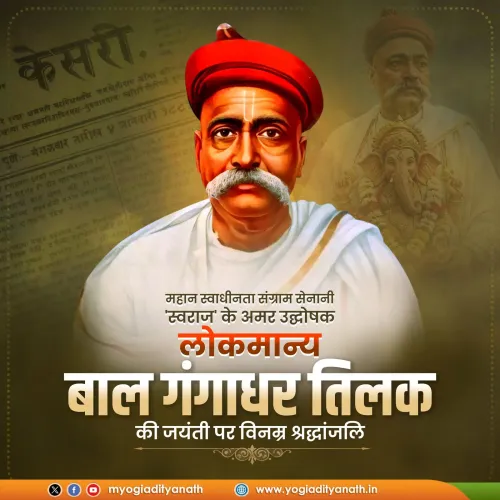
Pralhad Joshi Pays Tribute to Bal Gangadhar Tilak on Birth Anniversary
Synopsis
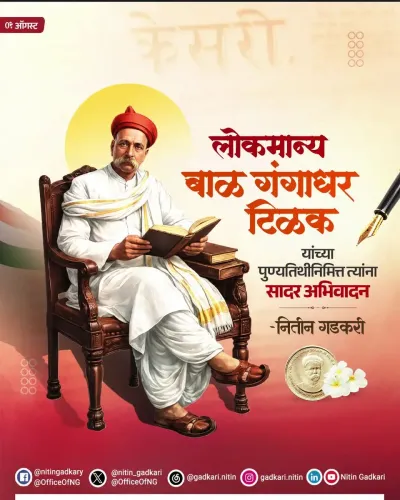
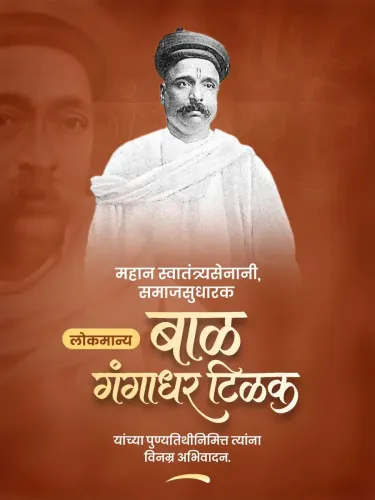
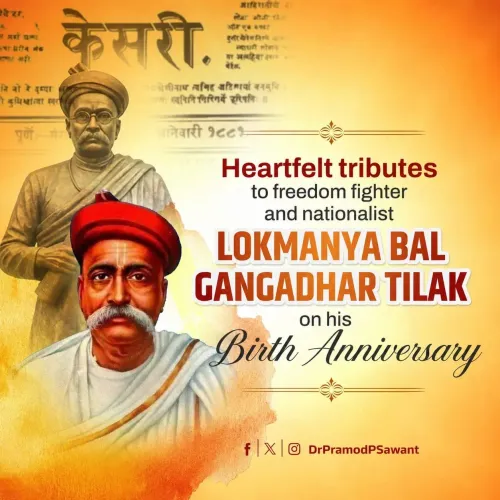
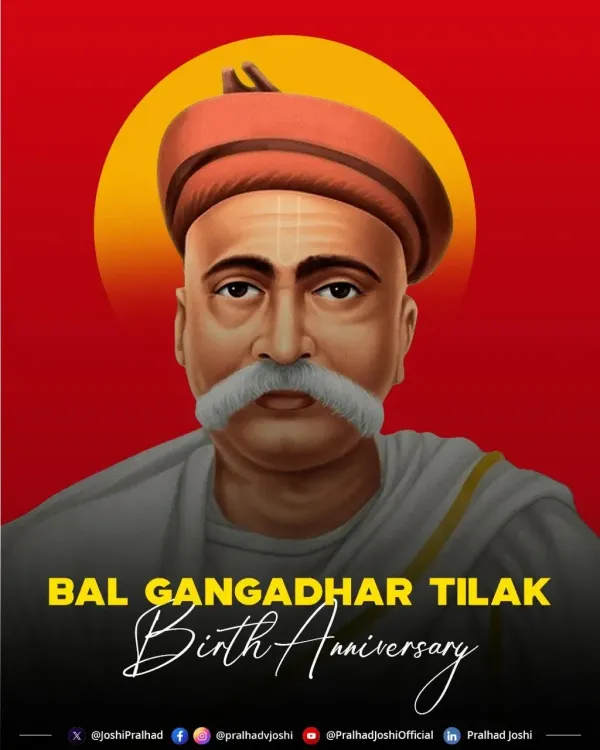
Union Consumer Affairs Minister Pralhad Joshi paid tribute to Lokmanya Bal Gangadhar Tilak on his birth anniversary on 23 July 2026, honouring the freedom fighter's Swaraj legacy and invoking his enduring call for a self-reliant and developed Bharat.
Key Takeaways
Union Consumer Affairs Minister Pralhad Joshi posted a tribute to Lokmanya Bal Gangadhar Tilak on 23 July 2026 , his birth anniversary.
Joshi called Tilak a 'towering freedom fighter, visionary nationalist and one of the foremost architects of India's freedom movement.' The minister included a Kannada-language passage quoting Tilak's famous declaration: 'Swaraj is my birthright and I shall have it.' Bal Gangadhar Tilak (1856–1920) co-founded the Home Rule Movement in 1916 and led the assertive nationalist faction at the 1907 Surat Congress session .
Joshi linked Tilak's legacy to the contemporary vision of a 'strong, self-reliant and developed Bharat.'
Union Consumer Affairs Minister Pralhad Joshi on Thursday, 23 July 2026, paid tribute to Lokmanya Bal Gangadhar Tilak on his birth anniversary, hailing the freedom fighter as a 'towering' nationalist and one of the foremost architects of India's independence movement.
Context
In his post, Minister Joshi described Tilak's call for Swaraj as a force that 'ignited the spirit of patriotism and awakened the nation.' He also wrote in Kannada, invoking Tilak's legendary declaration — 'Swarajya nanna janmasiddha hakku, adannu padeye teeruttene' [Swaraj is my birthright and I shall have it] — calling it a rallying cry that stirred self-respect among crores of Indians. Joshi described Tilak as a fighter, social reformer, and thinker whose 'sacrifice, courage and foresight continue to inspire us even today.'
Policy Backdrop
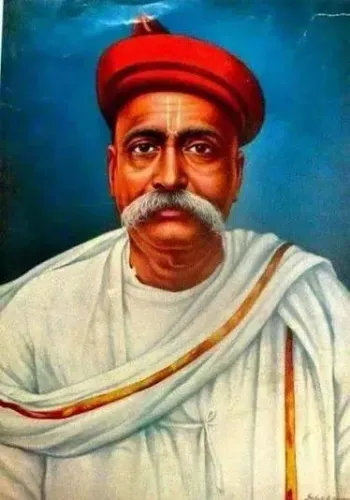
Bal Gangadhar Tilak (1856–1920), widely known as 'Lokmanya,' was one of the most consequential figures of India's nationalist movement. He popularised the slogan 'Swaraj is my birthright and I shall have it,' which became a defining call to action for millions under British rule. Tilak co-founded the Home Rule Movement in 1916 alongside Annie Besant, pressing for self-governance within the British Empire, and led the assertive 'Extremist' faction that clashed with moderate leaders at the 1907 Surat session of the Indian National Congress — a split that crystallised the demand for complete self-rule.
Tilak also revived the Ganesh Chaturthi and Shivaji Jayanti festivals as public, community-driven events to build nationalist consciousness, recognising mass mobilisation as essential to the freedom struggle. His newspaper, Kesari, served as a platform for assertive nationalist thought and landed him multiple terms of imprisonment under British authorities.
Stakeholders and Impact
Ruling party leaders across India regularly mark Tilak Jayanti on 23 July to connect the 19th- and 20th-century Swadeshi and Swaraj ideals with the contemporary policy emphasis on self-reliance, often framed under initiatives promoting domestic manufacturing and economic sovereignty. Minister Joshi's tribute fits this pattern, explicitly linking Tilak's legacy to the vision of a 'strong, self-reliant and developed Bharat.' For nationalist youth and citizens engaged with India's political history, such commemorations serve as touchstones that reinforce a continuum between historical sacrifice and present-day governance priorities.
Joshi's choice to include a Kannada-language passage is also notable: it directly addresses his home state of Karnataka and signals cultural pride in a leader who, while from Maharashtra, holds pan-Indian significance.
What's Next
Tilak Jayanti observances typically prompt parliamentary references, state-level commemorative events, and policy speeches that invoke his legacy of self-reliance. Statements from other senior leaders and possible government-organised events marking the anniversary are expected through the day. Tilak's ideas around Swaraj and Swadeshi are likely to continue surfacing in upcoming policy discourse around economic self-sufficiency and national sovereignty.
Point of View
Embedding governance narratives within the moral authority of the independence movement.
NationPress
21 Oct 2026
Frequently Asked Questions
When is Bal Gangadhar Tilak's birth anniversary?
Bal Gangadhar Tilak was born on 23 July 1856 , and his birth anniversary, known as Tilak Jayanti, is observed every year on that date across India.
What is Bal Gangadhar Tilak famous for?
Tilak is best known for the slogan 'Swaraj is my birthright and I shall have it,' his leadership of the assertive nationalist faction in the Indian National Congress, and co-founding the Home Rule Movement in 1916 .
Who is Pralhad Joshi?
Pralhad Joshi is a senior BJP leader from Karnataka and currently serves as India's Union Minister of Consumer Affairs, Food and Public Distribution, and Minister of New and Renewable Energy.
What was the Home Rule Movement started by Tilak?
The Home Rule Movement , co-founded by Bal Gangadhar Tilak and Annie Besant in 1916 , was a campaign to secure self-governance for India within the British Empire, marking a significant escalation in organised nationalist demand.
Why do Indian leaders pay tribute to Tilak on 23 July?
23 July is Tilak's birth anniversary, and leaders across parties mark the occasion to honour his contribution to India's freedom struggle, with ruling party figures often connecting his Swaraj and Swadeshi ideals to contemporary policies on national self-reliance.