Pralhad Joshi Pays Tribute to VHP Leader Ashok Singhal
Synopsis
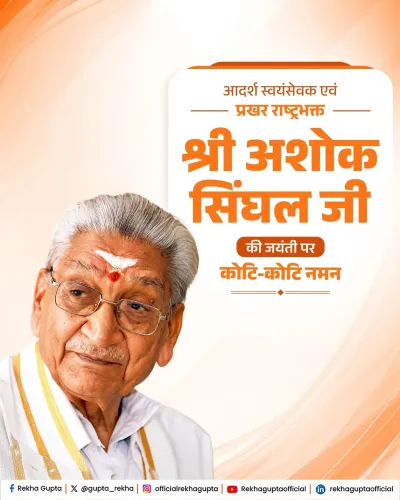
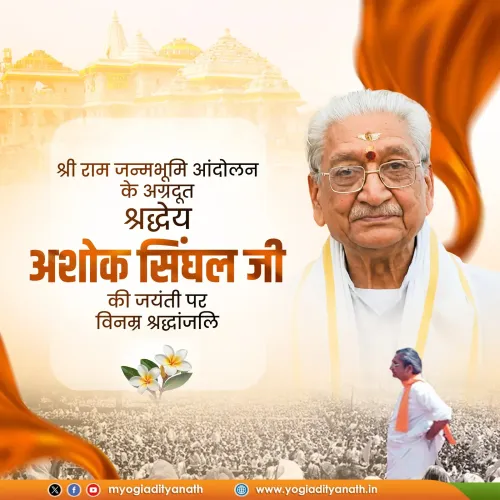
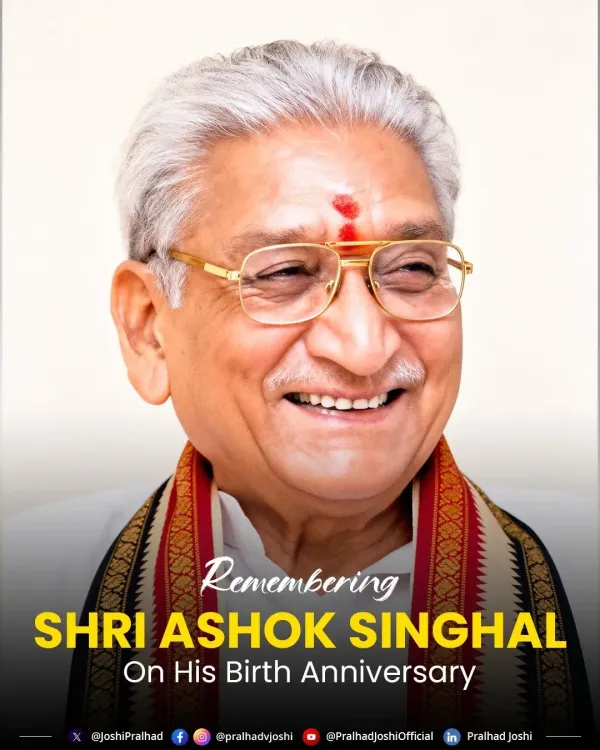
Union Minister Pralhad Joshi on 27 September 2026 paid tribute to senior VHP leader and Ram Janmabhoomi organiser Ashok Singhal on his birth anniversary, honouring his legacy of Dharma, social service and national unity in a bilingual English-Kannada post.
Key Takeaways
Union Consumer Affairs Minister Pralhad Joshi posted a tribute to Ashok Singhal on his birth anniversary on 27 September 2026 .
Ashok Singhal was a senior leader of the Vishva Hindu Parishad (VHP) , founded in 1964 .
Singhal was a leading organisational figure in the Ram Janmabhoomi movement , which intensified from the mid-1980s onward.
Joshi posted in both English and Kannada, signalling regional outreach to his home state of Karnataka .
The tribute is part of the BJP's consistent practice of publicly honouring VHP and Ayodhya movement veterans on key anniversaries.
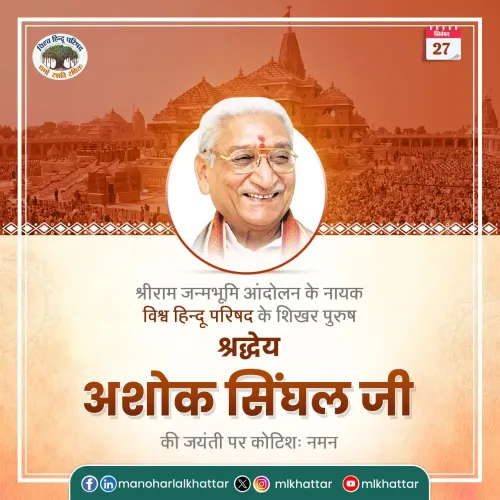
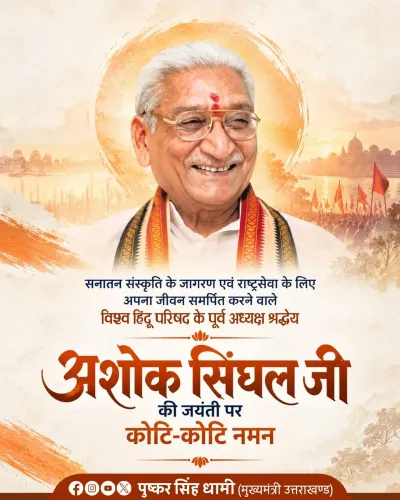
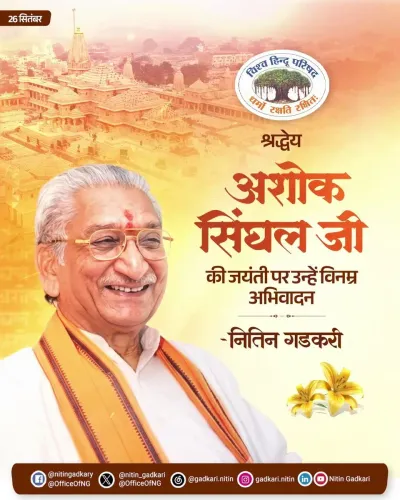
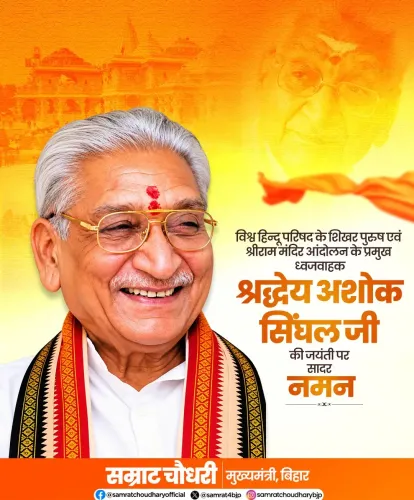
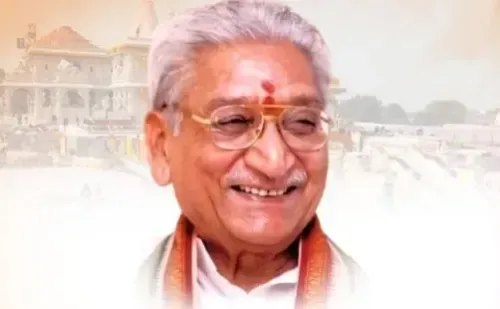
On the birth anniversary of Ashok Singhal, one of the most consequential organisers of the Ram Janmabhoomi movement, Union Consumer Affairs Minister Pralhad Joshi offered respectful tributes on Sunday, 27 September 2026, honouring a figure whose decades of work shaped modern Hindu nationalist politics in India.
Joshi wrote: 'On the birth anniversary of revered Shri Ashok Singhal ji, I pay my respectful tributes to his enduring contribution to society and the nation. His lifelong commitment to Dharma, social service and national unity remains a source of inspiration.'
He added that Singhal's ideals 'continue to guide us in our collective endeavour to build a strong, prosperous and self-reliant India.' The post also carried a tribute in Kannada, ಗೌರವಪೂರ್ವಕ ನಮನಗಳು ('respectful salutations'), reaching Joshi's home-state constituency in Karnataka.
Singhal's role in the Ram Janmabhoomi campaign
Ashok Singhal served as a senior leader of the Vishva Hindu Parishad (VHP), the Hindu nationalist body founded in 1964 to promote Hindu unity and cultural causes. From the mid-1980s onward, Singhal became one of the most prominent organisational voices of the Ram Janmabhoomi campaign — the decades-long movement seeking a temple at Ayodhya — marshalling mass mobilisation at a scale that left a lasting imprint on Indian public life.
His legacy is inseparable from the eventual consecration of the Ram Temple at Ayodhya, an outcome he campaigned for throughout his life.
BJP's consistent calendar of VHP remembrances
Joshi's tribute is part of a well-established pattern within the BJP: senior ministers and leaders regularly mark the birth and death anniversaries of figures associated with VHP and the Ayodhya movement, weaving organisational memory into the party's public calendar. For a Karnataka-based minister like Joshi, posting in both English and Kannada also signals outreach to a state where the BJP has invested heavily in Hindu consolidation narratives.
The dual-language post — formal English tribute paired with a Kannada salutation — underscores how anniversary messaging increasingly doubles as regional political communication, not merely ceremonial remembrance.
Point of View
Where Hindu consolidation remains electorally significant. Such anniversary tributes are not merely personal homage; they function as a recurring assertion of ideological lineage, connecting the current government's 'self-reliant India' framing to the Hindutva organisational tradition. Analysts tracking BJP communication will note how the language of 'Dharma, national unity and social service' is consistently deployed to bridge VHP heritage with mainstream governance messaging.
NationPress
27 Sept 2026
Frequently Asked Questions
Who was Ashok Singhal?
Ashok Singhal was a senior leader of the Vishva Hindu Parishad (VHP) and one of the most prominent organisers of the Ram Janmabhoomi movement, which campaigned for the construction of a Ram temple at Ayodhya.
What is the Vishva Hindu Parishad (VHP)?
The Vishva Hindu Parishad is a Hindu nationalist organisation founded in 1964 to promote Hindu unity and cultural causes. It played a central role in the Ram Janmabhoomi campaign from the mid-1980s onward.
Why did Pralhad Joshi post in Kannada?
Pralhad Joshi is a senior BJP leader from Karnataka. Including a Kannada tribute alongside the English post allows him to reach his home-state audience and signals regional political outreach.
What is the Ram Janmabhoomi movement?
The Ram Janmabhoomi movement was a decades-long campaign to build a Ram temple at the site believed to be the birthplace of Lord Ram in Ayodhya. Ashok Singhal was a key organisational figure in this movement.
Why do BJP ministers regularly post tributes to VHP leaders?
BJP ministers regularly mark the birth and death anniversaries of VHP and Ayodhya movement figures as part of the party's practice of publicly honouring figures central to its ideological and organisational heritage.