Kalaburagi Thogari earns GI tag, global market recognition after Modi Mann Ki Baat mention

Synopsis
After PM Modi name-checked Kalaburagi Thogari on Mann Ki Baat, the GI-tagged pigeon pea of Kalyana Karnataka has stepped onto the global stage. With protein levels of up to 23% and a limestone-rich terroir, it has the credentials — but farmers say the real test is whether policy can match the recognition.
Key Takeaways
Kalaburagi Thogari (pigeon pea/toor dal) is gaining international recognition as a premium pulse from Kalyana Karnataka .
Prime Minister Narendra Modi highlighted the product in his Mann Ki Baat radio programme, boosting its global visibility.
The crop holds a Geographical Indication (GI) tag , protecting its regional identity in global trade.
Nutritional data shows approximately 22.30 grams of protein per 100 grams , with protein content ranging between 18 and 23 per cent .
Cultivation spans Kalaburagi, Bidar, Yadgir , and Vijayapura districts, supporting farmer livelihoods across the region.
Traders have called for regulation of pulse imports and stronger government support to sustain demand for domestic high-quality produce.
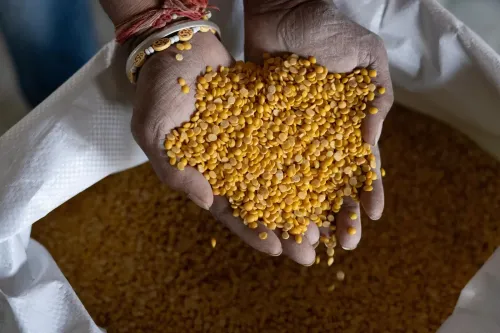
Kalaburagi's prized Thogari — the pigeon pea variety popularly called the 'Thogari Khanaja' of Kalyana Karnataka — is earning international recognition and finding buyers in overseas markets, buoyed in part by Prime Minister Narendra Modi's spotlight on the pulse during his monthly radio programme Mann Ki Baat. The development has lifted hopes among farmers and dal mill traders across the region for better returns and wider market access.
A Pulse With a Protected Identity
Kalaburagi district has long been regarded as a storehouse of high-quality Thogari owing to its extensive cultivation and the distinctive attributes of its pigeon peas. The crop has received the Geographical Indication (GI) tag, formally recognising its regional identity and protecting its provenance. Traders and farmer groups say the GI certification has been a key lever in positioning Kalaburagi Thogari as a premium product in global trade discussions.
The region's limestone-rich soil is considered a significant factor behind the pulse's characteristics. According to nutritional data cited by industry sources, 100 grams of Kalaburagi Thogari contains approximately 22.30 grams of protein, 1.70 grams of fat, 3.50 grams of minerals, 57.60 grams of carbohydrates, 335 kilocalories of energy, and 73 milligrams of calcium. Its protein content reportedly ranges between 18 and 23 per cent, making it a nutritionally significant crop for food security.
Modi's Mann Ki Baat and the Recognition Boost
Prime Minister Modi's mention of Kalaburagi Thogari in his Mann Ki Baat programme drew national attention to the pulse and reinforced its global market credentials. Gulbarga Dal Mill Association Director Pratish Tapadiya highlighted the international recognition and export of the GI-tagged product, directly linking the visibility boost to the Prime Minister's endorsement. For a crop that had largely remained within regional and domestic trade circuits, the national platform marked a turning point.
Farmers and Traders Eye Stronger Policies
Cultivation of Thogari spans Kalaburagi, Bidar, Yadgir, Vijayapura, and several other districts of Karnataka, supporting the livelihoods of a large farming community while contributing to the country's overall pulse supply. The growing international demand has raised expectations, but traders argue that structural support is needed to sustain the momentum.
Industry stakeholders, including members of the Dal Mill Association, have called on the government to regulate pulse imports from foreign countries and introduce policies that encourage domestic farmers to grow high-quality pulses. They contend that appropriate market support and active promotion of indigenous produce could strengthen local agriculture and reduce India's dependence on imported pulses. This comes amid broader concerns in the farming community about price volatility and competition from cheaper imports.
Nutritional Security and the Broader Significance
Thogari is an important source of dietary protein, particularly in regions where animal protein consumption is limited. Its role in contributing to nutritional security at the household level is well-established, and its cultivation aligns with national goals around protein sufficiency. Notably, the crop's combination of high protein density, energy value, and adaptability to the Deccan plateau's agro-climatic conditions makes it a strategically valuable commodity.
With international interest rising and a GI tag lending credibility, the focus now shifts to whether policy support — in the form of export facilitation, import regulation, and market linkage — will translate the recognition into sustained economic gains for farmers on the ground.
Point of View
Not a policy intervention — and that distinction matters. GI tags and prime-time radio endorsements can open doors, but Kalaburagi's farmers have been here before: moments of visibility that fade without the structural support of import regulation, minimum support price enforcement, and direct export linkages. India imports significant volumes of toor dal even as domestic growers struggle with price realisation. Until policy closes that gap, the international recognition risks remaining a feel-good headline rather than a durable income shift for the farmers of Kalaburagi, Bidar, and Yadgir.
NationPress
26 Oct 2026
Frequently Asked Questions
What is Kalaburagi Thogari and why is it special?
Kalaburagi Thogari is a variety of pigeon pea (toor dal) grown in the Kalaburagi district of Karnataka, popularly called the 'Thogari Khanaja' of Kalyana Karnataka. It holds a Geographical Indication (GI) tag and is distinguished by its high protein content — reportedly between 18 and 23 per cent — attributed partly to the region's limestone-rich soil.
Why did Kalaburagi Thogari gain recognition recently?
Prime Minister Narendra Modi mentioned Kalaburagi Thogari in his Mann Ki Baat radio programme as an example of a local product making its mark in global markets. The endorsement brought national and international attention to the GI-tagged pulse and boosted its credentials among overseas buyers.
Which districts in Karnataka grow Thogari?
Thogari is cultivated across Kalaburagi, Bidar, Yadgir, Vijayapura, and other districts in Karnataka. The widespread cultivation makes it a critical crop for farmer livelihoods and the country's overall pulse supply.
What are farmers and traders demanding from the government?
Traders and farming groups have called on the government to regulate pulse imports from foreign countries and introduce market support policies that incentivise domestic cultivation of high-quality pulses. They argue that stronger policy backing is needed to convert international recognition into lasting economic benefits for growers.
What is the nutritional value of Kalaburagi Thogari?
According to nutritional figures cited by industry sources, 100 grams of Kalaburagi Thogari contains approximately 22.30 grams of protein, 1.70 grams of fat, 3.50 grams of minerals, 57.60 grams of carbohydrates, 335 kilocalories of energy, and 73 milligrams of calcium. Its protein content is reported to range between 18 and 23 per cent.