CM DK Shivakumar Inaugurates Kambala at Mysuru Dasara
Synopsis
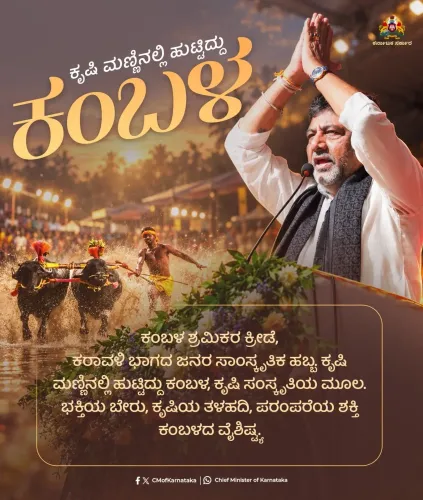
Chief Minister D.K. Shivakumar inaugurated Kambala — the traditional Tulu coastal buffalo race — at Mysuru Dasara on 18 October 2026, marking the first-ever inclusion of the folk sport in Karnataka's premier state festival.
Key Takeaways
First-ever Kambala event held as part of Mysuru Dasara , inaugurated by CM D.K.
Shivakumar on 18 October 2026 .
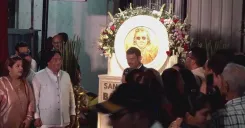
CM Shivakumar paid floral tributes to portraits of deity Tayi Chamundeshwari and folk hero Veera Gangadhara Ajjayya at the inauguration.
Kambala originates in the coastal districts of Dakshina Kannada and Udupi , rooted in the Tulu-speaking agricultural community's harvest rituals.
Mysuru Dasara has been organised as a state festival since 1973 , with successive governments adding regional cultural elements over the years.
State Kambala Committee president Devi Prasad Shetty and multiple ministers and legislators attended the event.
The inclusion raises questions about whether Kambala will become a permanent fixture in the Dasara programme and the state tourism calendar.
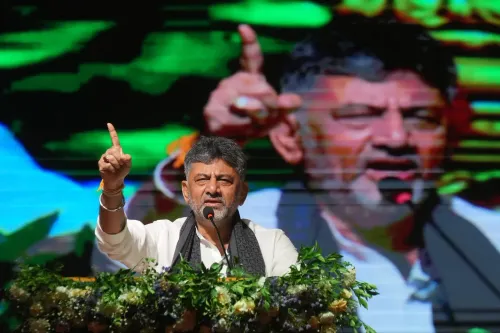
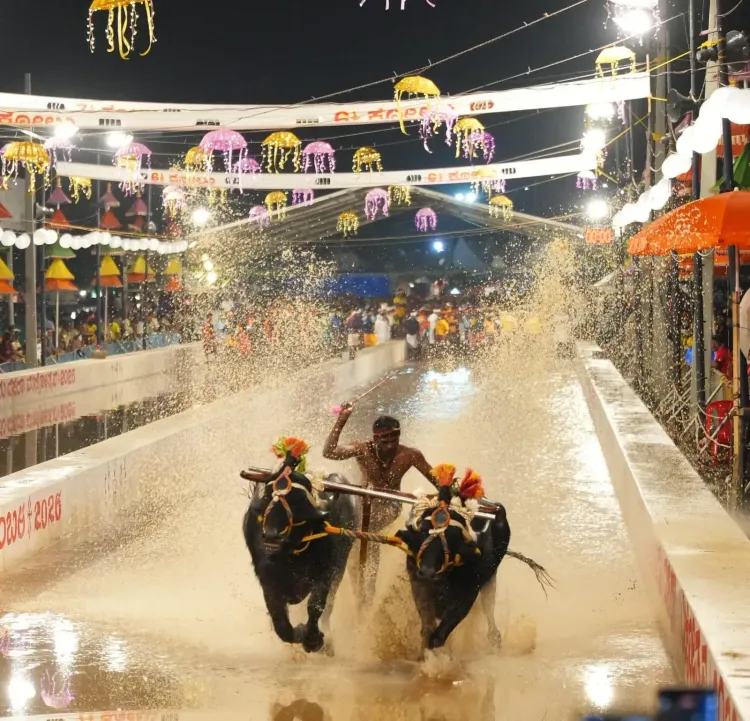
For the first time in the history of Mysuru Dasara, the thundering hooves of buffaloes tore through a muddy track at the heart of Karnataka's grandest state festival — and the crowd went wild. Chief Minister D.K. Shivakumar inaugurated the maiden Kambala event at the Mysuru Dasara celebrations on Sunday, 18 October 2026, marking a landmark fusion of coastal folk heritage with the royal traditions of the Navaratri festival.
Kambala makes its Dasara debut
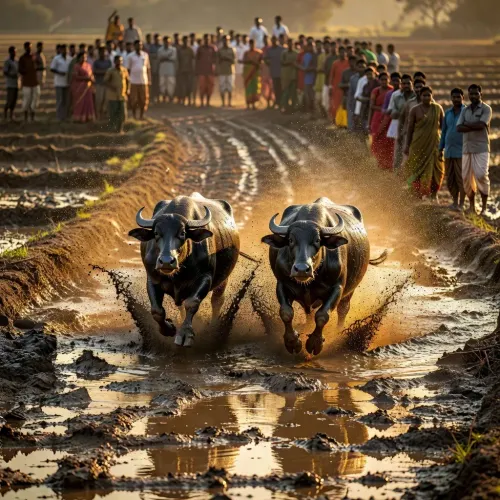
Kambala — the ancient buffalo race rooted in the red-mud paddy fields of coastal Karnataka's Tulu Nadu — has for centuries been the pride of Dakshina Kannada and Udupi districts. Bringing it to Mysuru, nearly 350 kilometres from its native shoreline, is a statement. CM Shivakumar paid floral tribute to portraits of presiding deity Tayi Chamundeshwari and folk hero Veera Gangadhara Ajjayya before the event got underway, grounding the inauguration in the spiritual and martial symbolism that Dasara has carried since its royal origins.
Several dignitaries attended the inauguration, including ministers Puttarangashetty and N. Chaluvarayaswamy, legislators G.T. Devegowda, Tanveer Sait, K. Harish Gowda, and Ashok Rai, former legislator Narendra Babu, State Kambala Committee president Devi Prasad Shetty, Dr. B.R. Ambedkar Development Corporation chairman Narendra, and Bovi Nigama chairman Ramappa.
The coastal sport that crossed the Western Ghats
Kambala is not mere spectacle. It is a ritual-sport tightly woven into the agricultural calendar of the Tulu coast, where farmers race pairs of buffaloes across waterlogged tracks as an offering of gratitude after the harvest. The Chief Minister's Office described it as carrying 'the fragrance of coastal soil, the richness of folk culture, and the beauty of traditions grown across generations' — a rare run of cultural poetry from an official account.
What makes this debut consequential is the platform it occupies. Mysore Dasara has been organised as a state festival since 1973, drawing hundreds of thousands of visitors and projecting Karnataka's identity on a national and international stage. Placing Kambala inside that frame gives the coastal tradition a scale of visibility it has never had before.
Dasara as Karnataka's cultural switchboard
Karnataka administrations have, over the decades, used the Mysuru Dasara programme as a switchboard to plug in regional traditions — folk dance, craft exhibitions, tribal performance — and give them a wider audience. Kambala's inclusion follows that logic, but it also carries a pointed political subtext: the Tulu coast is electorally significant, and cultural recognition of coastal practices resonates deeply with communities whose distinct language and identity have long sought greater state acknowledgment.
Whether this is a one-edition experiment or the beginning of a permanent fixture will tell a great deal about how seriously the state intends to institutionalise Kambala's presence in its flagship cultural calendar. The buffaloes have made their Dasara run. The question now is whether they'll be invited back.
Point of View
Multi-regional identity at a time when demands for separate statehood for Tulu Nadu occasionally resurface. The real test of intent will come at the next Dasara edition: a one-time showcase reads as gesture; a recurring feature reads as policy.
NationPress
19 Oct 2026
Frequently Asked Questions
What is Kambala and where does it come from?
Kambala is a traditional buffalo race practised in the coastal Tulu-speaking regions of Karnataka, particularly Dakshina Kannada and Udupi districts. It is a ritual-sport tied to the agricultural harvest season, where pairs of buffaloes race across waterlogged muddy tracks as a form of community celebration and thanksgiving.
Was Kambala held at Mysuru Dasara for the first time in 2026?
Yes. According to the Chief Minister's Office of Karnataka, the 2026 Mysuru Dasara marked the first-ever inclusion of Kambala in the state festival, inaugurated by CM D.K. Shivakumar on 18 October 2026 .
Who inaugurated the Kambala event at Mysuru Dasara 2026?
Chief Minister D.K. Shivakumar inaugurated the Kambala event. He also paid floral tribute to portraits of Chamundeshwari and Veera Gangadhara Ajjayya at the ceremony.
How long has Mysuru Dasara been a state festival?
The Karnataka government has organised Mysuru Dasara as an official state festival since 1973 . Over the decades, successive governments have incorporated regional cultural traditions from across Karnataka into its programme.
Will Kambala be included in future Mysuru Dasara editions?
That has not been formally announced. The 2026 event was billed as a first-time inclusion; whether it becomes a permanent fixture in the Dasara schedule or the state tourism calendar remains to be seen in subsequent editions.