Kannur Islamic cooperative depositors cry foul; Kerala CM Satheesan orders probe
Synopsis
A Sharia-compliant cooperative society in Kannur — inaugurated by former CM Pinarayi Vijayan and promoted by a senior CPI(M) leader — is now the subject of a government-ordered probe after depositors reported being unable to withdraw funds. The twist: the MLA who escalated the complaints is a former CPI(M) heavyweight who stood against the party in the last election and won.
Key Takeaways
Depositors of Halal Fayida Cooperative Society in Kannur have complained they cannot withdraw their funds from the CPI(M) -promoted institution.
Satheesan has ordered a probe after Thaliparamba MLA T.K.
Govindan submitted formal depositor complaints on 13 August .
Depositor Nassar confirmed his ₹1 lakh deposit was returned after he went public, but other complaints remain unresolved.
The society was inaugurated on 24 December 2017 by then CM Pinarayi Vijayan ; chief promoter M.
Shajar is a senior CPI(M) leader.
An earlier LDF attempt to establish a formal Islamic bank was rejected by the RBI during 2006–11 as inconsistent with banking law.
The probe must determine whether withdrawal difficulties are isolated or signal a broader financial problem at the cooperative.
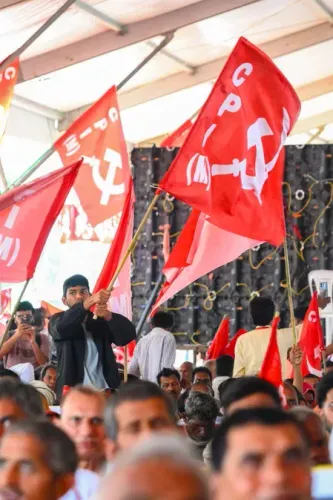
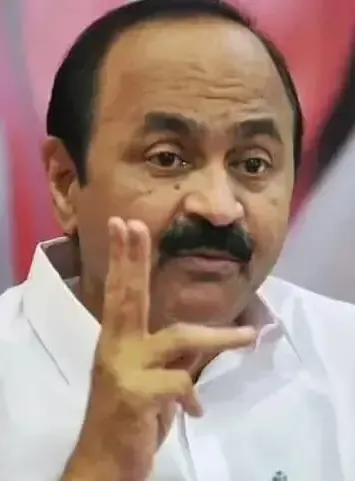
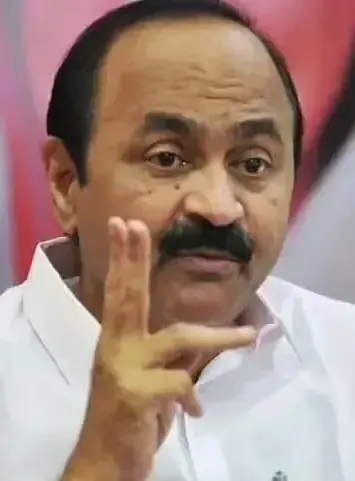
Depositors of Halal Fayida Cooperative Society, a Sharia-compliant financial institution promoted by Communist Party of India (Marxist) [CPI(M)] leaders in Kannur, have raised complaints that they are unable to withdraw their funds — prompting Kerala Chief Minister V.D. Satheesan to order an investigation. The complaints were formally brought to the government's attention on Thursday, 13 August, when Thaliparamba MLA T.K. Govindan submitted a dossier of grievances from depositors in the Mayyil area.
How the Complaints Reached the Chief Minister
T.K. Govindan said several residents of Mayyil had approached him after repeatedly failing to recover their deposits from the cooperative. He handed over the complaints directly to Chief Minister Satheesan, who assured that a probe would be launched. "After going through the complaints I submitted, the Chief Minister said that a probe would be launched," Govindan said.
In a development that has added complexity to the controversy, one of the complainants, Nassar, has confirmed that his deposit of ₹1 lakh was subsequently returned. He had earlier stated that repeated attempts to recover the money had failed and that he could not reach M. Shajar, the society's key promoter. "I tried calling Shajar, but he is not answering the call. I have no other option but to seek redress through legal means," Nassar had said. The return of his deposit has not, however, closed the broader inquiry, as complaints from other depositors remain unresolved.
The Political Dimension
The controversy carries an unusually sharp political edge. Govindan was himself a prominent CPI(M) figure in Kannur until the most recent Assembly election, when the party chose to field the wife of State CPI(M) Secretary M.V. Govindan from Thaliparamba instead. He contested as an Independent with the backing of the Congress-led United Democratic Front (UDF) and won. His decision to formally escalate the depositors' complaints to the Chief Minister is therefore being read as politically significant.
Govindan also acknowledged that concerns about the cooperative had first surfaced within the Mayyil CPI(M) unit and were subsequently discussed at the Kannur district CPI(M) committee level — suggesting the party was aware of the trouble before it became public.
Background: CPI(M)'s Push for Islamic Banking
Halal Fayida Cooperative Society was inaugurated on 24 December 2017 by then Chief Minister Pinarayi Vijayan in Kannur, with senior district CPI(M) leaders in attendance. M. Shajar, a CPI(M) leader who rose through the party's youth wing, was its chief promoter.
The institution was rooted in the Left Democratic Front (LDF) government's long-standing effort to promote Islamic banking in Kerala. An earlier attempt during the 2006–11 LDF term to establish a formal Islamic bank was blocked by the Reserve Bank of India (RBI), which held that the proposal was inconsistent with existing banking legislation. The cooperative society model was subsequently adopted as an alternative, operating outside the direct regulatory framework that governs conventional banks. Primary cooperative societies in Kerala function under the state cooperative system; many accept public deposits and extend loans, though they are not subject to the same oversight as scheduled banks.
What the Probe Must Establish
The investigation ordered by Chief Minister Satheesan will need to determine whether the withdrawal difficulties reported by depositors are isolated incidents or indicative of a deeper financial problem within the institution. The return of Nassar's ₹1 lakh deposit suggests some responsiveness, but the volume of unresolved complaints has kept the matter firmly in the public domain.
For the CPI(M) — particularly its Kannur organisation — the episode is an uncomfortable reminder of an initiative once championed with considerable political capital. How the probe unfolds will determine whether the party can contain the fallout or whether the cooperative's troubles widen into a larger accountability question.
Point of View
Leaving depositors with fewer protections when things go wrong. The political geometry here is equally telling — it took a CPI(M) rebel, now an Independent MLA backed by the Congress-led UDF, to formally escalate complaints that the party's own district committee had reportedly already heard. If the probe finds systemic withdrawal failures rather than isolated glitches, the CPI(M) faces a credibility problem not just over financial stewardship but over the selective accountability it applies to institutions it once championed.
NationPress
27 Sept 2026
Frequently Asked Questions
What is Halal Fayida Cooperative Society and why is it in the news?
Halal Fayida Cooperative Society is a Sharia-compliant financial institution in Kannur, Kerala, promoted by CPI(M) leaders and inaugurated by then Chief Minister Pinarayi Vijayan on 24 December 2017. It is in the news because depositors have reported being unable to withdraw their funds, prompting Kerala CM V.D. Satheesan to order a probe.
Who raised the depositor complaints with the Kerala government?
Thaliparamba MLA T.K. Govindan submitted a set of depositor complaints from the Mayyil area to Chief Minister V.D. Satheesan on 13 August. Govindan is a former CPI(M) leader who contested the last Assembly election as an Independent with UDF support after the party denied him the ticket.
Has any depositor received their money back?
Yes. Depositor Nassar confirmed that his ₹1 lakh deposit was returned after he publicly raised the issue. However, complaints from other depositors remain unresolved, and the government-ordered probe is still expected to proceed.
Why was a cooperative society used instead of a formal Islamic bank?
The LDF government's earlier attempt during 2006–11 to establish a formal Islamic bank was rejected by the Reserve Bank of India, which held the proposal was inconsistent with existing banking law. The cooperative society model was adopted as an alternative, as primary cooperative societies operate under the state cooperative system and are not subject to the same regulatory framework as conventional banks.
What will the government probe investigate?
The probe ordered by Chief Minister Satheesan will examine whether the withdrawal difficulties faced by depositors are isolated incidents or reflect a wider financial problem within Halal Fayida Cooperative Society. The findings will also determine the extent of the institution's liability to its remaining depositors.