Karnataka CM Office Invokes Mahagauri on Navratri Day 8
Synopsis
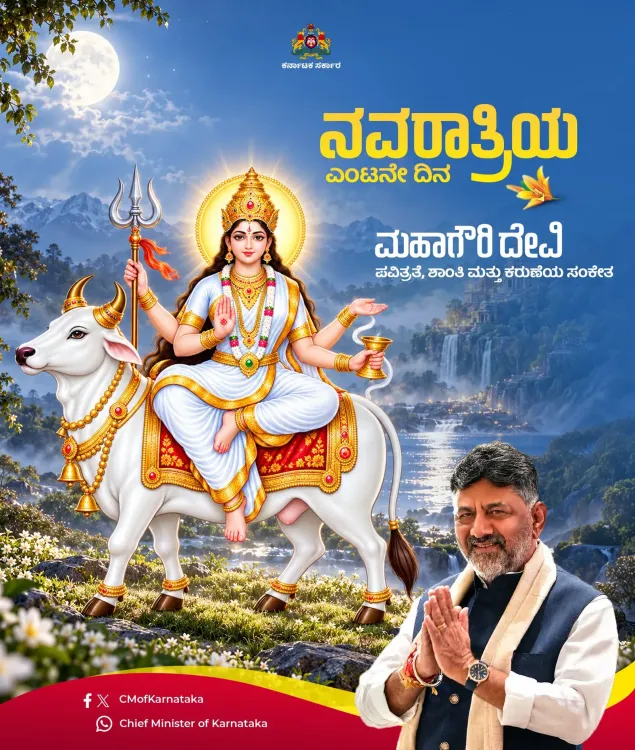
The Chief Minister's Office of Karnataka marked the eighth day of Navratri with a Kannada tribute to Mahagauri Devi, the goddess of purity, connecting her worship to respect for women's dignity and praying for peace, health, and prosperity across the state.
Key Takeaways
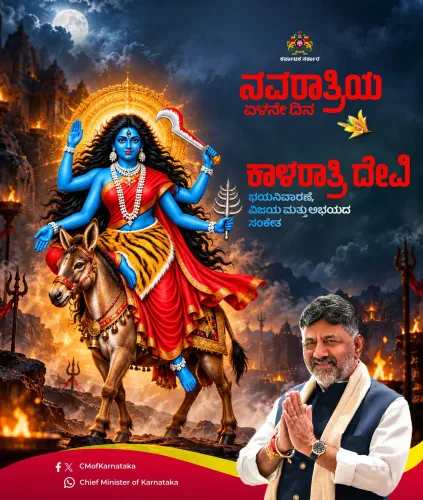
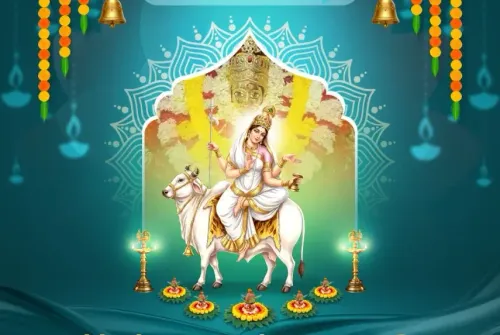
The Chief Minister's Office of Karnataka posted a Navratri Day 8 message on 18 October honouring Mahagauri Devi , the eighth form of Goddess Durga.
Mahagauri is associated with purity, divine white radiance, and the removal of ignorance, fear, and hardship from devotees.
The post explicitly states that respecting feminine power and women's self-respect is the 'true worship' of the goddess.
The CMO prayed for long life, health, peace, and prosperity for all people of Karnataka ( ಕರುನಾಡು ).
The message follows a well-established Indian tradition of state leaders blending religious observance with social values during Navratri.
Karnataka's Navratri season leads into the grand Mysuru Dasara celebrations on Vijayadashami.
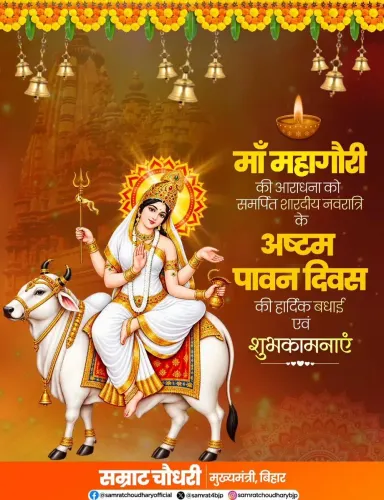
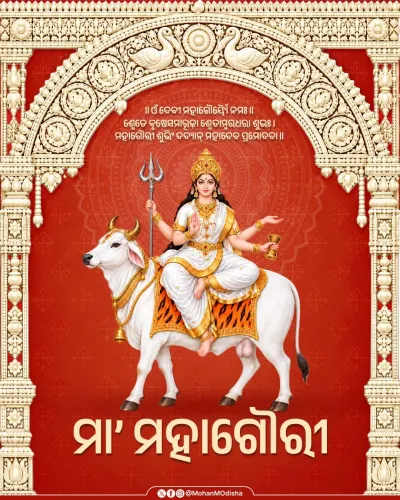
On the eighth day of Navratri, the Chief Minister's Office of Karnataka turned to one of the festival's most luminous figures — Mahagauri Devi — weaving a message of devotion, feminine dignity, and collective prosperity for the people of the state.
The post, shared in Kannada on Sunday, 18 October, describes Mahagauri as a compassionate goddess who, through intense penance, earned the grace of Lord Shiva and now radiates a divine white radiance — 'ಶ್ವೇತವರ್ಣದ ದಿವ್ಯ ತೇಜಸ್ಸು' ('the divine brilliance of white light'). She is invoked as the remover of ignorance, fear, and hardship from the hearts of devotees.
At its heart, the message carries a pointed social note: 'Respecting the dignity of feminine power and the self-respect of women is the true worship of the Mother.' The CMO's post frames the religious observance not merely as ritual, but as a call to honour women in everyday life.
Mahagauri — the eighth form and what she represents
Mahagauri is the eighth of the nine forms of Goddess Durga venerated across the nine nights of Navratri. Hindu tradition holds that she performed severe austerities to be reunited with Shiva, and her purity — symbolised by her white complexion, white garments, and white mount — represents the cleansing of accumulated suffering. Devotees believe worshipping her on the eighth day brings peace, removes past sins, and restores inner calm.
The CMO's blessing closes with a prayer that Jagannmata Mahagauri grant the entire people of the state long life, good health, peace, and prosperity — and that Karnataka, 'ಕರುನಾಡು' (the beloved homeland), may always shine with harmony and goodwill.
A tradition of blending faith with public values
State governments across India have long used Navratri messaging to connect religious sentiment with contemporary social themes. Karnataka's CMO follows this established practice by anchoring the Mahagauri tribute to women's dignity — a framing that resonates with ongoing state-level conversations around gender equity and safety. The nine forms of Durga, each celebrated on successive nights, provide a structured occasion for such public communication, reaching a broad cross-section of the electorate that observes the festival.
With Navratri culminating in Mahanavami and then Vijayadashami (Dasara) — a festival Karnataka celebrates with particular grandeur in Mysuru — the coming days are among the most culturally significant on the state's calendar.
For Karnataka, the goddess's blessing of 'ಶಾಂತಿ, ಸಾಮರಸ್ಯ' — peace and harmony — is not just a devotional wish. It is, the CMO signals, a governing aspiration.
Point of View
Women's dignity — that align with the ruling dispensation's social messaging priorities. By framing Mahagauri's worship as inseparable from respecting women, the government converts a devotional moment into a soft policy signal without legislative weight. This pattern, common across state governments during Navratri, reflects how cultural calendar events have become reliable, low-risk communication windows. With Dasara — Karnataka's most high-profile state festival — days away, the messaging also primes the public mood ahead of the government's most visible ceremonial showcase of the year.
NationPress
18 Oct 2026
Frequently Asked Questions
Who is Mahagauri Devi and why is she worshipped on the eighth day of Navratri?
Mahagauri is the eighth of the nine forms of Goddess Durga. She is worshipped on the eighth day of Navratri and is associated with purity, divine white radiance, and the power to remove devotees' ignorance, fear, and suffering. Tradition holds she attained her luminous form through intense penance to earn Lord Shiva's grace.
What did Karnataka's Chief Minister's Office say about Mahagauri?
The CMO's post described Mahagauri as a compassionate goddess radiating divine white light, and stated that respecting women's dignity and self-respect is the true form of worshipping the Mother. It also prayed for health, peace, and prosperity for all people of Karnataka.
What is the significance of Navratri Day 8 in Karnataka?
Navratri Day 8, dedicated to Mahagauri, falls just before Mahanavami and Vijayadashami (Dasara), which Karnataka celebrates with particular grandeur in Mysuru. It is one of the most culturally significant periods on the state's calendar.
Why do Indian state governments post Navratri messages on social media?
It is a long-standing practice for state governments to mark Navratri with public messages that blend religious observance with social values such as women's empowerment, harmony, and prosperity, using the festival's wide reach to communicate with a broad cross-section of citizens.
What is Dasara and how is it connected to Navratri in Karnataka?
Dasara, also called Vijayadashami, falls on the tenth day after Navratri begins and marks the festival's culmination. Karnataka, particularly Mysuru, is famous for its grand Dasara celebrations, making the Navratri period one of the state's most important cultural events.