Karnataka CM Office Pays Tribute to Rajiv Gandhi on Birth Anniversary
Synopsis
The Chief Minister's Office of Karnataka marked Rajiv Gandhi's birth anniversary on 20 August 2026 — observed as Sadbhavana Diwas — recalling his telecom missions, the constitutional lowering of the voting age to 18, and the Panchayati Raj framework he championed.
Key Takeaways
The Karnataka CMO posted a formal tribute to former PM Rajiv Gandhi on his birth anniversary, 20 August 2026 .
Rajiv Gandhi served as Prime Minister from 1984 to 1989 and launched the National Technology Missions in 1986-87 covering telecom, literacy, and drinking water.
The 61st Constitutional Amendment (1988) lowered India's voting age from 21 to 18 , enfranchising millions of young voters.
His tenure laid the political groundwork for the 73rd Constitutional Amendment (1992) , which institutionalised three-tier Panchayati Raj bodies nationwide.
Sadbhavana Diwas , observed annually on 20 August, promotes communal harmony and is formally linked to Rajiv Gandhi's birth anniversary.
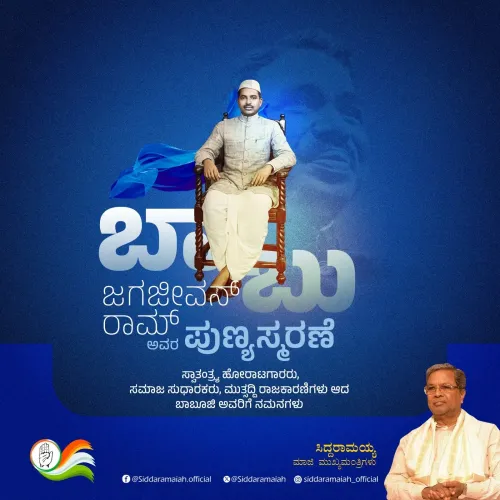
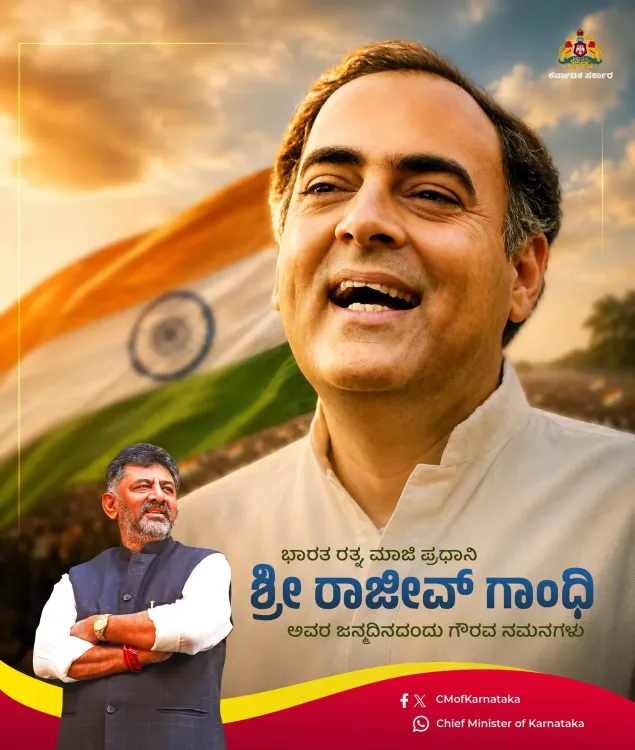
On what India marks as Sadbhavana Diwas, the Chief Minister's Office of Karnataka on 20 August 2026 paid homage to former Prime Minister Rajiv Gandhi on his birth anniversary, honouring the leader whose decisions reshaped how a billion people communicate, vote, and govern themselves at the grassroots.
The architect of India's technology leap
Rajiv Gandhi served as India's seventh Prime Minister from 1984 to 1989, and the Karnataka CMO's tribute underscores the enduring relevance of that era. The post, written in Kannada, describes him as a dhimanta chetana — a visionary spirit — who 'wrote the preface to the telecommunications and technology revolution in India and laid a strong foundation for the reconstruction of modern India.'
That foundation was institutional. In 1986-87, his government launched the National Technology Missions, targeting telecommunications, literacy, and drinking water — a cluster of interventions that planted the seeds for India's later software and IT services boom. The Sam Pitroda-led push to expand telephone connectivity across the country is among the most cited legacies of that period.
The 61st Amendment and the youth franchise
The CMO's post specifically highlights a constitutional act that often goes underappreciated: the 61st Constitutional Amendment of 1988, which lowered India's voting age from 21 to 18 years. At a stroke, tens of millions of young Indians became eligible voters, fundamentally altering the electorate and giving youth a front-row seat in the democratic process. The tribute calls this giving 'youth power the foremost place in the country's democratic process.'
Panchayati Raj and the push for grassroots power
Rajiv Gandhi's tenure also laid the political groundwork for what became the 73rd Constitutional Amendment Act of 1992 — the landmark law that mandated a three-tier Panchayati Raj system nationwide. While the amendment was enacted after his death, the CMO's tribute credits him with strengthening the framework for local self-governance and the empowerment of ordinary citizens at the village level.
Sadbhavana Diwas: harmony and green energy
20 August has been observed as Sadbhavana Diwas — National Harmony Day — since the early 1990s, formally linked to Rajiv Gandhi's birth anniversary. The CMO's post notes that the day is celebrated both as an affirmation of national unity and communal harmony, and as a day to highlight the importance of green energy. State-level events on this date typically include seminars and programmes on these themes.
From a lowered voting age to a wired countryside, the reforms of the Rajiv Gandhi years remain live wires in India's political memory — and Karnataka's tribute on Sadbhavana Diwas is a reminder that their current runs strongest when institutions, not just anniversaries, keep them charged.
Point of View
The CMO is also nudging the legacy toward present-day policy priorities — a subtle but deliberate act of political branding.
NationPress
20 Aug 2026
Frequently Asked Questions
Why is 20 August celebrated as Sadbhavana Diwas?
20 August is observed as Sadbhavana Diwas — National Harmony Day — to mark the birth anniversary of former Prime Minister Rajiv Gandhi. The observance, formally linked to his anniversary since the early 1990s, promotes communal harmony, national unity, and goodwill among citizens.
What did Rajiv Gandhi do for technology in India?
Rajiv Gandhi launched the National Technology Missions in 1986-87, which targeted telecommunications expansion, literacy, and drinking water. His push to computerise and wire India is widely credited with planting the seeds for the country's later IT and software services boom.
What is the 61st Constitutional Amendment?
The 61st Constitutional Amendment, passed in 1988 under Rajiv Gandhi's government, lowered India's voting age from 21 to 18 years. This single change enfranchised tens of millions of young Indians and significantly expanded youth participation in elections.
What is Rajiv Gandhi's connection to Panchayati Raj?
Rajiv Gandhi championed grassroots democracy and worked to strengthen local self-governance during his tenure (1984-1989). His efforts laid the political groundwork for the 73rd Constitutional Amendment of 1992, which mandated a three-tier Panchayati Raj system across India.
What did the Karnataka CMO post on Rajiv Gandhi's birthday?
On 20 August 2026, the Chief Minister's Office of Karnataka posted a tribute in Kannada honouring Rajiv Gandhi on his birth anniversary, recalling his contributions to India's telecom revolution, the lowering of the voting age to 18, and the strengthening of Panchayati Raj institutions.