Karnataka CM unveils GTCs, new rural student quota
Synopsis
The Chief Minister's Office of Karnataka on Independence Day 2026 announced five Global Technology Centres under the LEAP scheme in tier-2 cities and a new 7.5% professional-course sub-quota for rural government school students, alongside ring roads and mobility grids for every Karnataka town.
Key Takeaways
Five Global Technology Centres (GTCs) to be set up under the LEAP scheme in Kalaburagi, Belagavi, Hubballi-Dharwad, Mangaluru and Mysuru .
The initiative is branded 'Beyond Bengaluru' — aimed at spreading tech-industry growth to Karnataka's tier-2 cities.
New scheme 'Vidyaarthi Sahaya Hasta' will provide a 7.5% sub-quota within the existing 15% rural reservation for professional courses.
The sub-quota covers students who attended rural government schools from Class 1 to Class 10 , targeting access to medical and engineering seats.
Ring roads and mobility grids will be implemented for every town and city in Karnataka through an urban-planning framework.
Rollout timelines, land allocation and anchor-tenant commitments for the GTCs remain to be detailed.
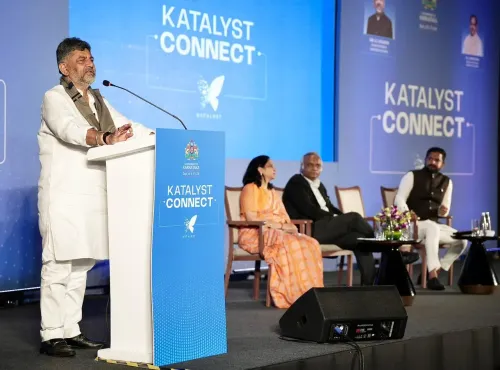
On Independence Day, 15 August 2026, the Chief Minister's Office of Karnataka laid out an ambitious blueprint to push technology-led growth beyond Bengaluru — planting five Global Technology Centres (GTCs) in tier-2 cities and carving out a new reservation for students who climbed from rural government schools. The message was pointed: global opportunity should not require a Bengaluru address.
Five cities, one ambition: the 'Beyond Bengaluru' push
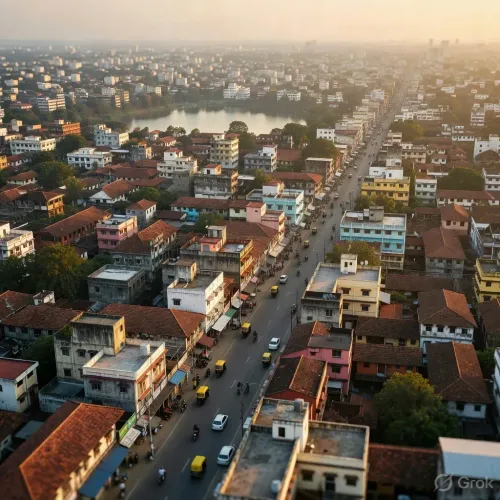
Under the LEAP scheme, GTCs will be established in Kalaburagi, Belagavi, Hubballi-Dharwad, Mangaluru and Mysuru — five cities spread across Karnataka's north, coast and south. The stated goal, in the CM's own words, is to convert 'investment into employment and employment into regional prosperity' (ಹೂಡಿಕೆಯನ್ನು ಉದ್ಯೋಗವಾಗಿ ಮತ್ತು ಉದ್ಯೋಗವನ್ನು ಪ್ರಾದೇಶಿಕ ಸಮೃದ್ಧಿಯಾಗಿ ಬದಲಿಸುವುದು). The framing is deliberate: talent in Karnataka's districts should access global careers locally, not migrate to the state capital.
Karnataka has pursued tech decentralisation since the late 1990s, with successive governments announcing IT parks and incentive packages in Mysuru, Mangaluru and Hubballi-Dharwad. The LEAP-GTC initiative continues that lineage — but the explicit bundling of all five cities under a single branded programme and scheme name marks a sharper, more coordinated pitch than previous announcements.
Vidyaarthi Sahaya Hasta: a sub-quota for rural school survivors
The second plank targets educational equity. A new scheme called 'Vidyaarthi Sahaya Hasta' (ವಿದ್ಯಾರ್ಥಿ ಸಹಾಯ ಹಸ್ತ — literally 'helping hand for students') will reserve 7.5 per cent of professional-course seats for students who studied from Class 1 to Class 10 in rural government schools. Critically, this sub-quota sits within the existing 15 per cent rural reservation — it does not add to the overall reserved pool but carves a protected slice for those who spent their entire foundational schooling in state-run rural institutions.
The courses in scope include medicine and engineering — historically the hardest professional pathways for rural students to crack. If implemented, the measure would redirect a meaningful share of the most competitive seats toward applicants from the least-resourced school environments.
Ring roads and mobility grids for every Karnataka town
Rounding out the announcements, the government committed to rolling out ring roads (outer ring roads) and mobility grids for every town and city in the state through an urban-planning framework. The infrastructure piece is the connective tissue of the broader vision: GTCs need accessible cities, and accessible cities need planned movement corridors.
The real test arrives in the details — land allocation, anchor-tenant commitments and rollout timelines for the five GTCs, and the legislative or regulatory changes needed to operationalise the Vidyaarthi Sahaya Hasta sub-quota. Karnataka has announced tech hubs before; what distinguishes ambition from outcome is the speed and specificity of follow-through.
Point of View
A calibration that avoids fresh legal exposure. Announced on Independence Day, both measures together frame the government's economic narrative around equity and regional balance — a message with clear electoral resonance in Karnataka's non-Bengaluru districts. Whether the GTCs attract genuine anchor tenants or repeat the pattern of under-utilised IT parks will define this government's legacy on the decentralisation question.
NationPress
15 Aug 2026
Frequently Asked Questions
What is the LEAP scheme in Karnataka?
The LEAP scheme is a Karnataka government initiative under which five Global Technology Centres (GTCs) will be established in tier-2 cities — Kalaburagi, Belagavi, Hubballi-Dharwad, Mangaluru and Mysuru — to develop technology-based industries beyond Bengaluru. Detailed funding and rollout timelines are yet to be announced.
What is Vidyaarthi Sahaya Hasta and who benefits from it?
'Vidyaarthi Sahaya Hasta' is a new Karnataka scheme that reserves 7.5% of professional-course seats — within the existing 15% rural reservation — for students who studied from Class 1 to Class 10 in rural government schools, widening access to medical and engineering programmes.
Which cities will get Global Technology Centres in Karnataka?
The five cities selected for GTCs under the 'Beyond Bengaluru' programme are Kalaburagi, Belagavi, Hubballi-Dharwad, Mangaluru and Mysuru.
Does the new 7.5% rural student quota increase overall reservations in Karnataka?
No. The 7.5% sub-quota for rural government school students is carved out from within the existing 15% rural reservation for professional courses — it does not add to the total reserved percentage.
What infrastructure plans did Karnataka announce alongside the tech centres?
The Karnataka government announced that ring roads (outer ring roads) and mobility grids will be implemented for every town and city in the state through an urban-planning framework, to support connectivity and urban growth.