Karnataka CM unveils sweeping Bengaluru governance overhaul
Synopsis
On Independence Day 2026, Karnataka's CMO announced Bengaluru's police commissionerate will be split into five, five Lalbagh-scale Tree Parks and seven lakes will be developed, a state motor insurance body created, and landowners offered TDR and FAR benefits under the Greater Bengaluru Authority framework.
Key Takeaways
Bengaluru City Police Commissionerate will be divided into five commissionerates , with new stations and a dedicated Rowdy Squad.
Five Tree Parks on the scale of Lalbagh will be built at Turahalli, Thottikallu Falls, Nettigere, B.M.
Kaval, Basavanthara, and Mandur-Jothipura.
Seven lakes — including Hesaraghatta and Bannerghatta — will be revived to boost groundwater and drinking water security.
A Karnataka State Motor Vehicle Insurance Corporation will be established to provide affordable insurance to vehicle owners.
Landowners affected by GBA development will receive cash relief, TDR, developed plots, and FAR benefits .
Traffic policing will be coordinated with the Greater Bengaluru Authority to tackle congestion and pollution.
India's tech capital is getting a structural reboot. On Independence Day, 15 August 2026, the Chief Minister's Office of Karnataka announced a sweeping package of administrative, policing, environmental, and insurance reforms aimed at transforming how Bengaluru — a city of over 13 million — is governed, policed, and sustained.
One commissionerate becomes five
The headline move is the splitting of the Bengaluru City Police Commissionerate into five separate commissionerates. For a city that has sprawled far beyond the boundaries its single command structure was designed to cover, this is not a cosmetic shuffle — it is a structural acknowledgement that law enforcement geography has not kept pace with urban growth. New police stations will be established wherever gaps exist, and a dedicated Rowdy Squad will be constituted specifically to create a fear-free environment for Bengaluru's residents.
Traffic policing — long a source of citizen frustration in one of Asia's most congested cities — will be brought into active coordination with the newly formed Greater Bengaluru Authority (GBA), which itself was created alongside five new city municipal corporations as an earlier milestone in this same reform arc. The CMO framed it directly: governance must reach people's doorsteps, ಆಡಳಿತವನ್ನು ಜನರ ಮನೆ ಬಾಗಿಲಿಗೆ ಕೊಂಡೊಯ್ಯುವ ('bringing administration to the doorstep of people's homes').
Five Tree Parks and seven lakes reborn
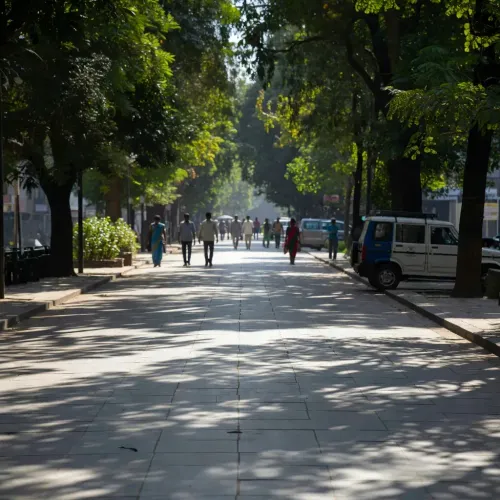
On the environmental front, the government announced five new Tree Parks modelled on the scale and character of Lalbagh Botanical Garden, the city's historic 240-acre green lung. The parks will come up at Turahalli Mini Forest, Thottikallu Falls, Nettigere, B.M. Kaval Forest Area, Basavanthara, and Mandur-Jothipura — all peripheral or semi-forested zones that could anchor a green belt around the expanding urban core.
Equally significant is the plan to revive seven lakes — Hesaraghatta, Bettadakote, Hoskote, Ele Mallappa Shetty, Bannerghatta, Bagalur, and Byramangala — to recharge groundwater and secure the city's drinking water supply. Hesaraghatta Lake, a 19th-century reservoir that has faced decades of encroachment and siltation, is among the most symbolically important on the list. Karnataka's Lake Development Authority, established in 2002, provides the institutional framework within which these rejuvenation projects are expected to operate.
A state motor insurance corporation for ordinary families
Perhaps the most unexpected announcement in the package is the creation of a Karnataka State Motor Vehicle Insurance Corporation. The CMO identified rising vehicle insurance costs and the difficulty ordinary families face in claiming insurance after accidents as a pressing problem — and proposed a state-owned insurer as the solution: affordable, simple, and trustworthy. It is a rare instance of a state government entering the insurance market directly, and its operational model will be closely watched.
Landowners, FAR, and the TDR lever
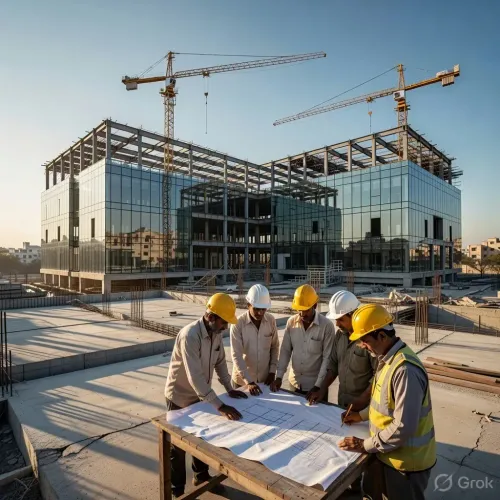
Underpinning the urban restructuring is a compensation framework for landowners: cash relief, Transfer of Development Rights (TDR), developed residential plots, developed commercial plots, and Floor Area Ratio (FAR) benefits. These tools — standard in large-scale urban land pooling — are designed to ease the acquisition of land needed for the GBA's infrastructure build-out without triggering protracted legal disputes.
Bengaluru has been through administrative restructuring before — the Bruhat Bengaluru Mahanagara Palike (BBMP) was itself formed in 2007 by merging the old city corporation with surrounding local bodies. What is different this time is the simultaneity: policing, municipal governance, green infrastructure, water security, and insurance reform announced in a single sweep, on the symbolic date of national independence. Whether the timelines and budget allocations match the ambition is the question Bengaluru's residents will be tracking from here.
Point of View
Echoing the 2007 BBMP consolidation but moving in the opposite direction — decentralisation rather than merger. Splitting a single police commissionerate into five is a tacit admission that the city's growth has outrun its administrative architecture. The state motor insurance corporation is the most politically novel element: state entry into insurance markets is rare and signals a willingness to use public institutions to address market failures affecting middle-class households. The real test will be whether budget allocations and implementation timelines materialise, or whether the sweep of the announcement obscures the difficulty of execution.
NationPress
29 Sept 2026
Frequently Asked Questions
Why is Bengaluru's police commissionerate being split into five?
The Karnataka government says the city's rapid expansion has made a single commissionerate insufficient for effective law and order management. Five separate commissionerates will allow more localised, responsive policing across the city's sprawling geography.
What is the Greater Bengaluru Authority?
The Greater Bengaluru Authority (GBA) is a new apex body created by the Karnataka government to oversee urban governance across Bengaluru, working alongside five newly constituted city municipal corporations to decentralise administration.
Which lakes will be developed under Bengaluru's water security plan?
The seven lakes earmarked for revival are Hesaraghatta, Bettadakote, Hoskote, Ele Mallappa Shetty, Bannerghatta, Bagalur, and Byramangala. The aim is to recharge groundwater and secure drinking water supply for the city.
What is the Karnataka State Motor Vehicle Insurance Corporation?
It is a proposed state-owned insurer announced by the Karnataka government to provide affordable, simple, and reliable vehicle insurance to car and bike owners, addressing high premiums and claim difficulties faced by ordinary families.
What compensation will landowners get under the Greater Bengaluru Authority?
Landowners will be offered a combination of cash relief, Transfer of Development Rights (TDR), developed residential plots, developed commercial plots, and Floor Area Ratio (FAR) benefits as part of the land acquisition framework for GBA infrastructure projects.