Karnataka CMO: Japan visit key to No. 1 FDI goal
Synopsis
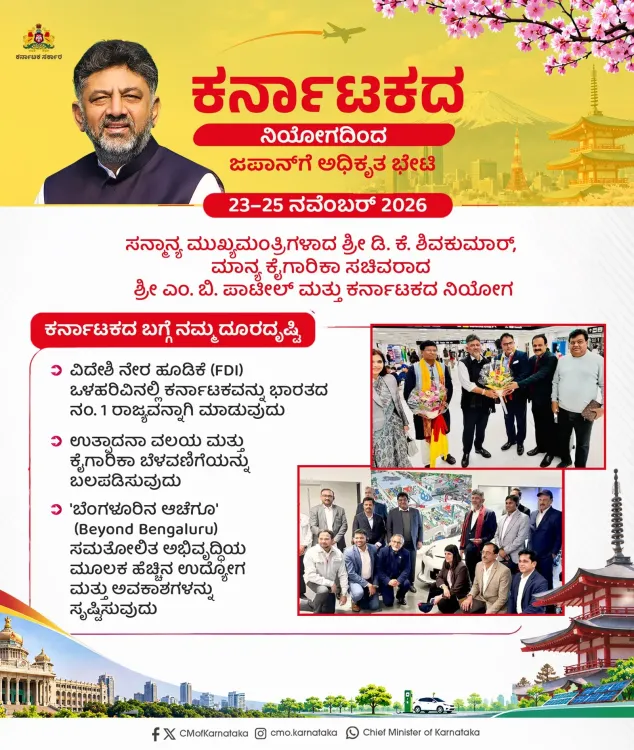
The Chief Minister's Office of Karnataka on 28 November 2026 called a state delegation's Japan visit a key step toward making the state India's No. 1 FDI destination, strengthening manufacturing, creating jobs and spreading development beyond Bengaluru.
Key Takeaways
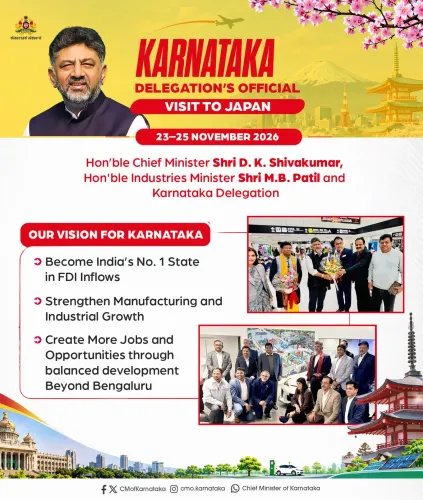
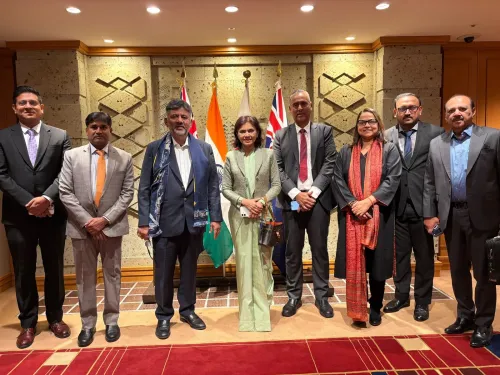
On 28 November 2026 , the Chief Minister's Office of Karnataka called a delegation's Japan visit a significant step toward the state's economic vision.
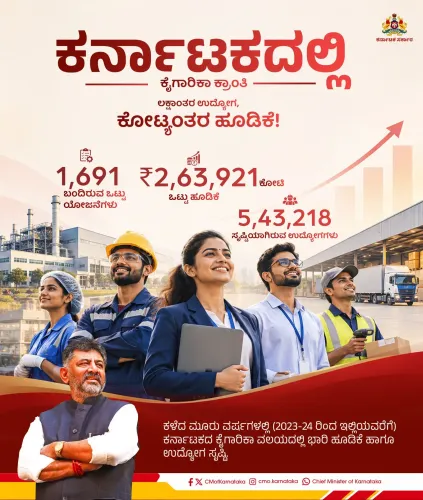
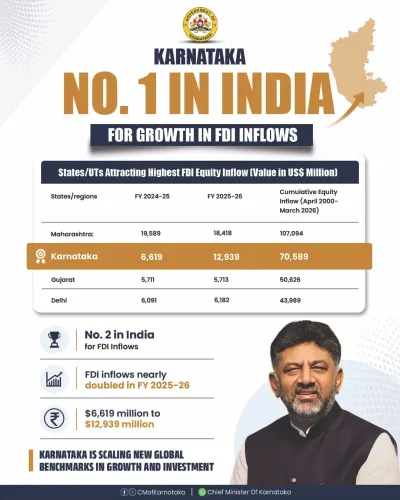
Stated goals include topping India's FDI table, strengthening manufacturing, creating jobs and spreading development beyond Bengaluru .
The office said Karnataka aims to strengthen global partnerships, attract investment and create new opportunities for its people.
Karnataka is already among India's leading FDI destinations, historically driven by IT in the capital.
India and Japan have a 2011 Comprehensive Economic Partnership Agreement; Japan is a major investor in automotive, electronics and infrastructure.
What to watch next is whether the visit yields pledges that become plants and jobs outside Bengaluru.
Karnataka is treating a Japan outreach as more than ceremony. It is the state's public bet to climb India's foreign-direct-investment ladder. On 28 November 2026, the Chief Minister's Office of Karnataka said a delegation's visit to Japan is a significant step toward taking the state to No. 1 in the country on FDI, strengthening manufacturing, creating jobs and spreading growth beyond Bengaluru.
Posted in Kannada, the office wrote that strengthening global partnerships, attracting investment and creating new opportunities for the people is Karnataka's goal. It then tied the Japan trip to a longer vision: raising the state to the country's top FDI rank, reinforcing production, generating employment, and achieving ಸಮತೋಲಿತ ಅಭಿವೃದ್ಧಿ (balanced development) outside the capital.
Japan visit framed as a No. 1 FDI move
Karnataka already sits among India's leading recipients of foreign direct investment, powered for years by information technology clustered in Bengaluru. The CMO message signals a harder manufacturing turn. Japan is a natural counterpart: a longstanding economic partner of India, with deep capital in automotive, electronics and infrastructure — the supply-chain lanes Indian states now fight to host.
That fight runs on older national rails. India launched Make in India in 2014 to lift domestic manufacturing and pull in more FDI. India and Japan signed a Comprehensive Economic Partnership Agreement in 2011 to expand trade and investment. State governments have since flown east in a recognisable pattern: lock in factories before another state, or another country, does.
The growth map beyond Bengaluru
Bengaluru remains the state's primary IT hub and the gravitational centre of its economy. Naming development beyond the city is an admission that plants, payrolls and infrastructure have to travel if an FDI race is to mean more than another capital boom. The stakeholders are specific: manufacturing industries seeking land and policy, job-seekers outside the software corridor, and districts that have watched capital pool in one metro.
The itinerary is not the story. Memorandums of understanding and investment pledges, if they come, will matter only when they become projects. So will manufacturing incentives and infrastructure under existing state policy — especially outside Bengaluru.
A Japan visit does not rewrite Karnataka's FDI rank on its own. The test is whether capital, plants and jobs follow the delegation home, and whether they land well beyond the Ring Road.
Point of View
Jobs and a less Bengaluru-centric map. That matches national Make in India logic and the 2011 India-Japan economic partnership, but execution will be judged in districts far from the capital. The political test is whether a visit produces plants and payrolls, not merely a stronger pitch.
NationPress
28 Nov 2026
Frequently Asked Questions
Why did the Karnataka CMO highlight a Japan visit?
The Chief Minister's Office of Karnataka said the Japan visit is a significant step to strengthen global partnerships, attract investment and create opportunities. It tied the trip to a vision of topping India's FDI rankings, boosting manufacturing, generating jobs and spreading development beyond Bengaluru.
Has Karnataka already become India's No. 1 state for FDI?
The 28 November 2026 post framed No. 1 in foreign direct investment as a goal, not a completed ranking. Karnataka is already among India's leading FDI recipients, especially in IT, and is now emphasising manufacturing.
What does balanced development beyond Bengaluru mean?
The CMO said the state's vision includes achieving balanced development outside Bengaluru, the capital and main IT hub. That points to shifting factories, jobs and infrastructure to other regions so growth is not concentrated in one city.
How do India and Japan already cooperate on trade and investment?
India and Japan signed a Comprehensive Economic Partnership Agreement in 2011 to expand bilateral trade and investment. Japan has long invested in Indian automotive, electronics and infrastructure, which aligns with Karnataka's manufacturing push.
What should be watched after the Karnataka delegation's Japan visit?
The CMO did not list specific deals in the post. Observers will watch for any memorandums of understanding or investment pledges and whether they become projects, plus progress on manufacturing incentives and infrastructure outside Bengaluru.