Is the Karnataka Hate Speech Bill a Tool to Muffle the Opposition?
Synopsis
The recent passage of the Karnataka Hate Speech Bill has sparked controversy, with BJP leader B.Y. Vijayendra accusing the Congress government of using it as a means to silence opposition voices. This critical analysis sheds light on the implications for democracy and the political landscape in Karnataka.
Key Takeaways
Bill passed hastily without adequate discussion.
Accusations of silencing opposition by the ruling party.
Concerns about democracy and free speech.
Political tensions are heightened in Karnataka.
Financial management of the state government is under scrutiny.
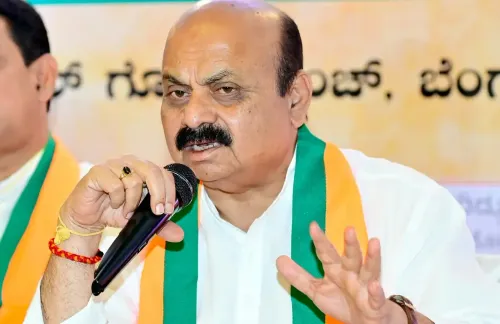
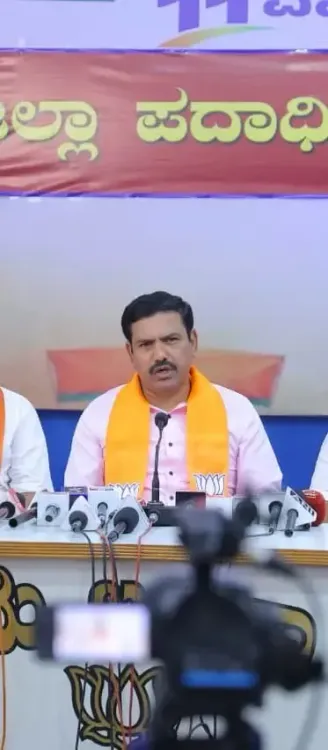
Shivamogga (Karnataka), Feb 2 (NationPress) - Accusing the Congress-led administration of rushing through the Karnataka Hate Speech and Hate Crimes (Prevention) Bill, 2025, during the Belagavi Winter Session without adequate discourse, BJP state president and MLA B.Y. Vijayendra asserted that the Bill was introduced with the primary goal of stifling the Opposition.
Addressing reporters on Monday, Vijayendra reacted to inquiries regarding the Governor withholding assent to the Bill, expressing that the legislation poses a threat to democracy. He noted, “Due to this law, our Hindu activist Vikas Puttur in Tarikere was interrupted by police before he could even start his address, receiving a notice threatening arrest if he proceeded,” he claimed.
He further alleged that Bajrang Dal activist Sharan Pumpwell has been restricted from crossing district borders in Dakshina Kannada. In Bengaluru, Puneeth Kerehalli was detained despite reportedly identifying illegal Bangladeshi immigrants, a task he argued should have been performed by the police.
He claimed that previously, individuals involved in illegal cattle transport were prosecuted under existing laws, leading to vehicle seizures and imprisonment. “The Siddaramaiah government even sought to introduce legislation that would allow station bail for those arrested in such situations,” he charged.
Vijayendra remarked that Chief Minister Siddaramaiah had previously attempted to fracture society by raising the issue of a distinct Veerashaiva-Lingayat identity. “Now, to mask his shortcomings, he is attempting to set the state against the Centre by alleging that the Union government has wronged Karnataka and the southern states. He aims to portray himself as the leader of South India,” he criticized.
He added that such a divisive perspective is detrimental, not only for Siddaramaiah but also for Karnataka and the nation’s development.
Commenting on the Congress-led government’s protest in Delhi under the slogan “Our tax, our right,” Vijayendra questioned the financial management of the Karnataka government.
He suggested that Siddaramaiah, in his capacity as Finance Minister, has failed to gather funds for the government’s guarantee schemes and has raised the excise department’s revenue target to Rs 40,000 crore, which could result in an increase in liquor consumption. “What will happen if they besiege Vidhana Soudha tomorrow, chanting ‘our tax, our right’?” he queried.
Vijayendra emphasized that the Centre has not committed any injustice against Karnataka. “If there were minor disagreements, the state government should have sought to persuade the Centre instead of staging protests,” he stated.
He pointed out that Bengaluru generates the highest tax revenue in the state and questioned the fate of districts like Raichur, Koppal, Belagavi, and Shivamogga if all tax revenue from Bengaluru is funneled solely into the city.
As Finance Minister, Siddaramaiah ought to focus on the comprehensive growth of the state, Vijayendra asserted.
He concluded by stating that while Karnataka and Maharashtra contribute substantial tax amounts, it does not imply that Karnataka is being deprived. “Karnataka has received its fair share,” he affirmed.
He accused the government of inadequately executing its guarantee schemes due to financial limitations and contended that the government has confined itself to the current predicament because of its lack of funds.
Point of View
This situation highlights the ongoing tension between state and central governance. The allegations raised by the BJP are significant and merit careful consideration. While the intention behind such legislation may claim to protect society, it raises critical questions about freedom of speech and its implications for political discourse across the nation.
NationPress
2 Oct 2026
Frequently Asked Questions
What is the Karnataka Hate Speech Bill?
The Karnataka Hate Speech and Hate Crimes (Prevention) Bill, 2025, aims to address issues of hate speech and crimes in the state but has faced criticism for its potential to limit free expression.
Who is B.Y. Vijayendra?
B.Y. Vijayendra is the BJP state president and a Member of the Legislative Assembly in Karnataka, known for his outspoken views on state policies.
Why is the bill controversial?
The bill is controversial because critics argue it could be used to silence the opposition and stifle free speech, raising concerns about its implications for democracy.
What are the implications of the bill for activists?
Activists fear that the bill may lead to increased censorship and legal repercussions for those who speak against the government.
How does this bill affect the political landscape in Karnataka?
The bill could deepen political divides and tensions between the ruling party and the opposition, potentially impacting future elections and governance.