Karnataka CM Siddaramaiah launches C2C Summit to make graduates career-ready
Synopsis
Karnataka's C2C Summit isn't just a conference — it's a policy signal. With ₹40,000 crore committed to KWIN City, a 20-lakh-jobs industrial target, and partnerships with Wipro and Infosys already in place, CM Siddaramaiah is betting that structural alignment between campuses and industry can fix what decades of enrolment-focused policy could not.
Key Takeaways
CM Siddaramaiah inaugurated the Campus to Career (C2C) Summit in Bengaluru on 15 May 2025 , focused on graduate employability.
Karnataka leads India with 66 colleges per lakh population and a GSDP of ₹30.7 lakh crore .
Bengaluru hosts 875 Global Capability Centres , making it a global technology hub.
The Yuva Nidhi scheme offers financial aid and skill training to graduates transitioning to employment.
The state's industrial policy targets 20 lakh new jobs ; the proposed ₹40,000 crore KWIN City near Bengaluru will anchor a knowledge-and-innovation economy.
The Higher Education Department has partnered with Wipro , Azim Premji Foundation , and Infosys for internships and skill development.
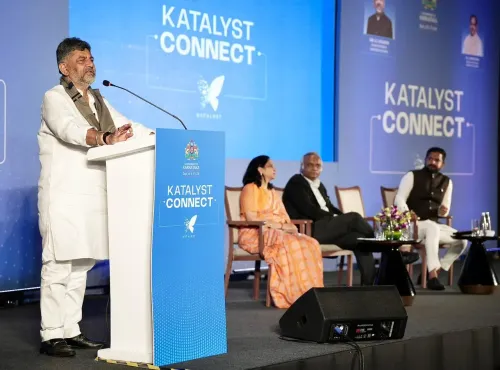
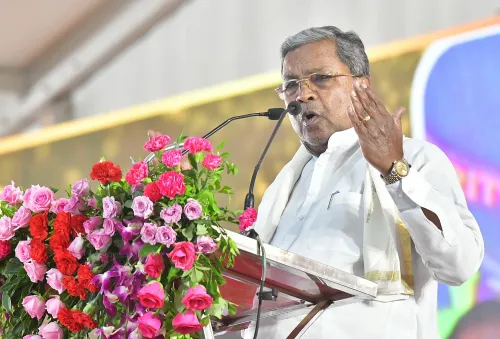
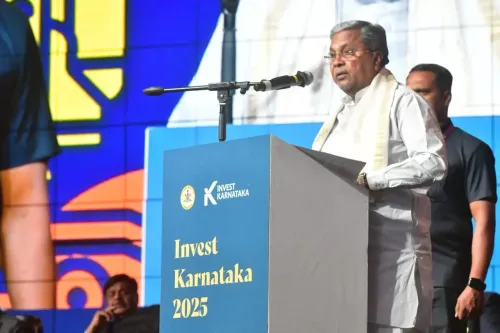
Karnataka Chief Minister Siddaramaiah on Friday, 15 May declared that his government is committed to transforming higher education into a direct pipeline for employment, entrepreneurship, and leadership — calling for deeper collaboration between academia, industry, and the state. His remarks came at the inaugural ceremony of the Campus to Career (C2C) Summit: Future-Ready Universities and Colleges, organised by the Higher Education Department in Bengaluru.
Key Developments at the Summit
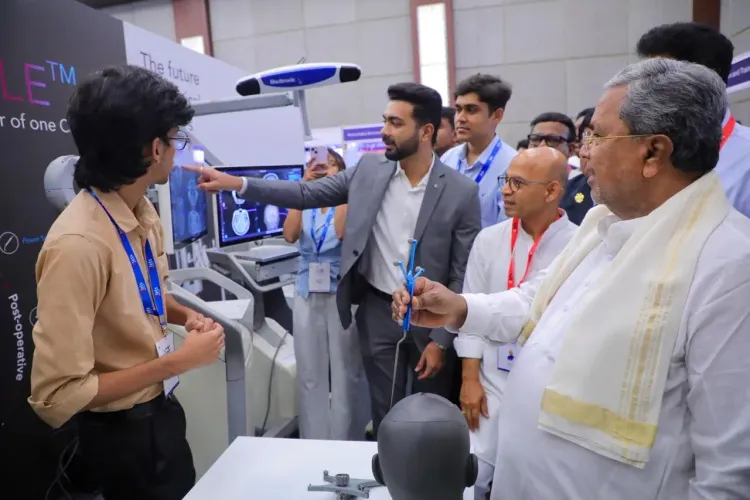
The event drew a high-powered gathering: Deputy Chief Minister D.K. Shivakumar, Higher Education Minister M.C. Sudhakar, Industries Minister M.B. Patil, IT and BT Minister Priyank Kharge, Medical Education and Skill Development Minister Sharanaprakash Patil, Agriculture Minister N. Chaluvarayaswamy, along with senior officials, industry representatives, academicians, and students. The summit aims to close the gap between what universities teach and what employers actually need.
What Siddaramaiah Said
Invoking Dr B.R. Ambedkar's view of education as a tool for social change, Siddaramaiah stressed that enrolment figures alone cannot define success. 'Our focus is now on converting enrolment into meaningful outcomes by ensuring that every student who enters higher education is prepared for employment, entrepreneurship, and leadership,' he said. He added that 'universities must measure success not only through enrolment numbers but also through the outcomes they create for students.'
The Chief Minister pointed to Karnataka's Gross State Domestic Product (GSDP) of ₹30.7 lakh crore and noted that Bengaluru hosts 875 Global Capability Centres, cementing its status as one of the world's foremost technology hubs. He also highlighted that Karnataka leads India with 66 colleges per lakh population — a figure he framed as a foundation to build on, not a finish line.
Schemes and Industrial Push
Siddaramaiah outlined several government initiatives designed to bridge the education-to-employment gap. The Yuva Nidhi scheme provides financial assistance and modern skill training to graduates during the critical transition from college to career. The state's industrial policy targets the creation of 20 lakh jobs, while the proposed ₹40,000 crore KWIN City project near Bengaluru — centred on knowledge, wellness, innovation, and employment — is positioned as the centrepiece of a future-ready economic corridor.
Industry Partnerships and Academic Reforms
The Higher Education Department has already formalised tie-ups with Wipro, Azim Premji Foundation, and Infosys to provide students with internship opportunities, industry exposure, and structured skill development support. Siddaramaiah called on universities to align curricula with market realities and equip students for practical, real-world challenges — a shift from rote learning to applied competence.
This comes amid a broader national conversation about graduate employability, with multiple studies indicating that a significant share of Indian college graduates remain underqualified for industry roles. Karnataka's C2C Summit represents one of the more structured state-level responses to that structural mismatch. Whether the partnerships and schemes translate into measurable placement outcomes will be the real test going forward.
Point of View
But the state has been here before — big industry partnerships and job-creation targets announced at high-profile events that rarely get independently audited. The ₹40,000 crore KWIN City and the 20-lakh-jobs target are headline numbers; what is missing is a public accountability framework that tracks graduate outcomes by institution and sector. With 875 Global Capability Centres already in Bengaluru, Karnataka has structural advantages most states lack — the question is whether the curriculum reform and industry tie-ups will reach students in Tier-2 and Tier-3 colleges, or remain concentrated in the capital's elite institutions.
NationPress
1 Oct 2026
Frequently Asked Questions
What is the Campus to Career (C2C) Summit in Karnataka?
The Campus to Career Summit is an initiative by Karnataka's Higher Education Department, inaugurated in Bengaluru on 15 May 2025, to align university education with employment and industry needs. It brings together policymakers, academic institutions, industry leaders, and skill development organisations to close the gap between academic learning and employer expectations.
What is the Yuva Nidhi scheme mentioned by CM Siddaramaiah?
The Yuva Nidhi scheme is a Karnataka government programme that provides financial assistance and modern skill training to graduates to support them during the transition from education to employment. It is one of several initiatives the state is using to improve graduate employability.
What is the KWIN City project and how does it relate to jobs?
KWIN City is a proposed ₹40,000 crore project near Bengaluru, designed around the pillars of knowledge, wellness, innovation, and employment. CM Siddaramaiah described it as the foundation of a future-ready economy and a key driver of the state's target to create 20 lakh new jobs under its industrial policy.
Which companies have partnered with Karnataka's Higher Education Department?
The Higher Education Department has tied up with Wipro, Azim Premji Foundation, and Infosys to provide students with internship opportunities, industry exposure, and skill development support. These partnerships are intended to make curricula more responsive to real-world industry demands.
How does Karnataka rank in higher education access compared to other states?
Karnataka leads India with 66 colleges per lakh population, reflecting the breadth of its higher education ecosystem. However, CM Siddaramaiah acknowledged that access alone is insufficient and emphasised the need to convert enrolment into measurable employment and entrepreneurship outcomes.