Why Did the K'taka Government Call an Emergency Cabinet Meeting for VB-G RAM G Act?
Synopsis
The Karnataka government is taking decisive action by holding an emergency Cabinet meeting to discuss the contentious VB-G RAM G Act. This special Legislature debate aims to shed light on the Act's implications and exert pressure on the central government.
Key Takeaways
Karnataka government holds an emergency Cabinet meeting.
Special debate on VB-G RAM G Act from January 22-31.
Focus on public awareness and state rights.
Centralization of power raises concerns about decentralization .
Engagement with legal avenues to protect citizens' rights.
Bengaluru, January 14 (NationPress) - The government of Karnataka, led by the Congress, held an urgent Cabinet meeting on Wednesday in Bengaluru, where they announced plans for a special Legislative debate from January 22 to January 31 regarding the Viksit Bharat-Guarantee for Rozgar and Ajeevika Mission (Gramin), commonly referred to as the VB-G RAM G Act. This initiative aims to put pressure on the Centre.
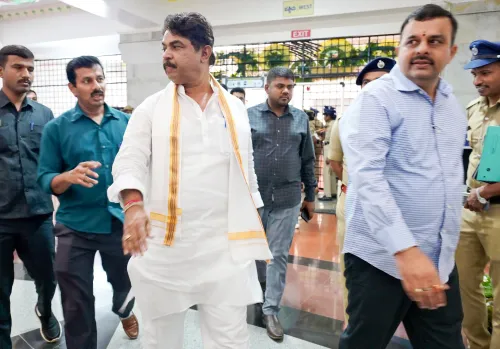
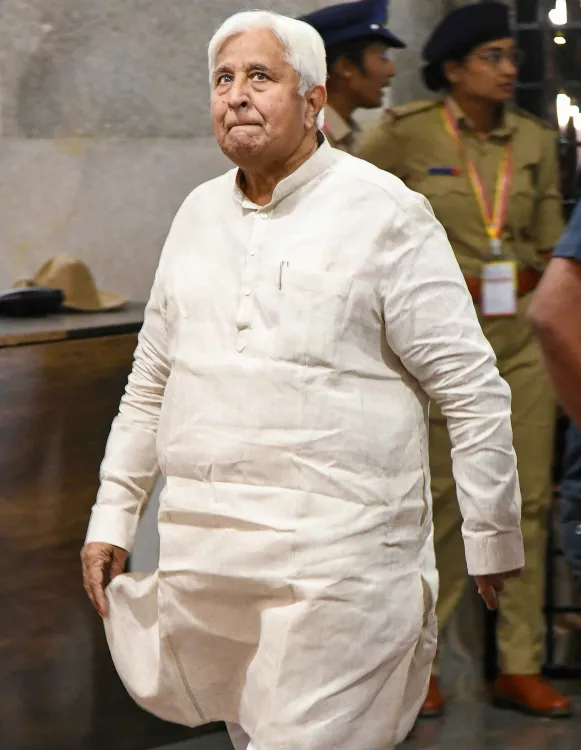
During a press conference at Vidhana Soudha, Law and Parliamentary Affairs Minister H.K. Patil informed the media about the outcomes of the emergency Cabinet meeting conducted earlier that day.
“The decision was made to hold the joint sitting on Thursday, January 22, at 11:00 AM. The session will run from January 22 to January 31, focusing on measures to safeguard public and state interests,” he mentioned.
Minister Patil elaborated, “The Cabinet reached three significant conclusions. We will convene the sessions of both the Legislative Assembly and the Legislative Council on January 22. Additionally, the Governor has been invited to address the joint session on the same day. The Chief Minister has been empowered to approve the Governor’s address.”
“A special discussion will be held to raise awareness regarding the social and economic implications of the VB-G RAM G Act. The Cabinet has resolved to organize this discussion during the joint session to inform the public about how the new Act affects society and to formulate a resolution regarding the legislation,” he stated.
The Minister asserted that the government is committed to taking appropriate actions to safeguard public interests and the welfare of the state. He emphasized that the government cannot remain passive if there are attempts to undermine the rights of the state's citizens within the federal framework.
He also indicated that the government is compelled to convene a legislative session, highlighting efforts to create public awareness and apply pressure on the Centre regarding the restoration of the MNREGA Act.
When asked why other states had not raised concerns, the Minister noted that the governments of Punjab and Tamil Nadu have expressed their worries, adding that six to seven states have voiced their opposition and dissatisfaction.
The MNREGA Act mandated not just the provision of work but also entitled beneficiaries to seek unemployment allowances if work was not available. Panchayats had the authority to determine the nature of work.
Under the new legislation, these powers have been removed from panchayats, with all decisions regarding work being centralized at the national level. He pointed out that workers who previously contributed to building rural infrastructure are now being redirected to work under contractors for road and tunnel projects.
By eliminating citizens' right to work, diminishing panchayats' decision-making powers, and centralizing authority, the new law undermines the very principle of decentralization, he explained.
For these reasons, the Cabinet has resolved to foster public awareness, facilitate a special discussion, and exert pressure on the Union government. He added that the government plans to engage not only the public but also legal avenues.
In response to allegations from BJP and JD(S) leaders challenging the government, the Minister clarified that audits in the state aim to identify irregularities, with necessary actions already implemented. He recalled that Prime Minister Narendra Modi had initially criticized MNREGA upon taking office, but subsequently praised the same scheme over the following years.
Point of View
It is crucial to recognize the Karnataka government's proactive approach in safeguarding state rights through legislative discussions. Their initiative highlights the importance of public awareness and the need for a balanced federal structure.
NationPress
17 Oct 2026
Frequently Asked Questions
What is the VB-G RAM G Act?
The VB-G RAM G Act stands for Viksit Bharat-Guarantee for Rozgar and Ajeevika Mission (Gramin), aimed at enhancing employment and livelihood opportunities in rural areas.
Why did the Karnataka government hold an emergency meeting?
The emergency meeting was convened to discuss the urgent need for a special Legislature debate on the VB-G RAM G Act and to address concerns about its implications for state rights.
What are the key decisions made during the Cabinet meeting?
Key decisions include convening the Legislative Assembly and Council sessions, inviting the Governor to address the joint session, and holding discussions to raise public awareness regarding the Act.
How does the new Act affect panchayats?
The new Act centralizes decision-making power, stripping panchayats of their authority to decide on local work, thereby undermining the principle of decentralization.
What steps will the government take to protect public interests?
The government plans to create public awareness, hold discussions, and potentially engage legal avenues to safeguard the rights of the citizens.