Kartarpur Sahib pilgrim fee: Pakistan accused of politicising Sikh faith
Synopsis
Pakistan's $20 fee for Indian pilgrims at Kartarpur Sahib has sparked a sharp editorial backlash, with critics comparing it to the Mughal-era Jizya tax. Add reported Operation Sindoor propaganda posters inside the corridor, and the charge is clear: a sacred Sikh shrine is being used as an instrument of revenue and political messaging.
Key Takeaways
Pakistan's ETPB charges Indian pilgrims $20 and NRI pilgrims $5 to visit Kartarpur Sahib .
An editorial in Khalsa Vox by Sudeep Singh calls the fee contrary to Sikh ideals and compares it to the Mughal-era Jizya tax.
Posters reportedly promoting Pakistan's claims about Operation Sindoor have been displayed inside the Kartarpur corridor complex .
No major Gurdwara anywhere in the world imposes a mandatory charge for paying obeisance, critics note.
Haryana CM Nayab Singh Saini highlighted India's Kartarpur Corridor and Amritsar–Nanded air connectivity as counter-examples of Sikh-community outreach by the Centre.
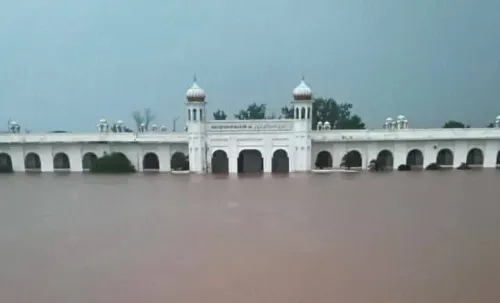
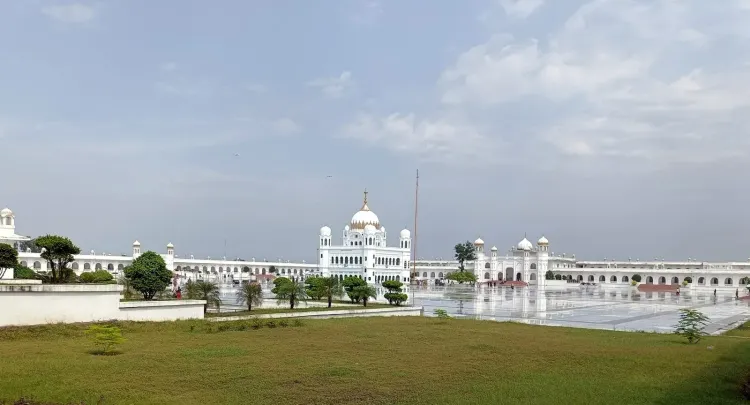
Pakistan's Evacuee Trust Property Board (ETPB) continues to charge Indian pilgrims $20 and Non-Resident Indian (NRI) pilgrims $5 for visiting Kartarpur Sahib, a practice that has drawn sustained criticism from Sikh organisations and religious commentators as a politicisation of faith. The controversy has intensified following an editorial by Sudeep Singh in Khalsa Vox, which argued that the fee structure contradicts fundamental Sikh principles and undermines the sanctity of the pilgrimage corridor.
A Fee Unlike Any Other Gurdwara
Singh's editorial underlines a striking anomaly: no major Gurdwara anywhere in the world imposes a mandatory entry charge for devotees seeking to pay obeisance. Critics argue the Kartarpur fee stands in direct contradiction to this universal norm. Singh wrote: 'Pakistan's policy reflects a mindset that views religious sites not as places of devotion but as instruments of control and revenue generation.'
Several Sikh organisations have reportedly drawn a historical parallel, comparing the levy to the Mughal-era Jizya tax — a charge imposed on non-Muslims solely on account of their faith. 'In the 21st century, imposing a tax on pilgrims simply because they come from another country can reasonably be viewed as a symbol of religious discrimination and outdated thinking,' Singh noted in the editorial.
Political Propaganda Inside the Corridor
The editorial raises a second, separate concern: the reported display of posters within the Kartarpur corridor complex propagating Pakistan's claims of victory in India's Operation Sindoor. According to the editorial, such material transforms a sacred pilgrimage site into a platform for what Singh described as 'military triumphalism' and 'political propaganda.'
The piece argues that these incidents collectively erode the spirit and stated purpose of the corridor, which was established to allow Sikh devotees unimpeded access to one of their holiest shrines. Notably, the corridor was inaugurated in 2019 as a rare bilateral initiative, widely seen at the time as a gesture of religious goodwill.
What the Editorial Demands
Singh's piece calls on Pakistan to take three concrete steps: abolish the pilgrimage fee entirely, remove all political propaganda from the corridor premises, and ensure that devotees can visit with dignity. 'Kartarpur Sahib is not the property of any government; it is a shared heritage of the entire Sikh Panth and, indeed, of humanity itself,' he wrote.
The editorial's framing positions the issue as one of global Sikh heritage rather than a bilateral India-Pakistan matter — a distinction that broadens the audience for the critique beyond South Asian politics.
India's Parallel Initiatives for Sikh Pilgrims
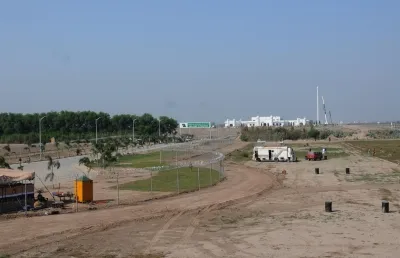
Against this backdrop, Haryana Chief Minister Nayab Singh Saini on Saturday highlighted the Central government's own outreach to the Sikh community. Saini pointed to the inauguration of the Kartarpur Corridor connecting Dera Baba Nanak with Kartarpur Sahib, and the launch of dedicated air connectivity between Amritsar and Takht Sri Hazur Sahib in Nanded, as landmark initiatives undertaken by the Centre.
The juxtaposition of India's facilitation efforts with Pakistan's fee-and-propaganda controversy is likely to deepen the political and religious dimensions of the debate in the weeks ahead.
Point of View
Not a religious one. For India, the controversy hands a ready diplomatic and domestic argument — but the Sikh community's grievance is genuine and deserves engagement beyond political point-scoring.
NationPress
23 Sept 2026
Frequently Asked Questions
What fee does Pakistan charge Indian pilgrims to visit Kartarpur Sahib?
Pakistan's Evacuee Trust Property Board (ETPB) charges Indian pilgrims $20 and NRI pilgrims $5 for visiting Kartarpur Sahib. Critics argue this is contrary to Sikh principles, as no major Gurdwara in the world imposes a mandatory entry fee for devotees.
Why are Sikh organisations comparing the Kartarpur fee to the Mughal-era Jizya tax?
The Jizya was a levy imposed on non-Muslims under Mughal rule solely because of their faith. Sikh organisations and commentators have reportedly drawn this parallel to argue that charging pilgrims based on their country of origin constitutes a form of religious discrimination, a comparison made in a Khalsa Vox editorial by Sudeep Singh.
What is the controversy over political propaganda at Kartarpur Sahib?
Posters reportedly promoting Pakistan's claims of victory in India's Operation Sindoor have been displayed inside the Kartarpur corridor complex. The Khalsa Vox editorial argues this turns a sacred pilgrimage site into a platform for military triumphalism and political propaganda, undermining its religious purpose.
What has the Khalsa Vox editorial demanded from Pakistan?
The editorial by Sudeep Singh demands that Pakistan abolish the pilgrim fee entirely, remove all political propaganda from the corridor premises, and ensure devotees can visit with dignity. It describes Kartarpur Sahib as the shared heritage of the entire Sikh Panth, not the property of any government.
What steps has India taken for Sikh pilgrims in contrast?
Haryana Chief Minister Nayab Singh Saini highlighted the inauguration of the Kartarpur Corridor connecting Dera Baba Nanak with Kartarpur Sahib, and dedicated air connectivity between Amritsar and Takht Sri Hazur Sahib in Nanded, as landmark Central government initiatives for the Sikh community.