Child Marriage Case: Kasaragod Court Orders Probe, 4 Booked

Synopsis
A Kasaragod court has ordered police to investigate an alleged child marriage involving a 16-year-old girl and a 28-year-old man employed in South Korea. Four accused — including the groom, the girl's father, a local body member, and a mosque secretary — have been booked, even as families insist it was merely an engagement.
Key Takeaways
The First Class Judicial Magistrate Court, Hosdurg , ordered Chandera Police to probe an alleged child marriage in Thrikkaripur, Kasaragod on April 25, 2025 .
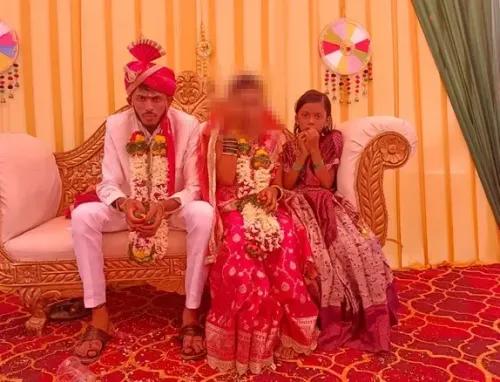
A 16-year-old girl was allegedly married to a 28-year-old man from Padanna , currently working in South Korea , on April 13 at a local Juma Masjid.
Four persons booked include the groom , the girl's father , a local body elected member , and the mosque secretary .
Childline first flagged the incident; the Child Marriage Prohibition Officer submitted prima facie evidence before the court directed police action.
Families of both parties deny a marriage occurred, claiming the event was only an engagement ceremony ; police are collecting digital and documentary evidence to verify.
A separate complaint has been filed with the Chief Secretary of Kerala seeking a probe by a senior-level police team .
A court-mandated investigation into an alleged child marriage in Thrikkaripur, Kasaragod district has been set in motion, with four individuals — including the 28-year-old groom, the girl's father, a local body elected member, and a mosque secretary — booked under applicable statutes. The First Class Judicial Magistrate Court, Hosdurg, directed the Chandera Police to register the case after the Child Marriage Prohibition Officer submitted prima facie findings on April 13, when a 16-year-old girl was allegedly wedded at a Juma Masjid in Kasaragod.
How the Case Came to Light
Childline, the national child helpline service, first received a tip-off about the alleged ceremony. The information was investigated by the Child Marriage Prohibition Officer, who gathered sufficient preliminary evidence and presented the findings before the magistrate court.
The court subsequently directed law enforcement to initiate formal legal proceedings. The Chandera Police registered the case and have since launched a structured investigation to collect both documentary and digital evidence.
Who Has Been Booked
The four accused are: the groom, a 28-year-old native of Padanna currently employed in South Korea; the girl's father, who is alleged to have performed the ceremonial rites; a local body member whose identity has not been officially disclosed; and the secretary of the mosque where the event took place.
Authorities have confirmed that the groom is believed to have returned to South Korea after the event. Officials, however, stated that legal action will be pursued in accordance with the law, irrespective of his current location.
Families Deny Marriage, Claim It Was an Engagement
Relatives of both the girl and the groom have refuted allegations of a marriage, insisting that the gathering was merely an engagement ceremony and not a legally binding marital union. This denial is expected to be a key point of contention as investigators seek to establish the nature of the event.
Police are actively gathering photographic and video evidence from the function, along with documentary records, to determine whether the event constituted a marriage under Indian law.
Escalation: Complaint Filed with Chief Secretary
In a parallel development, a separate individual has filed a formal complaint with the Chief Secretary of Kerala, urging that a senior-level police team be constituted to conduct a comprehensive and independent investigation into the matter. This signals growing public concern over the handling of the case at the local level.
Under the Prohibition of Child Marriage Act, 2006, child marriage is a cognisable and non-bailable offence in India. Those found guilty — including parents, guardians, and facilitators — can face imprisonment of up to two years and fines.
Broader Context: Kerala at the Centre of Child Marriage Controversy
This incident surfaces amid a high-profile legal dispute involving the Kerala Government and the Madhya Pradesh Government before the National Commission for Scheduled Castes and Scheduled Tribes in New Delhi, centred on the case of the viral 'Kumbh Mela girl'.
Kerala Police maintain that the girl in that case had attained 18 years of age at the time of her marriage on March 11 at a temple in Poovar, Thiruvananthapuram, and that all legal procedures were followed. In contrast, Madhya Pradesh Police and the girl's family contend she is a minor, creating a jurisdictional and humanitarian flashpoint.
The Kasaragod case adds another dimension to Kerala's ongoing scrutiny over child protection frameworks. Critics argue that the state's institutional mechanisms — while responsive — often act after the fact rather than preventing such incidents. With the groom abroad and families in denial, the outcome of this investigation will test the reach and resolve of Kerala's child rights enforcement machinery.
As the probe progresses, all eyes will be on whether authorities can secure sufficient evidence to prosecute the accused, and whether the complaint to the Chief Secretary results in a higher-level inquiry that brings greater accountability to the process.
Point of View
The presence of an elected local body member among the accused suggests that community gatekeepers, who should be safeguarding minors, may instead be enabling violations. With the groom abroad and families in denial, this case will be a litmus test for whether India's child marriage laws carry real deterrent weight — or remain toothless against social complicity.
NationPress
16 Sept 2026
Frequently Asked Questions
What happened in the Kasaragod child marriage case?
A 16-year-old girl was allegedly married to a 28-year-old man on April 13 at a mosque in Thrikkaripur, Kasaragod. The Hosdurg Magistrate Court ordered a police probe after the Child Marriage Prohibition Officer found prima facie evidence of the marriage.
Who has been booked in the Kasaragod child marriage case?
Four individuals have been booked: the 28-year-old groom (a native of Padanna working in South Korea), the girl's father, a local body elected member, and the mosque's secretary. All have been charged under relevant child marriage prohibition laws.
What is the legal punishment for child marriage in India?
Under the Prohibition of Child Marriage Act, 2006, child marriage is a cognisable, non-bailable offence. Those convicted — including facilitators and parents — can face up to two years in prison and monetary fines.
How was the Kasaragod child marriage discovered?
Childline, the national child helpline, received information about the alleged ceremony and alerted authorities. The Child Marriage Prohibition Officer investigated and submitted findings to the First Class Judicial Magistrate Court, Hosdurg, which then ordered police action.
Is the Kasaragod child marriage case connected to the Kumbh Mela girl controversy?
The two cases are separate but highlight Kerala's ongoing scrutiny over child marriage enforcement. The Kumbh Mela case involves a disputed marriage where Kerala and Madhya Pradesh governments disagree on the girl's age, while the Kasaragod case involves a court-ordered probe into an alleged local child marriage.