Kejriwal calls E20 fuel blending push a 'full blown scam'
Synopsis
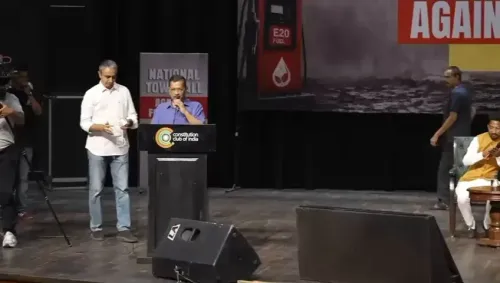
AAP National Convenor Arvind Kejriwal on 14 August 2026 branded India's E20 ethanol blending drive a 'full blown scam,' demanding PM Modi explain his urgency in pushing the policy despite widespread consumer and expert criticism over mileage loss and engine compatibility.
Key Takeaways
Arvind Kejriwal on 14 August 2026 called India's E20 ethanol blending drive a 'full blown scam' on X.
He demanded an explanation for why PM Modi is urgently pushing E20 despite consumer and expert opposition over mileage and engine compatibility.
India's National Policy on Biofuels 2018 set a 20% ethanol blending target by 2030 ; the programme has been running since 2003 .
Key stakeholders in tension: sugarcane farmers and sugar mills (who gain from ethanol offtake) versus urban vehicle owners (who face potential mileage losses).
The government's standard justification is energy security — reducing India's crude oil import dependence — but Kejriwal's post challenges whether that is the real driver.
The specific rationale for the pace of 2026 E20 expansion has not been detailed in verified public statements at the time of this report.
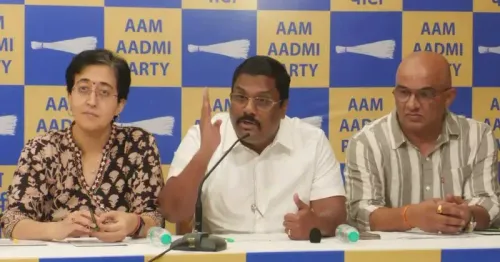
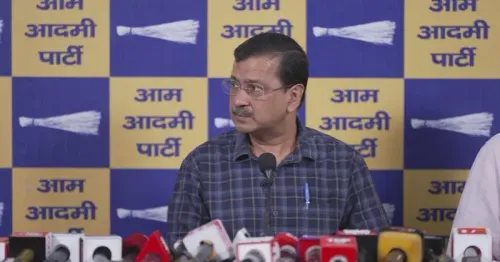
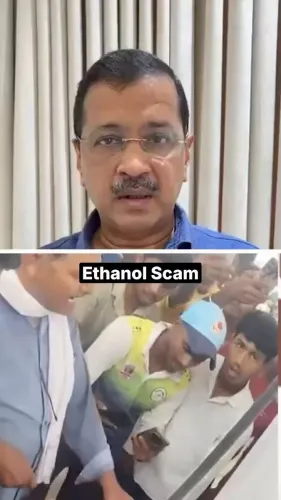
A political grenade landed on India's ethanol blending programme Friday when AAP National Convenor Arvind Kejriwal publicly labelled the government's push to roll out E20 fuel — petrol blended with 20% ethanol — a 'full blown scam,' demanding to know why Prime Minister Narendra Modi is pressing ahead despite vocal opposition from consumers and technical experts.
What E20 is and why it became a flashpoint
India's National Policy on Biofuels, 2018 set a target of achieving 20% ethanol blending in petrol by 2030. The Ethanol Blended Petrol programme itself dates to 2003, with successive governments — across party lines — ratcheting up the targets through 2015 and again in 2021, framing the policy as a triple win: cutting costly crude oil imports, channelling extra revenue to sugar mills, and trimming vehicular emissions.
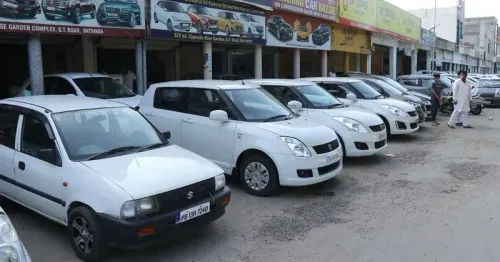
But the policy has never been controversy-free. Vehicle owners and automotive engineers have raised persistent concerns about real-world mileage losses on E20 blends, engine compatibility for older vehicles, and effective price parity at the pump. Those concerns form the backdrop to Kejriwal's broadside.
Kejriwal's 'scam' charge and what he is asking
In his post on 14 August 2026, Kejriwal did not allege a specific financial irregularity but framed the government's urgency itself as the red flag — asking 'why' Modi is 'soooo desperate' to impose E20 when consumers and experts are criticising it 'vociferously.' The rhetorical move is deliberate: it shifts the burden of explanation onto the government rather than presenting counter-evidence, a classic opposition pressure tactic.
The word 'impose' is doing significant work here. Kejriwal frames E20 not as a phased policy transition but as something being forced on an unwilling public — a framing that aligns with the concerns of petrol consumers and vehicle owners who worry about performance and cost.
The stakeholders caught in the middle
The E20 debate has always had competing interests in tension. Sugarcane farmers and sugar mills stand to gain from higher ethanol offtake, giving the policy a rural-agricultural constituency that successive governments have been reluctant to alienate. On the other side sit urban vehicle owners — a large, vocal, and politically sensitive group — who have flagged mileage drops and uncertainty over whether older engines can handle higher ethanol concentrations without modification.
Energy security advocates argue that every percentage point of domestic ethanol blended is one less barrel of imported crude — a balance-of-payments argument that carries real weight given India's chronic oil import bill. The government has consistently led with this logic. Kejriwal's post, by calling the urgency a 'scam,' challenges whether that logic is the real driver.
What the government has not yet answered publicly
The specific rationale for the pace of the 2026 E20 expansion — why now, at this speed, over consumer objections — has not been detailed in verified public statements available at the time of this report. That gap is precisely the space Kejriwal is occupying. His post is less a policy counter-proposal than a demand for transparency, and it will keep pressure on the government to articulate, clearly and publicly, the cost-benefit case for E20 at this moment.
As E20 pumps expand nationwide and technical studies on vehicle performance accumulate, the political argument around ethanol blending is only going to get louder — and more specific.
Point of View
Because it implies hidden beneficiaries. The charge lands inside a long-running tension in India's biofuel policy between agricultural interests, energy security logic, and urban consumer welfare. For the BJP, the challenge is to publicly defend the timeline with specifics, not just the principle; silence or vague energy-security boilerplate will keep the 'scam' framing alive. This episode also signals that fuel pricing and energy policy are returning as live electoral issues in 2026.
NationPress
14 Aug 2026
Frequently Asked Questions
What is E20 fuel in India?
E20 is petrol blended with 20% ethanol , part of India's Ethanol Blended Petrol programme that began in 2003 . The government's National Policy on Biofuels 2018 set a target of achieving E20 blending nationwide by 2030 to reduce crude oil imports and support sugar mills.
Why is Kejriwal calling E20 a scam?
AAP National Convenor Arvind Kejriwal has not alleged a specific financial irregularity but questions why PM Modi is 'desperate' to push E20 despite consumer and expert criticism over mileage loss and engine compatibility, framing the urgency itself as suspicious.
Does E20 fuel reduce mileage?
Ethanol has a lower energy density than petrol, and higher ethanol blends like E20 can result in real-world mileage reductions. The extent varies by vehicle type and engine design. Concerns over mileage loss and engine compatibility for older vehicles are central to the consumer criticism Kejriwal references.
Who benefits from India's ethanol blending programme?
Sugarcane farmers and sugar mills benefit from higher ethanol demand, while the government aims to reduce India's crude oil import bill. Energy security advocates argue the policy improves India's balance of payments. Critics say urban vehicle owners bear the cost through mileage losses.
What is AAP's position on the E20 policy?
AAP National Convenor Arvind Kejriwal has publicly opposed the pace of E20 rollout, citing consumer impacts and expert criticism. His 14 August 2026 post escalates that opposition by characterising the government's push as a 'full blown scam.'