Kejriwal claims Amit Shah personally ordered Satyendra Jain's arrest

Synopsis
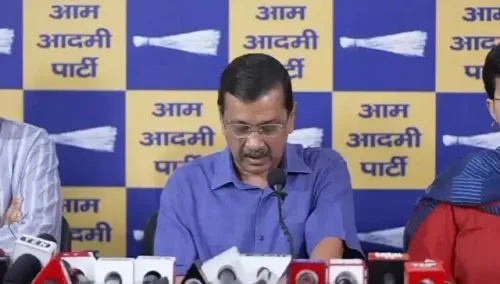
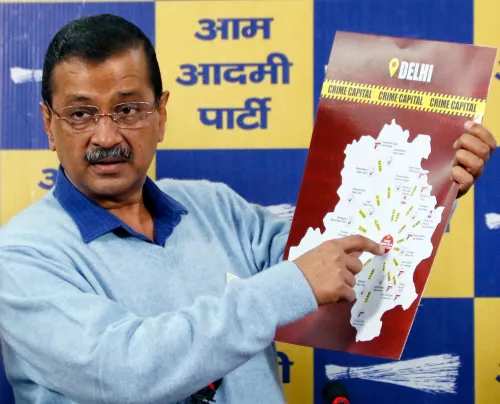
AAP convenor Arvind Kejriwal alleged on 19 August 2026 that Union Home Minister Amit Shah personally telephoned the ACB to order the arrest of AAP leader Satyendra Jain, claiming arrests are now politically directed rather than evidence-driven. The Home Ministry has not responded.
Key Takeaways
Kejriwal alleged on 19 August 2026 that Home Minister Amit Shah personally called the ACB to order Satyendra Jain's arrest that afternoon.
According to Kejriwal, the ACB had no plan to arrest Jain until the alleged call arrived at noon.
Jain was first arrested by the Enforcement Directorate in 2022 in a money laundering case linked to public works irregularities.
Manish Sisodia was arrested by central agencies in 2023 , making Jain the second senior AAP minister to face such action.
The specific claim of a direct ministerial phone call to the ACB is unverified and has not been confirmed by the Home Ministry or ACB.
The allegation feeds into a wider constitutional dispute over the Union government's control of Delhi's law-enforcement agencies.
An arrest that was not on the calendar at dawn was executed by afternoon — and AAP convenor Arvind Kejriwal says he knows exactly why. In a sharp post on 19 August 2026, Kejriwal alleged that a direct phone call from Union Home Minister Amit Shah to the Anti-Corruption Branch (ACB) triggered the arrest of AAP leader Satyendra Jain the same day.
Quoting what he described as an account from an ACB officer, Kejriwal wrote: 'Subah tak ACB ka Satyendra Jain ko giraftaar karne ka koi plan nahin tha. Phir dopahar mein Amit Shah ji ka seedhe phone aaya ki giraftaar kar lo. Tab giraftaar kiya.' ('Until morning, the ACB had no plan to arrest Satyendra Jain. Then in the afternoon, Amit Shah called directly and said arrest him. So they did.')
The conclusion Kejriwal drew was blunt: 'It is now clear that arrests do not happen because someone has committed a crime, but because those two want someone arrested.'
Satyendra Jain's history with central agencies
Satyendra Jain, a senior AAP figure and former Delhi minister, was first arrested by the Enforcement Directorate in 2022 in a money laundering case linked to alleged irregularities in public works projects. That case has wound through courts since. A fresh ACB action on 19 August 2026 — if confirmed — would mark another escalation in the legal pressure on one of AAP's most prominent faces.
Jain is not alone. Manish Sisodia, AAP's former deputy chief minister, was arrested by central agencies in 2023 on charges related to the now-scrapped Delhi liquor policy. The pattern of arrests of senior AAP leaders has become one of the defining fault lines of Delhi politics over the past four years.
AAP's 'political vendetta' narrative — and the government's counter
Kejriwal and AAP have consistently framed these arrests as weaponised enforcement — investigations timed and directed not by evidence but by political calculus at the Centre. The Union government and its agencies have maintained the opposite: that every case reflects the rule of law applied without fear or favour.
The specific allegation in Wednesday's post — that Shah personally phoned the ACB to order the arrest — is unverified and has not been confirmed by the Home Ministry or the ACB. NationPress could not independently corroborate the claim of a direct call. The ACB and the Home Ministry had not issued a public response at the time of publication.
Why the ACB angle matters
The Anti-Corruption Branch is a Delhi government agency, nominally under the elected administration. That an ACB officer would allegedly receive a call from the Union Home Minister — bypassing the state government's own chain of command — is precisely the detail Kejriwal is foregrounding. It feeds directly into a long-running constitutional argument about the Centre's control over Delhi's law-enforcement apparatus, a dispute that has played out in the Supreme Court and Parliament alike.
Whether the allegation is substantiated or not, the political charge is now in the air ahead of what are likely to be contentious court hearings in Jain's case. The Home Ministry's silence — or its rebuttal — will be the next move that matters.
Point of View
It is designed to shift the public frame from 'corruption case' to 'political hit' ahead of court proceedings. The absence of any immediate official rebuttal leaves the allegation to shape the day's news cycle unchallenged.
NationPress
19 Aug 2026
Frequently Asked Questions
Why was Satyendra Jain arrested?
Satyendra Jain was first arrested by the Enforcement Directorate in 2022 in a money laundering case linked to alleged irregularities in public works projects. Kejriwal alleged on 19 August 2026 that a fresh ACB arrest was ordered directly by Home Minister Amit Shah, a claim the government has not confirmed or denied.
What did Kejriwal say about Amit Shah and the ACB?
Kejriwal claimed that an ACB officer told him there was no plan to arrest Satyendra Jain until Amit Shah personally called the ACB in the afternoon of 19 August 2026 and instructed them to proceed with the arrest.
Has Amit Shah or the Home Ministry responded to Kejriwal's allegation?
At the time of publication, neither the Home Ministry nor the ACB had issued a public response to Kejriwal's allegation of a direct phone call ordering Jain's arrest.
What is the Anti-Corruption Branch and who controls it?
The Anti-Corruption Branch is a Delhi government agency responsible for investigating corruption cases in the national capital. Control over Delhi's law-enforcement apparatus has been a long-running constitutional dispute between the elected Delhi government and the Union government.
Which other AAP leaders have been arrested by central agencies?
Former Delhi Deputy Chief Minister Manish Sisodia was arrested by central agencies in 2023 on charges related to the Delhi liquor policy. Satyendra Jain was arrested by the ED in 2022. AAP has called both arrests politically motivated.