CM Sai's Chhattisgarh Bets on Jashpur Women to Spin Silk Success
Synopsis
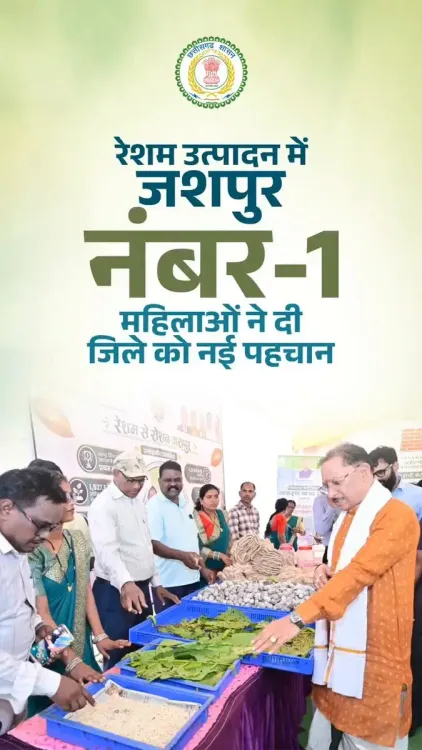
The Chief Minister's Office of Chhattisgarh spotlighted Jashpur district as the state's top silk-producing district on 19 August 2026, crediting women workers and CM Vishnu Deo Sai's governance policies for driving sericulture growth under the AtmaNirbhar Chhattisgarh agenda.
Key Takeaways
The Chhattisgarh CMO on 19 August 2026 declared Jashpur the state's number-one silk-producing district.
Chief Minister Vishnu Deo Sai , in office since December 2023 , has framed sericulture growth as part of the 'Sushasan Sarkar' good-governance agenda.
Women in Jashpur are credited as the primary drivers of the district's silk output, linking traditional skills to formal economic participation.
Chhattisgarh has a long history of promoting tasar silk in tribal districts through women's self-help groups and rural livelihood programmes.
Updated district-wise silk production data for 2026-27 is yet to be independently published, and the number-one ranking is based on the government's own claim.
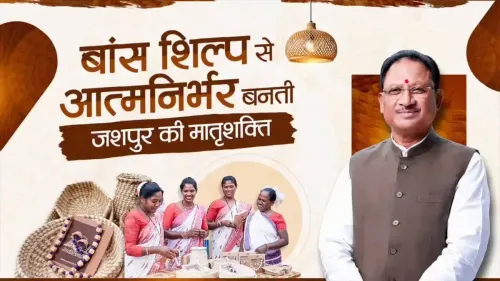
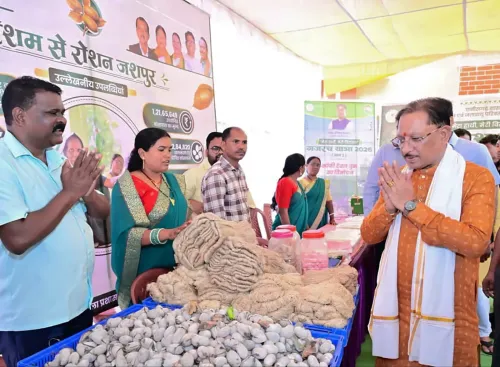
In the forested hills of northern Chhattisgarh, women in Jashpur district are turning silkworm threads into economic independence — and the state government wants the country to take notice. The Chief Minister's Office of Chhattisgarh on Wednesday, 19 August 2026, highlighted how sericulture has found new momentum under Chief Minister Vishnu Deo Sai, with Jashpur emerging as the state's top silk-producing district, driven by its women workers.
The official post declared, 'जशपुर की रेशमी उड़ान, महिलाओं के हुनर से नई पहचान!' — 'Jashpur's silken flight, a new identity forged by the skill of women' — crediting the BJP-led government's 'Sushasan Sarkar' (good governance) policies and sustained encouragement for giving silk production fresh momentum across the state.
Jashpur's Long Road to the Top of Chhattisgarh's Silk Map
Sericulture is not new to Chhattisgarh's tribal belt. The state has historically been a significant producer of tasar silk, a coarser, more durable variety grown on forest trees rather than mulberry leaves, making it well suited to districts like Jashpur with dense natural cover and a predominantly tribal population. Successive state governments have channelled rural livelihood programmes through women's self-help groups in these districts, linking traditional forest-based skills to formal market chains. What the CMO's announcement signals is that this older approach is being re-energised and given a sharper political identity under the Sai administration — framing women's participation in sericulture not just as a livelihood measure but as a marker of district-level achievement and self-reliance.Women at the Centre of the 'AtmaNirbhar Chhattisgarh' Push
The state's framing of Jashpur's silk story is deliberately women-forward. The post singles out the 'hardworking women' of the district — their skill, labour, and self-reliance — as the engine behind the ranking. This fits the broader 'AtmaNirbhar Chhattisgarh' narrative that the Sai government has used to position women's economic participation as a pillar of state development since taking office in December 2023. For families in Jashpur, sericulture offers income that can be managed from home or from small community rearing centres, making it particularly accessible to women who balance agricultural and domestic responsibilities. When state policy backs that with training, procurement support, and market linkages, the returns can meaningfully supplement household incomes in one of Chhattisgarh's more remote districts. The district-level 'number one' ranking cited by the CMO has not yet been corroborated by independently published state sericulture data, and updated district-wise production figures for 2026-27 are awaited. What is clear is that the government is investing political capital in the Jashpur silk story as a proof point for its rural women's empowerment agenda. If the production numbers hold up and training programmes scale, Jashpur's silk could yet become the kind of district-level success story that shapes how Chhattisgarh allocates its next round of sericulture budgets — thread by careful thread.Point of View
Long a contested space between state and central schemes, are being re-branded under a unified 'AtmaNirbhar Chhattisgarh' identity. Whether the ranking translates into sustained budget allocations and market linkages for Jashpur's silk producers will be the real test of political intent.
NationPress
20 Aug 2026
Frequently Asked Questions
Why is Jashpur famous for silk production in Chhattisgarh?
Jashpur is a forested, predominantly tribal district in northern Chhattisgarh where tasar silk — grown on forest trees rather than mulberry — has traditionally been produced. State livelihood programmes have long supported women's self-help groups there in sericulture activities.
What is tasar silk and how is it different from regular silk?
Tasar silk is produced by silkworms that feed on forest trees like arjun and asan rather than mulberry. It is coarser and more textured than mulberry silk, and is closely associated with tribal forest communities in central and eastern India, including Chhattisgarh.
Who is Vishnu Deo Sai and what is his role in Chhattisgarh's silk push?
Vishnu Deo Sai is the Chief Minister of Chhattisgarh, in office since December 2023, leading a BJP government that has positioned women's economic participation in sectors like sericulture as a pillar of its 'AtmaNirbhar Chhattisgarh' development agenda.
What is AtmaNirbhar Chhattisgarh?
AtmaNirbhar Chhattisgarh is a self-reliance framework promoted by the Sai government, echoing the national AtmaNirbhar Bharat initiative, which encourages local production, women's entrepreneurship, and tribal livelihood development within the state.
Has Jashpur's number-one silk ranking been officially verified?
The ranking has been announced by the Chief Minister's Office of Chhattisgarh. Independent district-wise silk production data for 2026-27 from state sericulture authorities has not yet been publicly released to corroborate the claim.