CM Sai Highlights Makhana Push for Women, Farm Diversification

Synopsis
Chhattisgarh Chief Minister Vishnu Deo Sai on 29 May 2026 highlighted Dhamtari district as a model for makhana-led women's empowerment and crop diversification, saying his government has integrated self-help groups across the full makhana value chain to raise rural incomes.
Key Takeaways
CM Vishnu Deo Sai on 29 May 2026 publicly championed makhana cultivation as a new identity for Chhattisgarh beyond paddy farming.
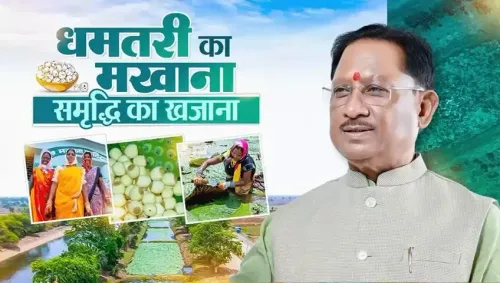
Dhamtari district has been identified as the primary cluster for makhana production in the state.
The government has linked women's self-help groups to cultivation, processing, and marketing of makhana to create full value-chain participation.
The initiative is framed under goals of women's empowerment, agricultural diversification , and a self-reliant rural economy.
Makhana is a high-value aquatic crop; Bihar's Mithila region received a GI tag for it in 2022 , and Chhattisgarh is now positioning itself as a new production hub.
CM Sai stated the aim is to supplement traditional farming with cash crops and modern agri-innovation to raise farmer incomes.
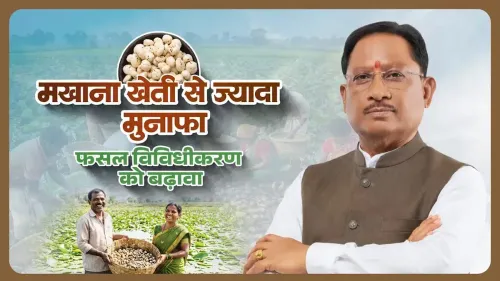
Chhattisgarh Chief Minister Vishnu Deo Sai on Friday, 29 May 2026 highlighted the state's growing makhana cultivation drive, calling Dhamtari district a new model of women's empowerment, agricultural diversification, and rural prosperity. The Chief Minister said the initiative is reshaping Chhattisgarh's identity beyond its long-standing reputation as a paddy-farming state.
Context
Posting in Hindi on X, CM Sai wrote: 'धान की खेती के लिए प्रसिद्ध छत्तीसगढ़ अब मखाना उत्पादन के माध्यम से महिला सशक्तीकरण, कृषि विविधिकरण और ग्रामीण समृद्धि की नई पहचान बन रहा है' ['Chhattisgarh, famous for paddy farming, is now becoming a new symbol of women's empowerment, agricultural diversification and rural prosperity through makhana production']. He specifically named Dhamtari as the district where the shift is most visible, describing it as an emerging example of women's enterprise and a self-reliant rural economy.
Makhana — the dried seed of the fox nut or lotus plant — is an aquatic crop traditionally associated with Bihar's Mithila region, which received a Geographical Indication tag for Mithila Makhana in 2022. Chhattisgarh's effort to cultivate the crop signals a deliberate push to diversify beyond rice, the state's dominant staple crop.
Policy Backdrop
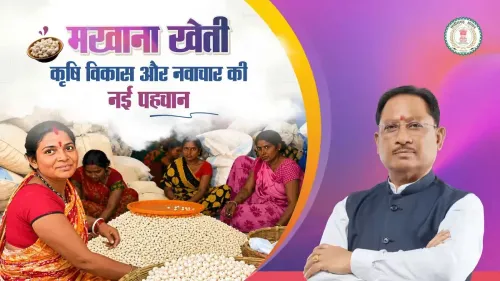
The Chief Minister stated that his government has connected women's self-help groups (SHGs) and farmers to makhana production, creating new opportunities for self-reliance and income growth. He said women are actively participating across the entire value chain — from cultivation through processing to marketing — making the programme a vehicle for economic empowerment at the village level.
Women's SHGs in India operate largely under the National Rural Livelihoods Mission (NRLM) framework, which supports village-level collectives in farm and non-farm enterprises. Integrating SHGs into a high-value aquatic crop supply chain aligns with the broader national pattern of using these collectives as anchors for rural income diversification. Several Indian states have rolled out similar crop-diversification roadmaps since 2020.
Stakeholders and Impact
Women self-help group members and Dhamtari district farmers are the primary beneficiaries named in the Chief Minister's post. The emphasis on processing and marketing — not just cultivation — suggests an attempt to capture a larger share of the makhana value chain at the village level, potentially raising household incomes beyond what field-level production alone would yield.
Makhana commands a premium price in domestic and export markets, driven by growing demand for health foods. For farmers on marginal or waterlogged land previously unsuitable for paddy, the crop offers an alternative income stream. The Chief Minister's message also signals a political intent to associate the BJP-led Chhattisgarh government, which took office in December 2023, with visible rural welfare outcomes.
What's Next
CM Sai said the government's goal is to link farmers to cash crops and modern agricultural innovations alongside traditional farming, so that incomes rise and 'a new atmosphere of prosperity is created in villages.' Observers will watch for district-level makhana production data in upcoming Chhattisgarh agriculture budgets and any move toward a dedicated state processing policy or a GI application for Chhattisgarh makhana.
If the Dhamtari cluster scales successfully, it could serve as a replicable template for other districts in the state with similar agro-climatic conditions, deepening the state's agricultural diversification agenda in the years ahead.
Point of View
Women-led rural economy. By spotlighting a single district, the messaging follows a proven BJP playbook of anchoring policy narratives in tangible, local success stories. The SHG-to-value-chain framing also lets the state government align itself with the central NRLM architecture without requiring new institutional machinery. Whether Dhamtari's makhana cluster translates into measurable income gains for SHG members will ultimately determine if the initiative becomes a durable policy plank or remains a communication exercise.
NationPress
15 Oct 2026
Frequently Asked Questions
What is the makhana cultivation initiative in Chhattisgarh?
Chhattisgarh is promoting makhana (fox nut) farming as an alternative to traditional paddy cultivation, with Dhamtari district identified as the key production cluster. The state government has linked women's self-help groups to the full value chain — from growing the crop to processing and selling it.
Why is Chhattisgarh promoting makhana farming?
Makhana is a high-value aquatic crop that can generate significantly higher income than paddy on suitable land. The government aims to diversify farmer incomes, empower women through SHG-led enterprises, and build a self-reliant rural economy beyond the state's traditional rice-farming base.
Which district in Chhattisgarh is leading makhana production?
Dhamtari district has been highlighted by CM Vishnu Deo Sai as the primary hub for makhana cultivation and women-led processing in the state.
How are women's self-help groups involved in makhana farming in Chhattisgarh?
Women's SHGs have been integrated into the makhana supply chain at every stage — cultivation, processing, and marketing — enabling members to earn income beyond subsistence farming and build economic independence.
Is Chhattisgarh makhana different from Bihar's Mithila Makhana?
Mithila Makhana from Bihar received a Geographical Indication tag in 2022 and is the country's most established makhana brand. Chhattisgarh's programme is newer and is currently focused on Dhamtari district; no GI application for Chhattisgarh makhana has been confirmed yet.