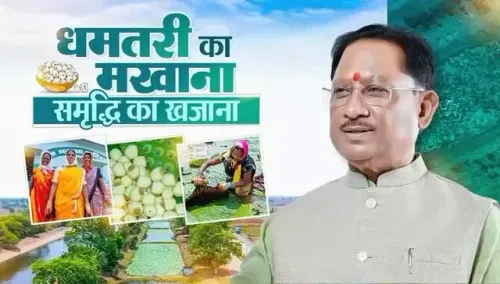
CM Sai Pushes Makhana Farming in Dhamtari for Farmer Income
Synopsis
Chhattisgarh's CMO announced on 11 July 2026 that CM Vishnu Dev Sai is driving makhana cultivation in Dhamtari district to diversify farmer incomes beyond paddy, positioning the state as a hub of agricultural innovation and self-reliance.
Key Takeaways
The Chief Minister's Office of Chhattisgarh announced the makhana cultivation push on 11 July 2026 .
Dhamtari district , traditionally a paddy-growing region, is the focus of the pilot due to its wetland geography.
The initiative aims to create alternative income opportunities for farmers alongside conventional farming.
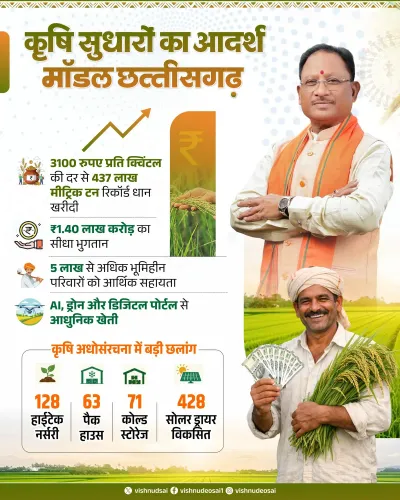
CM Vishnu Dev Sai has championed agricultural diversification since taking office in December 2023 .
Makhana commands higher market prices than paddy, making it a financially attractive crop for small farmers.
Success in Dhamtari could serve as a model for replication across other wetland districts in Chhattisgarh.
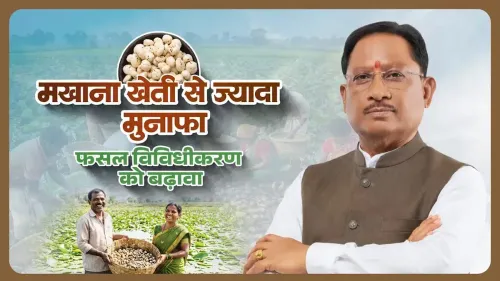
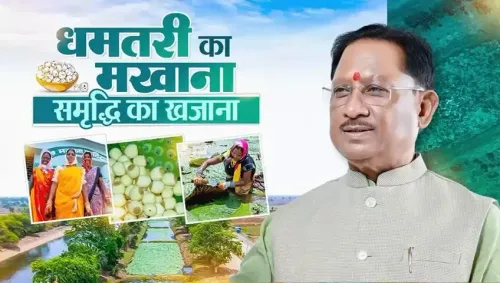
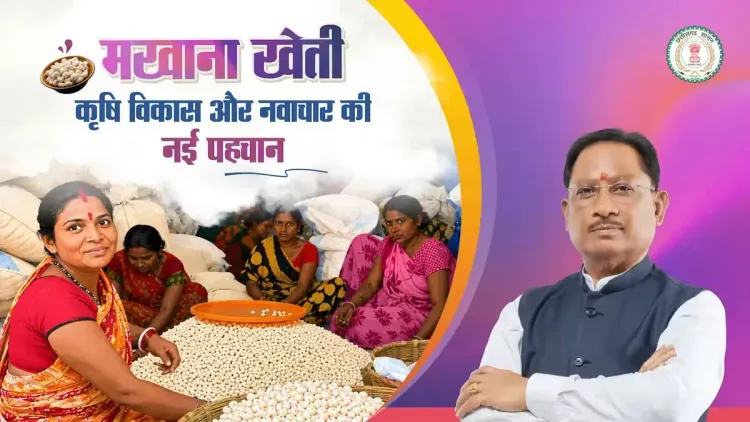
The Chief Minister's Office of Chhattisgarh announced on Saturday, 11 July 2026 that the state is actively promoting makhana (fox nut) cultivation in Dhamtari district alongside traditional farming, creating alternative income streams for farmers under the leadership of Chief Minister Vishnu Dev Sai.
The official post stated: 'Chhattisgarh ki krishi ab aatmanirbharta aur navachar ki nayi pahchan gadh rahi hai' — 'Chhattisgarh's agriculture is now forging a new identity of self-reliance and innovation.' The government said the initiative is designed to connect farmers with new technologies, agricultural innovations, and a prosperous future.
Context
Dhamtari, a district in central Chhattisgarh, has historically depended on paddy cultivation. The district's wetland areas make it a natural candidate for makhana farming, an aquatic crop that thrives in shallow water bodies. The state government is positioning this pilot as a model for reducing over-dependence on paddy across the region. Makhana, also known as fox nut or lotus seed, commands significantly higher market prices than paddy, making it an attractive diversification option for small and marginal farmers. The CMO's post highlighted that the push is creating 'new alternative income opportunities' (vaikalpik aay ke naye avsar) for the farming community in Dhamtari.Policy Backdrop
Following the December 2023 state elections, the Vishnu Dev Sai-led government signalled a shift towards agricultural reforms centred on crop diversification and self-reliance. The makhana initiative in Dhamtari is consistent with that broader policy direction. Several Indian states have introduced makhana cultivation in non-traditional geographies over the past decade, following the success of Bihar, which remains the dominant producer. The strategy aligns with national priorities around climate-resilient farming and increasing farmer incomes through high-value niche crops. Chhattisgarh's move reflects a state-level adaptation of this proven model. The initiative also resonates with the central government's thrust on crop diversification away from water-intensive cereals, a policy priority that has gained momentum across eastern and central Indian states.Stakeholders and Impact
The primary beneficiaries are Dhamtari's farming community, particularly small and marginal farmers who stand to gain from a higher-value crop that can be grown in existing wetland plots without displacing paddy on upland fields. Makhana cultivation is labour-intensive, which could also generate additional rural employment in the district. For the broader Chhattisgarh agricultural ecosystem, a successful Dhamtari pilot could serve as a template for replication in other wetland-adjacent districts. The government's framing of the initiative under the #Sushasansarkar ('good governance government') banner signals that it is being positioned as a flagship welfare and innovation programme.What's Next
Key indicators to watch include farmer uptake rates, yield data from the first harvest cycles, and the development of market-linkage and processing infrastructure in Dhamtari. Any announcement of dedicated subsidies, procurement support, or processing units in the upcoming state agriculture budget would signal the programme's transition from pilot to policy at scale. If the Dhamtari experiment yields strong results, Chhattisgarh could emerge as a significant new entrant in India's makhana supply chain, offering farmers a durable and profitable alternative to paddy in wetland zones.Point of View
The ruling party is clearly seeking political capital from farmer welfare alongside policy gains. The move mirrors a broader pattern of BJP-governed states adopting high-value niche crop pilots to demonstrate agricultural modernisation. Whether the initiative translates into sustained income gains will depend on market linkages and post-harvest infrastructure — the perennial weak link in similar state-level crop diversification efforts.
NationPress
10 Oct 2026
Frequently Asked Questions
What is the makhana farming initiative in Chhattisgarh's Dhamtari district?
The Chhattisgarh government, under CM Vishnu Dev Sai, is promoting makhana (fox nut) cultivation in Dhamtari district alongside traditional paddy farming to provide farmers with alternative, higher-value income sources.
Why is makhana being introduced in Dhamtari, Chhattisgarh?
Dhamtari's wetland areas are naturally suited to makhana cultivation, and the crop fetches higher market prices than paddy, making it an attractive diversification option for small and marginal farmers in the district.
Who is leading the agricultural reforms in Chhattisgarh?
Chief Minister Vishnu Dev Sai, who took office in December 2023, is leading Chhattisgarh's agricultural reform agenda, which includes crop diversification and farmer income enhancement initiatives.
How does Chhattisgarh's makhana push compare to other Indian states?
Bihar has been India's dominant makhana producer for decades. Several other states have since introduced the crop in wetland areas; Chhattisgarh's Dhamtari pilot follows this established model of state-level adaptation.
What should farmers and observers watch for next in this programme?
Key developments to follow include farmer uptake data, first-season yield results, and any government announcements on subsidies, procurement support, or processing infrastructure for makhana in Dhamtari.