CM Sai Govt Backs Makhana Farming for Women's Empowerment in Chhattisgarh
Synopsis
The Chhattisgarh government is promoting makhana cultivation in Dharmatri district by linking women's self-help groups to the full value chain — from farming to processing and marketing — as a model for rural women's empowerment and agricultural diversification under CM Vishnu Deo Sai.
Key Takeaways
The Vishnu Deo Sai government in Chhattisgarh is promoting makhana (foxnut) cultivation as a flagship agricultural diversification initiative.
Dharmatri district has been identified as the pilot location for linking women's self-help groups to the makhana value chain.
Women's participation spans the full chain — cultivation, processing, and marketing — to maximise income retention at the household level.
The initiative builds on the National Rural Livelihood Mission framework and follows successful makhana models pioneered in Bihar .
The government has branded the effort under #SushasanSarkar , its 'good governance' communications umbrella.
A wider rollout to additional Chhattisgarh districts and formal FPO or market linkages are being watched as the next potential steps.
The Chief Minister's Office of Chhattisgarh announced on Friday, 29 May 2026 that the Vishnu Deo Sai government is actively promoting makhana (foxnut) cultivation in Dharmatri district as a vehicle for women's empowerment, agricultural diversification, and the building of a self-reliant rural economy.
Context
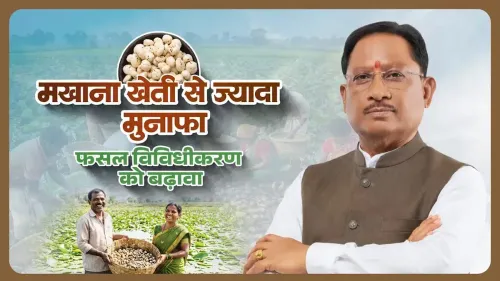
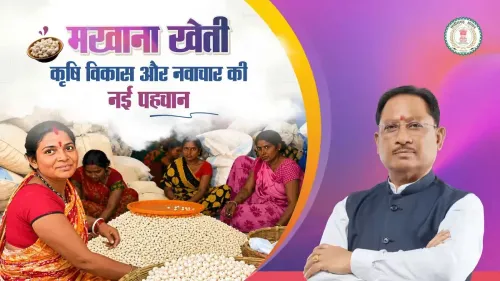
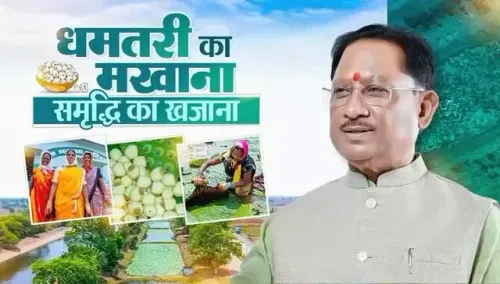
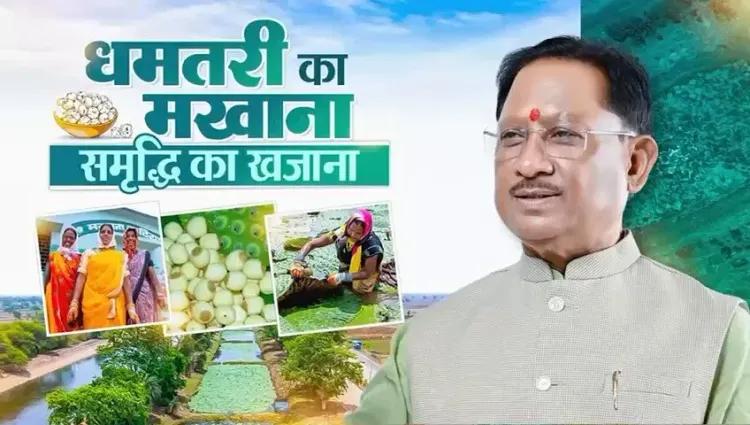
The official post, shared by the Chief Minister's Office, states: 'Chhattisgarh aaj makhana utpadan ke zariye mahila sashaktikaran, krishi vividhikaran aur aatmnirbhar gramin arthavyavastha ki nayi misal banta ja raha hai' — translating to: 'Chhattisgarh is today becoming a new example of women's empowerment, agricultural diversification, and a self-reliant rural economy through makhana production.' The post highlights that women's self-help groups (SHGs) and farmers in Dharmatri district are being linked to the makhana value chain, creating new opportunities for self-reliance and income growth.
Crucially, the initiative covers the full value chain — from cultivation through processing to marketing — with women playing an active role at every stage. This end-to-end participation, the government says, is what makes the model economically transformative rather than merely symbolic.
Policy Backdrop
Chief Minister Vishnu Deo Sai, who has led the BJP government in Chhattisgarh since December 2023, has consistently emphasised agricultural modernisation and rural livelihood diversification as governance priorities. The makhana push in Dharmatri builds on the framework of the National Rural Livelihood Mission, under which women's SHGs have long been mobilised for enterprise-linked activities.
Makhana — an aquatic crop grown in shallow water bodies — has gained national attention as a high-value, nutritionally rich alternative to cereal farming. Bihar pioneered large-scale makhana cultivation in India, and several states have since sought to replicate that model. Chhattisgarh's entry into this space signals a deliberate pivot away from its traditional dependence on rice and minor forest produce toward higher-margin crops suited to its water-rich districts.
The state government has tagged the initiative under #SushasanSarkar — meaning 'good governance government' — a branding phrase that the Sai administration has used to frame welfare and development announcements since taking office.
Stakeholders and Impact
The primary beneficiaries are women members of self-help groups and small farmers in Dharmatri district. By integrating women into processing and marketing — not just cultivation — the programme aims to ensure that value addition and its associated income accrue to rural households rather than intermediaries.
Makhana commands a strong domestic and export market, driven by rising demand for healthy snack foods and traditional fasting staples. Embedding SHGs in the value chain positions rural women in Chhattisgarh to capture a share of that premium market. The model also aligns with the post-pandemic policy emphasis on localised, resilient rural economies less dependent on urban supply chains.
What's Next
The government's framing of Dharmatri as a demonstrator district suggests a possible rollout to additional districts if the pilot yields measurable income gains. Analysts will watch for state budget allocations toward makhana processing infrastructure, Farmer Producer Organisation linkages, or dedicated market tie-ups that could formalise and scale the initiative.
More broadly, the Sai government's emphasis on crop diversification through women-led collectives reflects a wider pattern visible across Indian states — using SHG networks as ready-made institutional channels for introducing high-value agriculture. Whether Chhattisgarh can match Bihar's scale in makhana production will depend on sustained investment in water management, training, and assured market access for its rural producers.
Point of View
The administration is leveraging an existing institutional infrastructure to accelerate both adoption and political visibility. The #SushasanSarkar tag connects the announcement to a broader BJP governance narrative that equates women's economic participation with development credibility. The real test will be whether market linkages and processing infrastructure follow the political messaging — without those, SHG-led makhana cultivation risks remaining a pilot rather than a structural shift.
NationPress
23 Sept 2026
Frequently Asked Questions
What is the Chhattisgarh government doing with makhana farming?
The Vishnu Deo Sai government is linking women's self-help groups and farmers in Dharmatri district to makhana (foxnut) cultivation, processing, and marketing to boost rural incomes and promote agricultural diversification.
Which district in Chhattisgarh is piloting makhana production?
Dharmatri district has been selected as the pilot location where women's SHGs are being integrated into the makhana value chain from cultivation through to marketing.
What is makhana and why is it being promoted in Chhattisgarh?
Makhana, also known as foxnut, is a high-value aquatic crop grown in shallow water bodies. It commands strong domestic and export demand as a nutritious snack, making it an attractive alternative to traditional cereal farming for raising rural incomes.
How does the makhana scheme empower women in Chhattisgarh?
Women's self-help groups are involved at every stage — farming, processing, and marketing — ensuring that income from value addition stays with rural households rather than intermediaries.
Is this makhana initiative new or part of an existing scheme?
The initiative builds on the National Rural Livelihood Mission framework, which has long supported women's SHGs in Chhattisgarh, but the focus on makhana as a high-value diversification crop represents a new direction under the Sai government that took office in December 2023.