CM Sai Credits Women's Power in Viksit Chhattisgarh Vision
Synopsis
Chief Minister Vishnu Deo Sai's office credited women's self-help group members as the backbone of Chhattisgarh's development push, linking state schemes like BIHAN and Lakhpati Didi to Prime Minister Modi's Viksit Bharat 2047 mission.
Key Takeaways
The Chief Minister's Office of Chhattisgarh posted on 9 July 2026 attributing a core role to women in realising the Viksit Chhattisgarh vision.
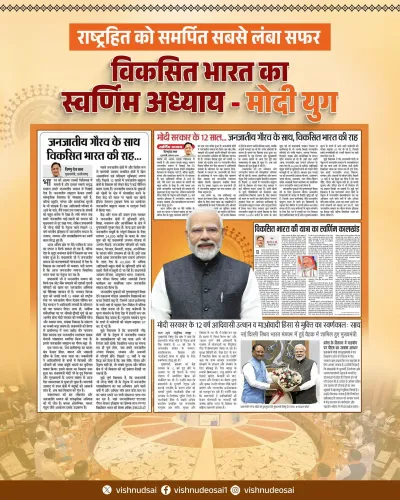
CM Vishnu Deo Sai explicitly connected women's contribution to PM Narendra Modi 's Viksit Bharat 2047 national goal.
The Lakhpati Didi scheme targets women in self-help groups to earn at least Rs 1 lakh annually .
Chhattisgarh's BIHAN programme, active since 2019 , provides the state-level delivery infrastructure for such schemes.
The post was tagged under #DidiKeGoth , indicating an ongoing village-level women's outreach campaign by the state government.
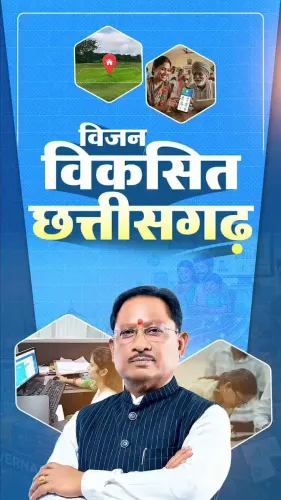
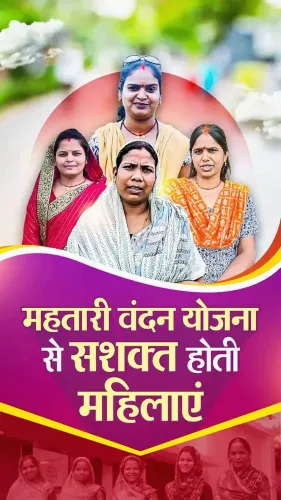
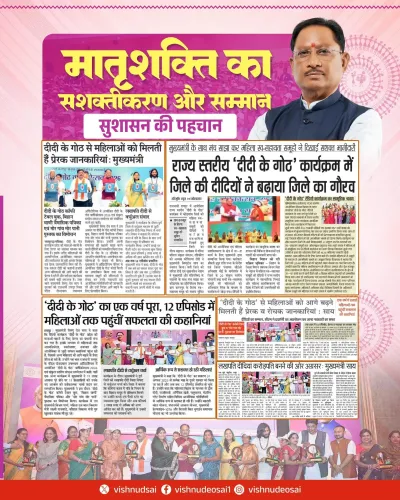
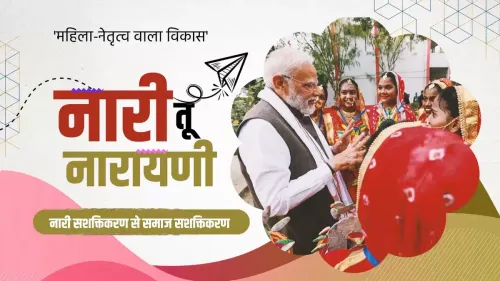
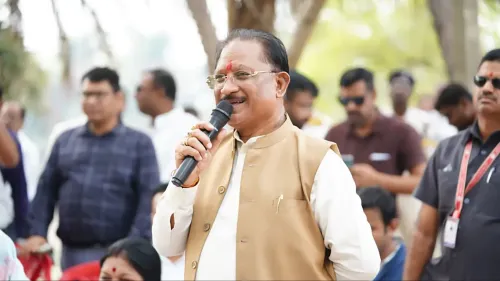
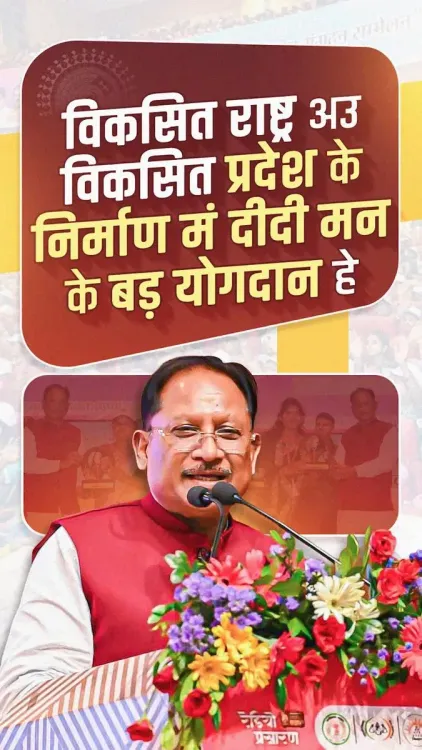
The Chief Minister's Office of Chhattisgarh, on behalf of Chief Minister Vishnu Deo Sai, on Thursday, 9 July 2026, acknowledged the central role of women — referred to as maatrushakti (motherly force) — in building a developed Chhattisgarh, linking their contribution directly to Prime Minister Narendra Modi's national vision of a Viksit Bharat by 2047.
The post, shared in Chhattisgarhi, reads in translation: 'Aaj jab hamn Viksit Chhattisgarh ke baat kartha aur hamar desh ke Pradhanmantri Viksit Bharat ke sankalp l sakaar kare ke baat karthen, t emma aap sabbo maatrushakti ke bahut bade yogdaan he' — 'Today, when we speak of a developed Chhattisgarh, and our country's Prime Minister speaks of realising the resolve of a developed India, in that endeavour, the contribution of all of you — the women's force — is immense.'
Context
The message was shared under the hashtags #DidiKeGoth, #NariShakti, #LakhpatiDidi, and #ViksitChhattisgarh, signalling an alignment between state-level outreach and the Centre's flagship women-empowerment agenda. The Lakhpati Didi scheme, a Government of India initiative, targets women in self-help groups (SHGs) to achieve annual incomes of at least Rs 1 lakh. The hashtag #Bihan references Chhattisgarh's own state-run SHG livelihood programme, which has been active since 2019.
Chief Minister Vishnu Deo Sai, who assumed office in December 2023 following the BJP's decisive win in the state assembly elections, has consistently positioned women-led economic activity as a cornerstone of his administration's governance model.
Policy Backdrop
The Viksit Bharat Sankalp Yatra, launched nationally in November 2023, was designed to bring central government schemes — including those targeting rural women — directly to beneficiaries at the grassroots level. Chhattisgarh's BIHAN programme, which supports women's self-help groups with credit linkages and livelihood training, was expanded in scope under state women empowerment policies from 2019 onward.
The convergence of the state's BIHAN framework with the Centre's Lakhpati Didi scheme represents a layered approach: state infrastructure is used to deliver nationally defined income targets for rural women. BJP-governed states have increasingly framed such local delivery as a direct contribution to the Viksit Bharat 2047 mission.
Stakeholders and Impact
The primary beneficiaries of the policies referenced in the post are rural women enrolled in self-help groups across Chhattisgarh. These groups serve as the organisational unit through which credit, skill training, and market linkages are delivered. Women who cross the Rs 1 lakh annual income threshold under the Lakhpati Didi scheme are recognised as 'Lakhpati Didis,' a designation that carries both social recognition and access to further state support.
The framing of maatrushakti — women as a force for national development — reflects a broader political messaging strategy seen across BJP-ruled states, where women's economic participation is positioned not merely as welfare but as a driver of state and national growth.
What's Next
Observers will watch for formal announcements around the Viksit Chhattisgarh roadmap, including any dedicated budget allocations for women-centric livelihood schemes in the state's upcoming fiscal planning. The continued emphasis on #DidiKeGoth — a community outreach format targeting women at the village level — suggests the state government intends to sustain direct engagement with SHG networks as a political and programmatic priority.
With the Lakhpati Didi target set at the national level and states competing to demonstrate delivery, Chhattisgarh's ability to convert SHG enrolment into verified income milestones will be a key metric for both governance credibility and political messaging ahead of future electoral cycles.
Point of View
Lakhpati Didi, and NariShakti in a single post, the administration signals that women-centric schemes are being positioned as proof points of delivery under BJP rule. This mirrors a pattern across BJP-governed states where SHG outcomes are cited as governance credibility markers. The sustained use of Chhattisgarhi language in official communication also reflects a localisation strategy aimed at grassroots resonance beyond Hindi-belt political messaging.
NationPress
8 Oct 2026
Frequently Asked Questions
What is the Lakhpati Didi scheme in Chhattisgarh?
Lakhpati Didi is a Government of India scheme that supports women enrolled in self-help groups to achieve an annual income of at least Rs 1 lakh. In Chhattisgarh, it is delivered through the state's BIHAN programme infrastructure.
What is the BIHAN scheme in Chhattisgarh?
BIHAN is Chhattisgarh's state-run self-help group livelihood programme that provides rural women with credit linkages, skill training, and market access. It has been expanded under state women empowerment policies since 2019.
What is Viksit Chhattisgarh?
Viksit Chhattisgarh is the state government's development vision under Chief Minister Vishnu Deo Sai, framed as Chhattisgarh's contribution to the national Viksit Bharat 2047 goal of making India a developed nation.
What is DidiKeGoth in Chhattisgarh?
DidiKeGoth is a community outreach initiative by the Chhattisgarh government that targets women at the village level, often engaging self-help group members to spread awareness of government schemes.
Who is Vishnu Deo Sai?
Vishnu Deo Sai is the BJP Chief Minister of Chhattisgarh, sworn into office in December 2023 following the party's victory in the state assembly elections.