CM Sai Highlights 2.5 Years of Women Welfare in Chhattisgarh
Synopsis
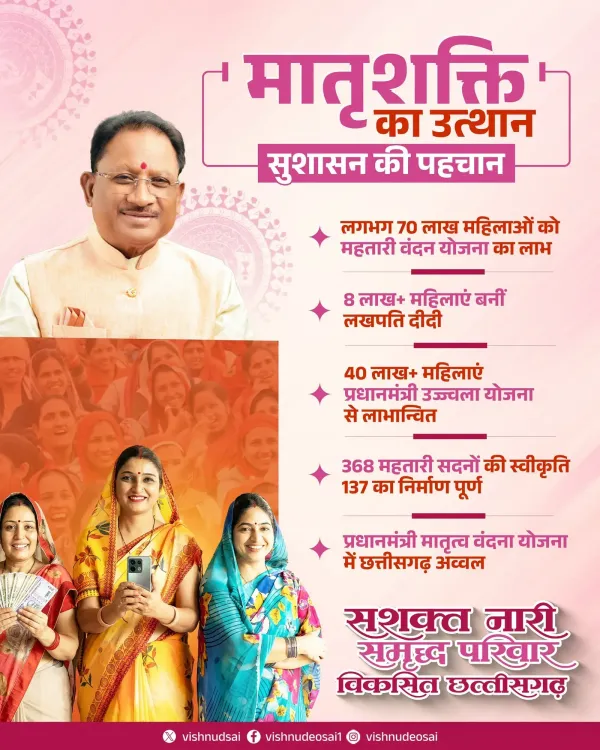
Chhattisgarh Chief Minister Vishnu Deo Sai on 17 June 2026 reaffirmed that the double-engine government has spent 2.5 years delivering economic support, social security, and empowerment opportunities to lakhs of women across the state, calling women's welfare the hallmark of good governance.
Key Takeaways
Chief Minister Vishnu Deo Sai posted on 17 June 2026 reaffirming the government's commitment to women's welfare, safety, and empowerment.
He credited the double-engine government — the alignment of the state and central BJP administrations — for the progress made.
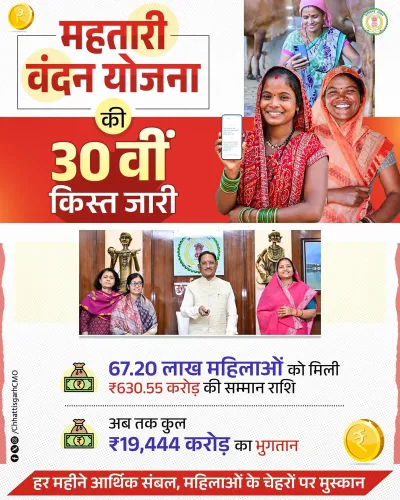
The government claims that over the past two-and-a-half years , lakhs of women in Chhattisgarh have received economic support and social security through various welfare schemes.
Three core pillars were highlighted: honour, safety, and empowerment of women.
The BJP-led Chhattisgarh government took office in December 2023 and is approaching the midpoint of its five-year term.
Updated beneficiary data and budget allocations are expected at the next state assembly session or annual budget .
Chhattisgarh Chief Minister Vishnu Deo Sai on Wednesday, 17 June 2026, reaffirmed his government's commitment to the welfare, safety, and empowerment of women, stating that the double-engine government has worked continuously over the past two-and-a-half years to deliver economic support, social security, and self-reliance opportunities to lakhs of women across the state.
Context
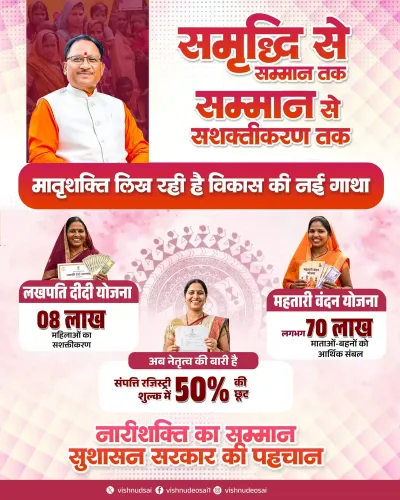
Posting in Hindi on X (formerly Twitter), Chief Minister Sai wrote: 'मातृशक्ति का कल्याण, सुशासन की पहचान' — 'The welfare of women is the hallmark of good governance.' He added that through various public-welfare schemes, women in the state have experienced positive change in their lives, gaining new avenues for economic strength and social security.
The post marks a milestone communication as the BJP-led Chhattisgarh government approaches the midpoint of its five-year term, which began in December 2023 following the party's victory in the state assembly elections.
Policy Backdrop
Since taking office, the Sai administration has expanded existing women-focused welfare programmes and introduced new components aimed at economic uplift and social protection. The phrase 'double-engine government' — a recurring BJP formulation — refers to the alignment between the state government and the central government led by Prime Minister Narendra Modi, enabling coordinated delivery of both central and state-level schemes.
This approach has been a consistent feature of BJP governance in Hindi-belt states, where targeted cash-transfer programmes and self-help group linkages are presented as tangible proof of the double-engine model's effectiveness. Chhattisgarh, a central Indian state with a significant tribal and rural population, has historically been a focus of women-centric welfare outreach.
Stakeholders and Impact
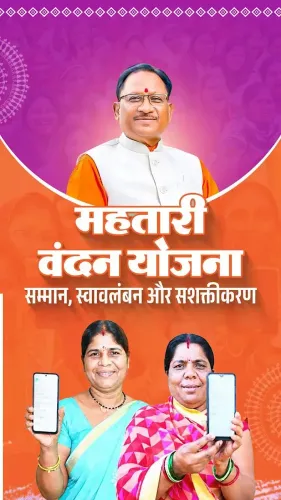
The primary beneficiaries cited are lakhs of women across Chhattisgarh, particularly those in rural and semi-urban areas who have accessed state-sponsored economic support and social security programmes over the past two-and-a-half years. The Chief Minister's framing emphasises three pillars: honour (सम्मान), safety (सुरक्षा), and empowerment (सशक्तिकरण).
Self-help groups, women's cooperative networks, and direct-benefit-transfer recipients form the core stakeholder base. Positive outcomes in financial inclusion and livelihood support for women have been a stated priority of the administration since its inception.
What's Next
The government's next opportunity to put numbers to these claims will likely come during the forthcoming state assembly session or the annual state budget, where updated beneficiary figures and fresh allocations for women-centric schemes are expected to be tabled. Analysts will watch whether the administration translates this political messaging into new programme announcements or expanded budget lines ahead of the 2028 assembly election cycle.
As the BJP continues to position women's welfare as a defining feature of its governance record in Chhattisgarh, the credibility of that claim will increasingly rest on verifiable data on scheme reach, fund utilisation, and on-ground impact.
Point of View
Designed to consolidate the BJP's brand equity among women voters in Chhattisgarh well before the next election cycle. The 'double-engine government' framing is deliberate — it ties state-level welfare delivery to the central government's political identity, making both accountable for outcomes. This messaging pattern mirrors similar communication strategies deployed by BJP chief ministers in Madhya Pradesh and Uttar Pradesh, where women-centric schemes have been central to electoral mobilisation. The real test will be whether the administration backs this narrative with auditable data on beneficiary reach and fund utilisation in the sessions ahead.
NationPress
22 Sept 2026
Frequently Asked Questions
What did Chhattisgarh CM Vishnu Deo Sai say about women's welfare?
CM Vishnu Deo Sai said that the double-engine government has worked continuously over the past two-and-a-half years to provide economic support, social security, and empowerment to lakhs of women in Chhattisgarh, calling women's welfare the hallmark of good governance.
What is the 'double-engine government' referred to by CM Sai?
The 'double-engine government' is a BJP term describing the simultaneous functioning of a BJP state government and the BJP-led central government, which together are said to deliver coordinated welfare benefits to citizens.
When did Vishnu Deo Sai become Chief Minister of Chhattisgarh?
Vishnu Deo Sai became Chief Minister of Chhattisgarh in December 2023 after the BJP won the state assembly elections.
Which women welfare schemes has the Chhattisgarh government launched?
The Chhattisgarh government has expanded existing women-focused welfare programmes and introduced new components for economic uplift and social security since December 2023, though specific scheme names and exact beneficiary figures are yet to be officially published in verifiable detail.
What are the main goals of the Chhattisgarh government for women?
The Chhattisgarh government under CM Sai has stated three core goals for women: honour (samman), safety (suraksha), and empowerment (sashaktikaran), delivered through various public-welfare schemes.