White House Claims Record Drop in US Prescription Drug Prices
Synopsis
The White House announced on August 30, 2026 that US prescription drug prices are falling at a record-breaking pace, crediting the Inflation Reduction Act's Medicare drug-price negotiation authority — now in its first year of full implementation — as proof of campaign promises fulfilled.
Key Takeaways
The White House announced on August 30, 2026 that US prescription drug prices are falling at a 'record-breaking pace.' The Inflation Reduction Act (2022) granted Medicare the authority to negotiate drug prices directly with manufacturers — a first in the program's history.
Negotiated prices under the IRA officially took effect in 2026 , making this the first year the law's core mechanism is fully operational.
The Centers for Medicare and Medicaid Services (CMS) is responsible for implementing the negotiation framework and publishing pricing data.
The precise statistics behind the 'record-breaking' claim have not been independently verified; congressional scrutiny of the IRA's early effects is expected.
Pharmaceutical manufacturers had mounted legal challenges to the negotiation authority, but implementation proceeded after those challenges largely failed.
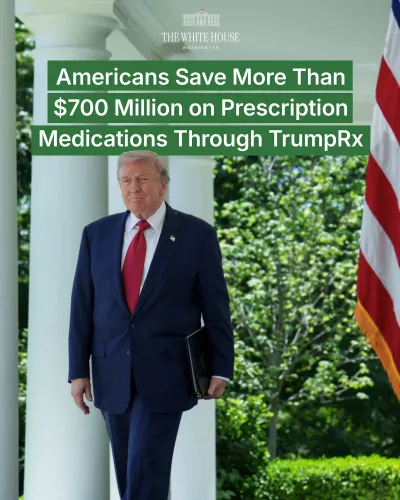
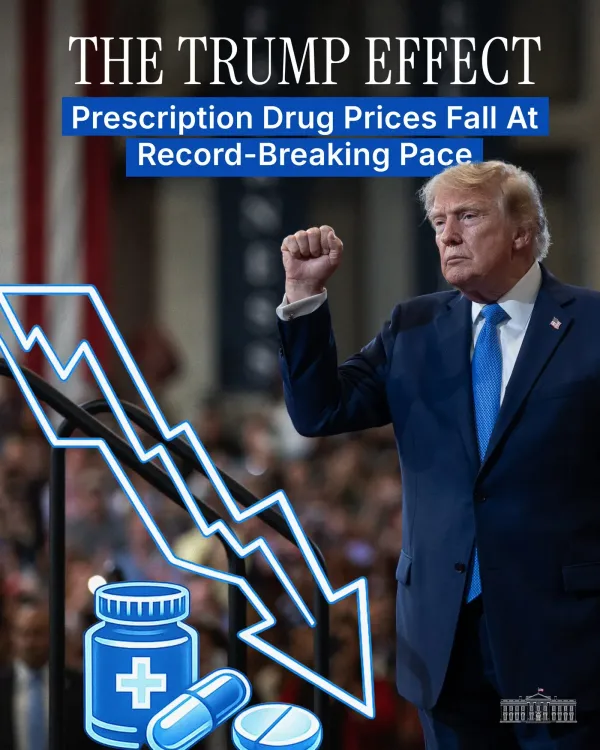
For millions of American seniors, the cost of staying alive just got measurably cheaper — and the White House is making sure no one misses it. The White House posted on X on Sunday, August 30, 2026, declaring that prescription drug prices have fallen at a 'record-breaking pace,' framing it as a campaign promise delivered.
The IRA's 2026 Moment: Negotiation Meets Reality
The policy engine behind this claim is the Inflation Reduction Act (IRA), signed into law in 2022. For the first time in the program's history, the law granted Medicare — the federal health insurance program covering seniors and disabled Americans — the authority to directly negotiate prices on select high-cost drugs with pharmaceutical manufacturers. Those negotiated prices were always scheduled to kick in during 2026, making this year the first real-world test of the law's core promise.
The Centers for Medicare and Medicaid Services (CMS) is the agency responsible for implementing the negotiation framework and tracking the resulting price data. The White House's announcement positions CMS's work as the proof point — a government program moving from legislative text to lower costs at the pharmacy counter.
What 'Record-Breaking' Actually Means for Medicare Beneficiaries
The IRA's drug-pricing provisions operate on two tracks: direct negotiation for a defined list of high-cost medicines, and inflation rebates that penalise manufacturers who raise prices faster than inflation. Together, these mechanisms were designed to bend the long-upward curve of US drug costs. The White House's framing — 'promises made, promises kept' — signals that the administration views the 2026 implementation cycle as political and policy vindication.
The specific price statistics and the precise methodology behind the 'record-breaking' characterisation have not been independently verified. What is established is that the IRA's negotiation authority is now active, and Medicare beneficiaries are the primary group positioned to feel its effects at the point of purchase.
Pharma's Long Fight and What Comes Next
The road to this moment was anything but smooth. Pharmaceutical manufacturers mounted legal challenges to the IRA's negotiation provisions, arguing the process was constitutionally coercive. Those challenges largely failed to halt implementation. Industry groups continue to warn that negotiated prices could dampen investment in new drug development — a debate that will intensify as CMS expands the list of drugs subject to negotiation in future cycles.
Congressional hearings on the IRA's early effects are expected to scrutinise both the scale of savings and any downstream impact on pharmaceutical research pipelines. The 'record-breaking' label the White House has applied will face its sharpest test in those chambers.
Point of View
Turning the Inflation Reduction Act from a legislative promise into a lived reality for millions of seniors. Framing the drop as 'record-breaking' is a deliberate effort to own the policy narrative before congressional scrutiny and pharmaceutical industry counter-messaging can complicate it. The broader arc here is a decade-long Democratic push to give Medicare bargaining power that Republicans and pharma lobbied hard to block — this announcement is as much a political claim as a policy one. How CMS's underlying data holds up to independent review will determine whether this becomes a durable legacy point or a contested talking point.
NationPress
31 Aug 2026
Frequently Asked Questions
Why are US prescription drug prices falling in 2026?
The Inflation Reduction Act of 2022 gave Medicare the authority to directly negotiate prices with pharmaceutical manufacturers for the first time. Those negotiated prices took effect in 2026, which the White House says is driving the record decline.
What is the Inflation Reduction Act and how does it affect drug prices?
The Inflation Reduction Act, passed in 2022, introduced two key drug-pricing tools: direct Medicare negotiation on select high-cost medicines, and inflation rebates that penalise manufacturers who raise prices faster than the inflation rate.
Which drugs are covered under Medicare price negotiation?
The Centers for Medicare and Medicaid Services selects a defined list of high-cost drugs for negotiation each cycle. The specific drugs covered in the 2026 cycle are determined by CMS based on Medicare spending data.
Does the US drug price drop affect medicine costs in India?
Directly, no — the negotiated prices apply specifically to Medicare, the US federal program for seniors and disabled individuals. However, US drug-pricing policy can influence global pharmaceutical pricing trends and trade negotiations over time.
Did pharmaceutical companies challenge Medicare drug price negotiation in court?
Yes. Several pharmaceutical manufacturers filed legal challenges arguing the IRA's negotiation process was unconstitutional, but those challenges largely failed to halt implementation, and the negotiation framework proceeded as scheduled.