Kejriwal Declares 71 Seats in Punjab Ahead of 2027 Polls
Synopsis
AAP national convenor Arvind Kejriwal declared candidates for 71 of Punjab's 117 assembly seats on 12 November 2026, projecting confidence ahead of the 2027 state elections and challenging opposition parties to match the move with a positive agenda of their own.
Key Takeaways
AAP convenor Arvind Kejriwal announced candidates for 71 seats in Punjab on 12 November 2026 , months ahead of the 2027 assembly elections.
Punjab has 117 assembly seats ; AAP's declaration covers more than 60 percent of them in a single move.
AAP won 92 of 117 seats in the landmark 2022 Punjab election , forming the state's first non-Congress, non-Akali government in decades.
Kejriwal accused opposition parties of having 'nothing positive to offer except abusing' AAP, framing early candidate declaration as a show of organisational strength.
Further seat-wise announcements and opposition responses are expected as the 2027 Punjab polls draw closer.
With Punjab's 2027 assembly elections still on the horizon, AAP national convenor Arvind Kejriwal has fired an early opening salvo — declaring candidates for 71 of Punjab's 117 seats while his rivals, he says, have nothing to offer but attacks. That kind of early mobilisation is a deliberate strategic bet, and it signals just how seriously the party is treating its defence of the state it swept in 2022.
71 Seats Named While Others Stay Silent
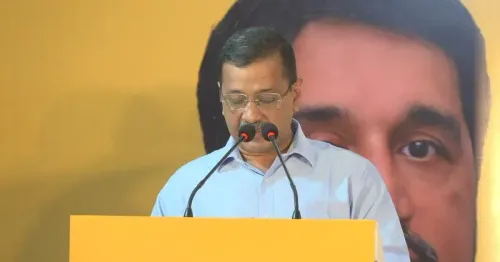
Posting on Thursday, 12 November 2026, Kejriwal struck a confident, forward-looking tone: 'AAP is moving ahead in Punjab with confidence.' The announcement of 71 candidates — well ahead of any formal election schedule — is a deliberate show of organisational muscle. While opposition parties have yet to finalise their own lists, AAP has already given more than half of Punjab's constituencies a named face to rally around.
Kejriwal framed the opposition's silence as an absence of vision, noting that rivals have 'nothing positive to offer except abusing us.' He signed off with best wishes to the declared candidates — a signal that the campaign machinery is already in motion.
AAP's Punjab Bet: Defending a Landmark 2022 Victory
The stakes are steep. In the 2022 Punjab Legislative Assembly election, AAP delivered one of modern Indian politics' most emphatic mandate — capturing 92 of 117 seats and becoming the first party outside the Congress-Akali axis to govern the state in decades. That landslide gave the party not just a government, but a template: early outreach, direct candidate announcement, and a governance-first pitch.
Replicating — or even defending — that majority in 2027 will require fending off a resurgent Congress, a recalibrating Shiromani Akali Dal, and the BJP's expanded ambitions in the border state. Early seat declarations push AAP's candidates into their constituencies months before rivals have even begun internal seat-sharing negotiations.
The Strategic Logic of Going First
Political parties rarely announce candidates this far out without reason. The move locks in local faces, cuts off internal dissent before it festers, and forces rivals onto the defensive — reacting to AAP's list rather than setting their own narrative. For a party governing an entire state, it also doubles as a mid-term report card: each candidate carries the weight of the last five years of administration in Punjab.
Kejriwal's framing — confidence against criticism — is consistent with AAP's broader messaging strategy since 2022: position governance delivery against opposition noise. Whether Punjab voters endorse that contrast at the ballot box is the question that the next several months will begin to answer.
The campaign clock in Punjab is ticking — and right now, AAP is the only party that has already started running.
Point of View
Kejriwal is essentially converting organisational discipline into electoral momentum. The move also carries a governance subtext: every early-declared candidate is implicitly asking Punjab voters to ratify AAP's five-year record in office. If the party's delivery story holds up to scrutiny at the constituency level, the head-start could prove decisive; if local anti-incumbency has accumulated, it equally gives opponents a longer runway to consolidate against named targets.
NationPress
12 Nov 2026
Frequently Asked Questions
How many seats has AAP declared in Punjab for the 2027 elections?
AAP has declared candidates for 71 seats out of Punjab's total 117 assembly constituencies , as announced by national convenor Arvind Kejriwal on 12 November 2026.
When are the next Punjab assembly elections?
The next Punjab Legislative Assembly elections are due in 2027 . AAP, which currently governs the state, has begun early candidate announcements to build momentum.
How did AAP perform in the 2022 Punjab elections?
AAP won a historic majority in the 2022 Punjab assembly election , capturing 92 of 117 seats and forming the state government for the first time.
Why is AAP announcing Punjab candidates so early?
Early candidate declarations allow AAP to establish a campaign presence at the constituency level ahead of rivals, reduce internal party dissent, and project organisational confidence — a strategy Kejriwal has publicly framed as 'moving ahead with confidence.'
What did Kejriwal say about the opposition in his Punjab announcement?
Kejriwal said opposition parties have 'nothing positive to offer except abusing' AAP, positioning his party's proactive candidate list against what he characterised as purely negative campaigning by rivals.