Kejriwal reaches Mandir Marg police station to secure release of arrested youths

Synopsis
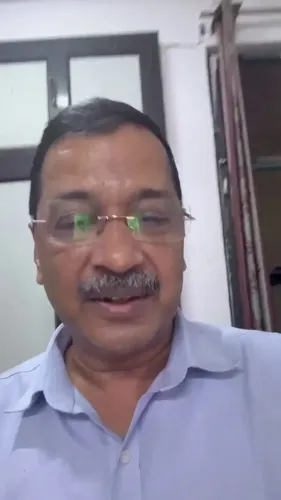
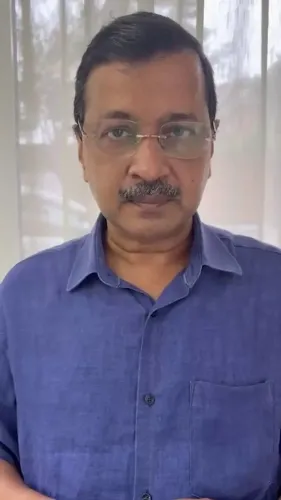
AAP convenor Arvind Kejriwal reached Mandir Marg police station in central Delhi on 21 July 2026, posting a video of himself speaking with detained youths and stating he had come to secure their release.
Key Takeaways
Arvind Kejriwal personally visited Mandir Marg police station in central Delhi on 21 July 2026 .
He announced the visit on X, sharing a video of himself conversing with arrested youths inside the station.
The specific reasons for the youths' detention have not been officially disclosed by Delhi Police .
Delhi Police reports to the Union Ministry of Home Affairs , not the elected Delhi government — a long-standing governance tension in the capital.
The intervention follows a pattern of direct public engagement that has defined Kejriwal's political identity since the India Against Corruption movement of 2011-2012 .
A formal response from Delhi Police on the arrests and their outcome is awaited.
AAP convenor Arvind Kejriwal arrived at Mandir Marg police station in central Delhi on Tuesday, 21 July 2026, to intervene on behalf of several young people detained there, announcing the visit in a post on X that showed him in conversation with the arrested individuals.
In the post, Kejriwal wrote: 'Mandir Marg thane mein giraftaar kuch yuvaon se meri baatcheet. Inko chhudhvane ke liye main thane pahuncha hoon.' ('My conversation with some youths arrested at Mandir Marg police station. I have reached the police station to get them released.')
Context
Mandir Marg police station is located in central Delhi and functions under Delhi Police, which reports directly to the Union Ministry of Home Affairs — not the elected Delhi government. The details of the arrests, including the reason for detention and the number of youths involved, have not been officially disclosed by police as of the time of the post.
Kejriwal shared a video alongside the post, indicating he was physically present at the station and had spoken directly with those detained.
Policy Backdrop
The visit reflects a recurring pattern in Kejriwal's political career: direct, on-the-ground intervention in civic and law-and-order matters as a demonstration of accessibility. This style of public engagement traces back to his days as a key figure in the India Against Corruption movement of 2011-2012, which ultimately led to the founding of the Aam Aadmi Party in 2012.
The structural tension between Delhi's elected government and the centrally controlled Delhi Police has long been a flashpoint in the capital's politics. Because the elected government has no administrative authority over Delhi Police, opposition leaders and AAP alike have frequently used public visits and social media posts to highlight law-and-order concerns, framing them as accountability exercises directed at the Centre.
Stakeholders and Impact
The most immediate stakeholders are the detained youths and their families, for whom Kejriwal's intervention represents a direct appeal to the police. For AAP's support base — drawn heavily from Delhi's working-class and lower-middle-class neighbourhoods — such visible acts of solidarity with ordinary citizens carry significant political resonance.
Broader Delhi residents and youth groups will be watching whether the intervention results in any formal relief or response from Delhi Police. The post, amplified through Kejriwal's large following on X, also ensures the incident receives public attention that a routine police matter might not otherwise attract.
What's Next
A formal statement from Delhi Police clarifying the grounds for the arrests and the outcome of Kejriwal's visit is awaited. AAP may follow up with a press conference or further social media communication depending on how the situation develops at the station.
The episode is likely to feed into the continuing political debate over the governance of Delhi Police and the accountability of central agencies to the elected representatives of Delhi's residents.
Point of View
Working-class constituency. Because Delhi Police answers to the Centre rather than the elected government, such visits also serve a dual purpose: they project personal accountability while simultaneously drawing attention to what AAP frames as an institutional gap in Delhi's governance architecture. The move is low-risk and high-visibility: even if the intervention yields no immediate legal outcome, the social media documentation ensures the narrative is controlled by Kejriwal. As AAP seeks to rebuild its position in Delhi politics, episodes like this allow the party to stay rooted in everyday civic grievances rather than purely legislative battles.
NationPress
20 Oct 2026
Frequently Asked Questions
Why did Kejriwal go to Mandir Marg police station?
Kejriwal stated he went to Mandir Marg police station on 21 July 2026 to seek the release of several youths who had been arrested there, posting a video of himself speaking with the detainees.
Who controls Mandir Marg police station and Delhi Police?
Delhi Police, including Mandir Marg police station, is administered by the Union Ministry of Home Affairs and is not under the control of the elected Delhi government.
What is Aam Aadmi Party's history of police station visits?
AAP convenor Arvind Kejriwal has a documented history of visiting police stations and public institutions to highlight civic grievances, a practice rooted in his India Against Corruption activism that began in 2011.
What were the youths arrested for at Mandir Marg?
The specific reasons for the arrests at Mandir Marg police station have not been officially disclosed by Delhi Police as of Kejriwal's post on 21 July 2026.
What happens after Kejriwal's visit to the police station?
A formal statement from Delhi Police on the grounds of arrest and the outcome of the visit is awaited; AAP may issue further communication depending on developments at the station.